

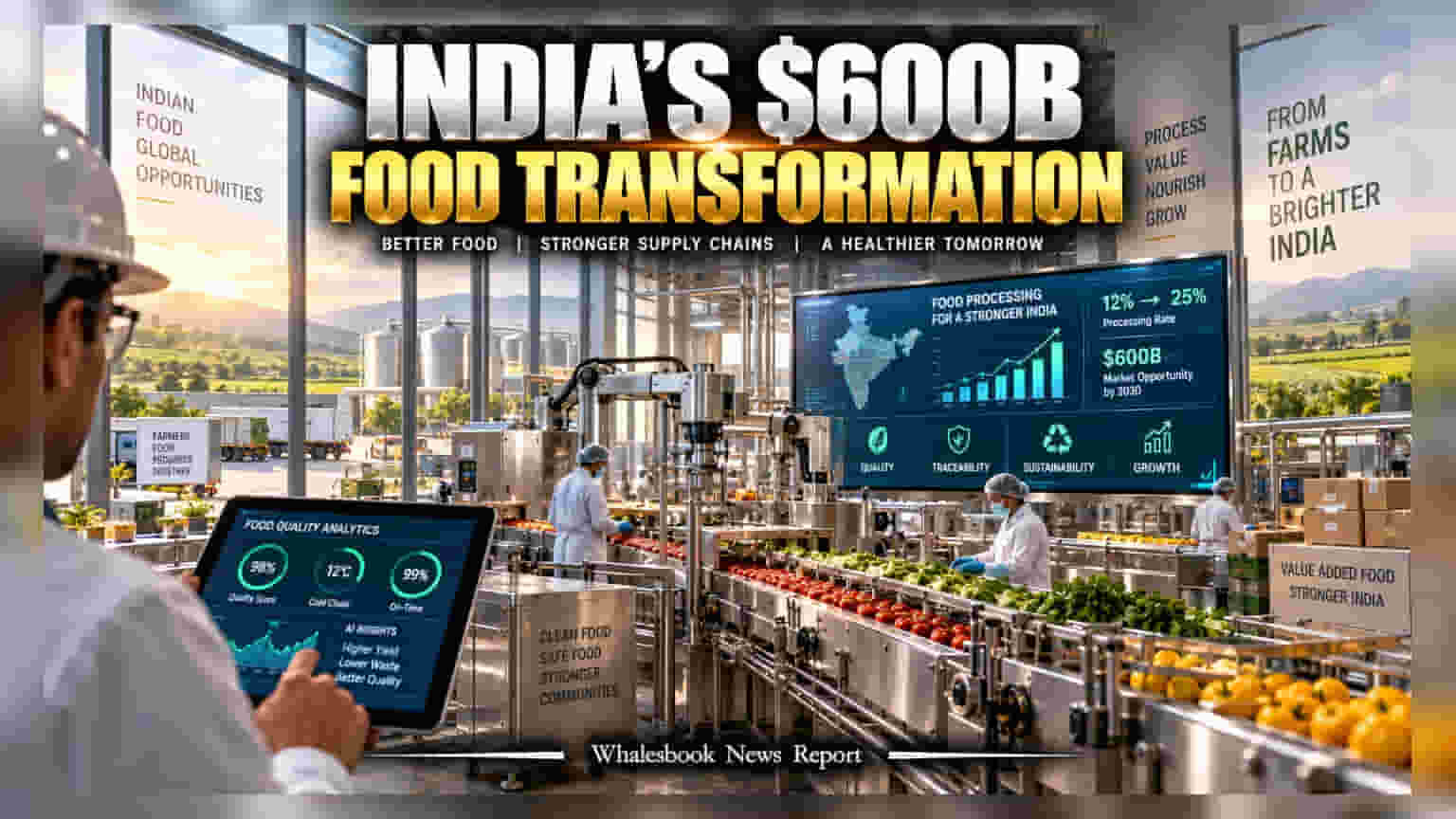
India’s food processing industry holds a potential $600 billion market valuation by 2030, according to recent projections by FICCI and Deloitte. This shift from raw commodity production to high-value processing aims to reduce post-harvest losses and boost global exports. Investors in the broader agriculture and consumer goods sectors should note that realizing this growth depends on overcoming significant structural hurdles in infrastructure and supply chain management.
India is aiming to position its food processing sector as a major economic driver, with industry projections suggesting the market could reach a valuation of $600 billion by 2030. This estimate, highlighted in the recent 'STEP UP' report by FICCI and Deloitte, reflects a strategic pivot for the country: moving away from a volume-based agricultural model toward a value-added, technology-driven approach. For investors, understanding this trend is essential, as the growth potential spans across several connected industries, including FMCG, packaging, logistics, and cold-chain infrastructure.
Moving From Commodity to Value
The central thesis of this growth plan is the underutilization of current agricultural output. While India produces massive quantities of food, only about 12% to 13% currently undergoes significant processing. The industry goal is to increase this percentage by focusing on high-value products like functional foods, specialized ingredients, and ready-to-consume items rather than simply exporting raw commodities. By processing raw food into higher-value products, companies can capture larger profit margins and reduce the volatility often associated with raw commodity prices.
The Role of Infrastructure and Tech
Success in this sector is heavily dependent on resolving deep-rooted structural issues. A major hurdle is the current state of supply chains, which are often fragmented. To reach the projected growth, the industry requires massive investment in cold-chain infrastructure to reduce the high rates of post-harvest food waste. Furthermore, technology is becoming a key differentiator. Large industry players are beginning to deploy artificial intelligence (AI) for demand forecasting and quality control, which helps in aligning production with consumer trends and meeting the strict quality standards required by global export markets.
Risks and Structural Challenges
While the $600 billion target presents a positive outlook, investors should remain aware of significant risks. The sector is highly dependent on micro, small, and medium enterprises (MSMEs) that often operate with thin profit margins and face limited access to credit, which can make scaling operations difficult. Additionally, the industry faces macro challenges such as climate volatility, which impacts crop yields and raw material costs. Food inflation also remains a persistent risk, as rising input prices can pressure the margins of processed food companies and dampen consumer spending power.
What Investors Should Track
This growth projection is not a guarantee but a roadmap, and its realization will depend on execution. Investors tracking this space may focus on a few specific indicators: the capital spending (capex) plans of companies involved in food processing and supply chain management, the adoption rate of new technologies like automated sorting and storage, and government policy updates regarding the Production-Linked Incentive (PLI) schemes. Ultimately, the ability of companies to maintain consistent product quality and navigate potential supply chain disruptions will be the primary factors determining their success in this evolving market.