

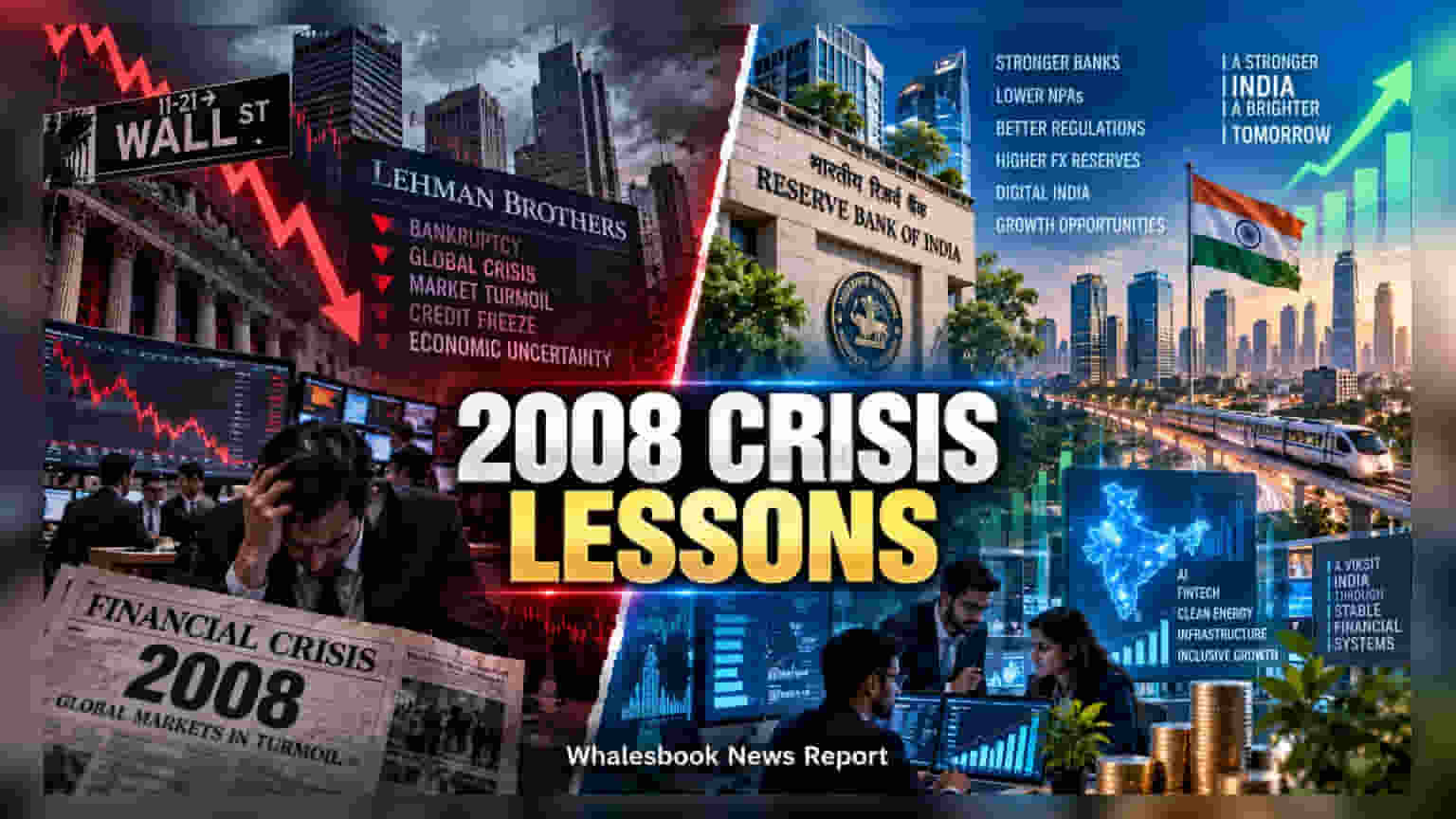
Eighteen years after the 2008 global financial crisis, India’s financial system is significantly more robust. With record foreign exchange reserves, lower bank bad loans, and a formal insolvency framework, the economy is better prepared for external shocks. Investors should now track if debt-funded expansion in newer sectors like artificial intelligence creates risks similar to the past, rather than focusing on the mortgage-linked failures of the previous crisis.
Eighteen years after the 2008 global financial crisis, the Indian financial system operates with a very different architecture. When the collapse of Lehman Brothers sent shockwaves across global markets in 2008, India faced volatility primarily through reduced trade and capital outflows. In 2026, the country enters a new phase of global investment cycles with significantly stronger buffers and a more proactive regulatory environment.
One of the most notable changes is the strength of the banking sector. In the years following 2008, Indian banks faced challenges with rising bad loans and stressed assets. Today, the sector has cleaned up balance sheets, with gross non-performing assets at multi-year lows. This stability is supported by the Reserve Bank of India’s focus on proactive supervision, where regulators increasingly monitor credit growth and liquidity long before vulnerabilities turn into systemic risks.
Another layer of stability is the creation of the Insolvency and Bankruptcy Code. This framework provides a legal process for resolving stressed corporate debts, a mechanism that was notably absent during the 2008 crisis. Additionally, individual depositors now have more security, as deposit insurance coverage from the DICGC was increased to ₹5 lakh, helping maintain confidence in the banking system during uncertain times.
Foreign exchange reserves have also reached historic highs compared to the levels held eighteen years ago. These reserves provide the central bank with a substantial buffer against currency volatility and external liquidity shocks, allowing for more stable policy management when global markets fluctuate. This improvement in external financial strength helps decouple the domestic economy from international instability more effectively than in the past.
As markets now look at the rapid investment cycle in artificial intelligence, comparisons to past technology or financial bubbles are common. A key difference in the current cycle is the financial health of the companies leading the charge. Unlike the subprime mortgage crisis of 2008, which was fueled by complex, leveraged mortgage securities, the current artificial intelligence boom is largely led by companies with robust cash flows and stronger balance sheets. However, this does not mean the sector is risk-free. If companies begin to rely heavily on debt to fund massive infrastructure expansion, the risk profile could change.
Investors should look beyond the differences in business models and monitor the broader factors that typically impact financial stability. The key monitorables for the coming quarters include global liquidity conditions, interest rate trends, and the level of debt being used to fuel new technology projects. While the structural safeguards today are superior to those in 2008, global shocks can still impact markets through sentiment and capital flows. Keeping an eye on how these factors evolve will be essential for understanding the stability of the current investment cycle.