

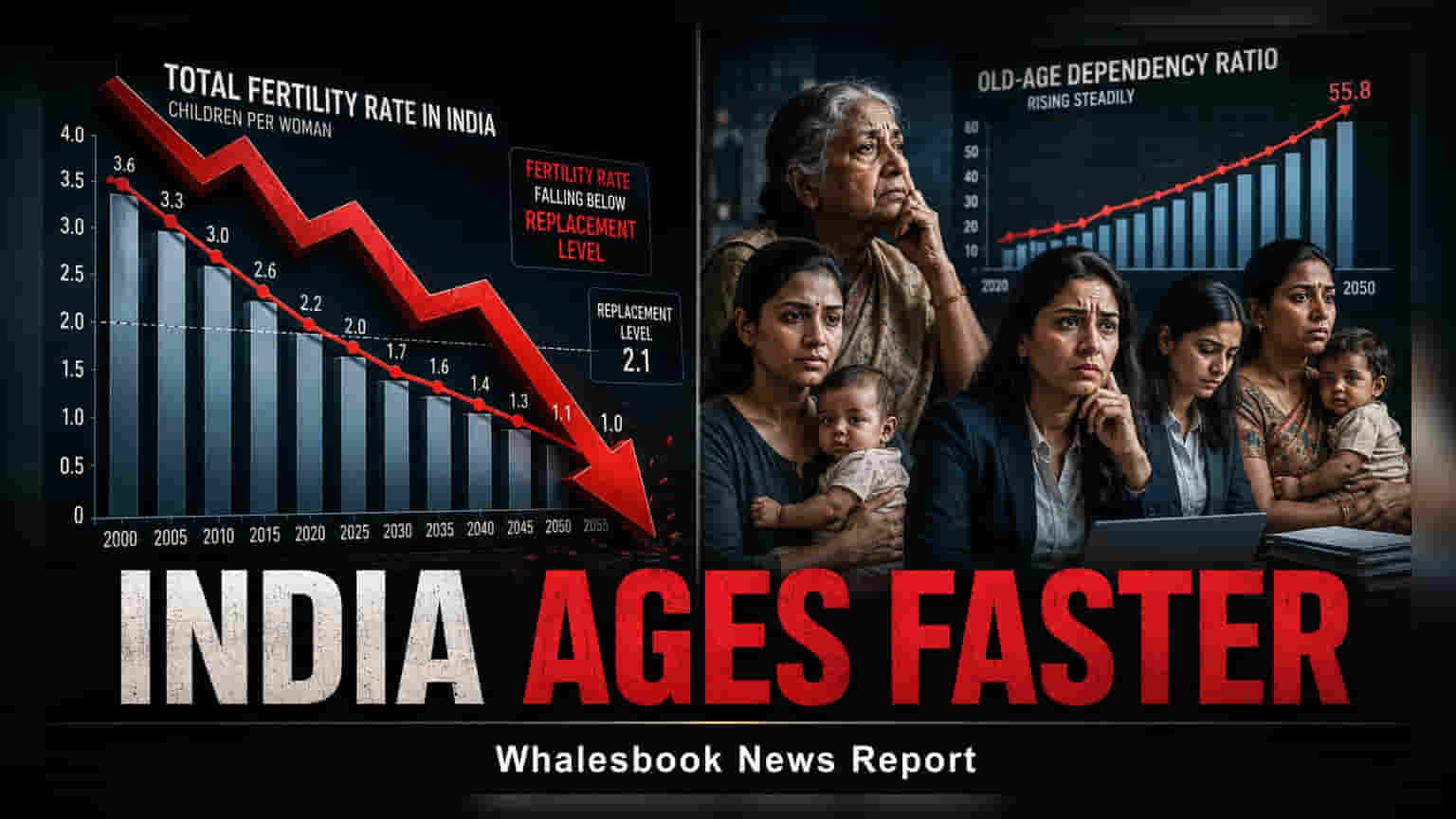
India's total fertility rate has dropped to 2.0, falling below the replacement level of 2.1. This demographic shift could limit long-term economic growth by reducing the working-age population faster than expected. Investors should track how this trend affects future labor costs, consumption patterns, and government fiscal spending on aging-related social infrastructure.
Detailed Coverage
India has reached a significant demographic turning point as the nation's total fertility rate (TFR) has declined to 2.0. This figure, which measures the average number of children born to a woman over her lifetime, is now below the replacement level of 2.1. In economic terms, this shift suggests that India’s population is beginning to stabilize sooner than historically anticipated, mirroring the demographic transitions seen in countries like Japan, South Korea, and China.
Impact on the Working-Age Population
For the Indian economy, a declining fertility rate means that the window of time to maximize the 'demographic dividend' is narrowing. The demographic dividend refers to the economic growth potential that results from having a larger working-age population compared to the number of dependents, such as children and the elderly. If birth rates continue to decline, the pace at which the labor force grows will slow down, potentially leading to a shrinking workforce in the coming decades. This creates a risk where the country might face labor shortages or rising wage costs before it has fully transitioned into a high-income economy.
Fiscal and Social Implications
As the fertility rate drops, the old-age dependency ratio is expected to rise. This ratio tracks the number of elderly individuals who rely on the working population for support. An increasing number of pensioners compared to active taxpayers often puts pressure on national savings and forces governments to increase spending on healthcare and pension schemes. In India, where a significant portion of the workforce remains in the informal sector with limited social security, a faster-than-expected rise in the elderly population may increase fiscal liabilities for the state.
Employment and Industrial Challenges
India’s current economic environment faces a unique set of hurdles compared to East Asian peers that achieved rapid industrialization in the late 20th century. While those nations leveraged massive, labor-intensive manufacturing sectors to absorb their young populations, India’s transition to a service-oriented economy has left a gap in formal, high-volume employment. Data consistently shows that graduate unemployment remains a critical concern, indicating a mismatch between the current education output and industry requirements. Without a robust strategy to integrate the existing youth into formal jobs, an unabsorbed workforce could pose social and fiscal challenges rather than acting as a catalyst for prosperity.
Regional Disparities and Future Trends
The national average of 2.0 masks a complex reality across different states. Over 18 states and Union Territories have already recorded fertility rates well below the replacement level, particularly in regions with higher levels of female education and workforce integration. Moving forward, analysts and policymakers will focus on how these states manage the shift toward an aging demographic. Investors monitoring these trends should pay attention to future government policies regarding labor reforms, automation incentives in manufacturing, and healthcare investments, all of which will be necessary to sustain growth in a society where the proportion of young workers is gradually declining.