

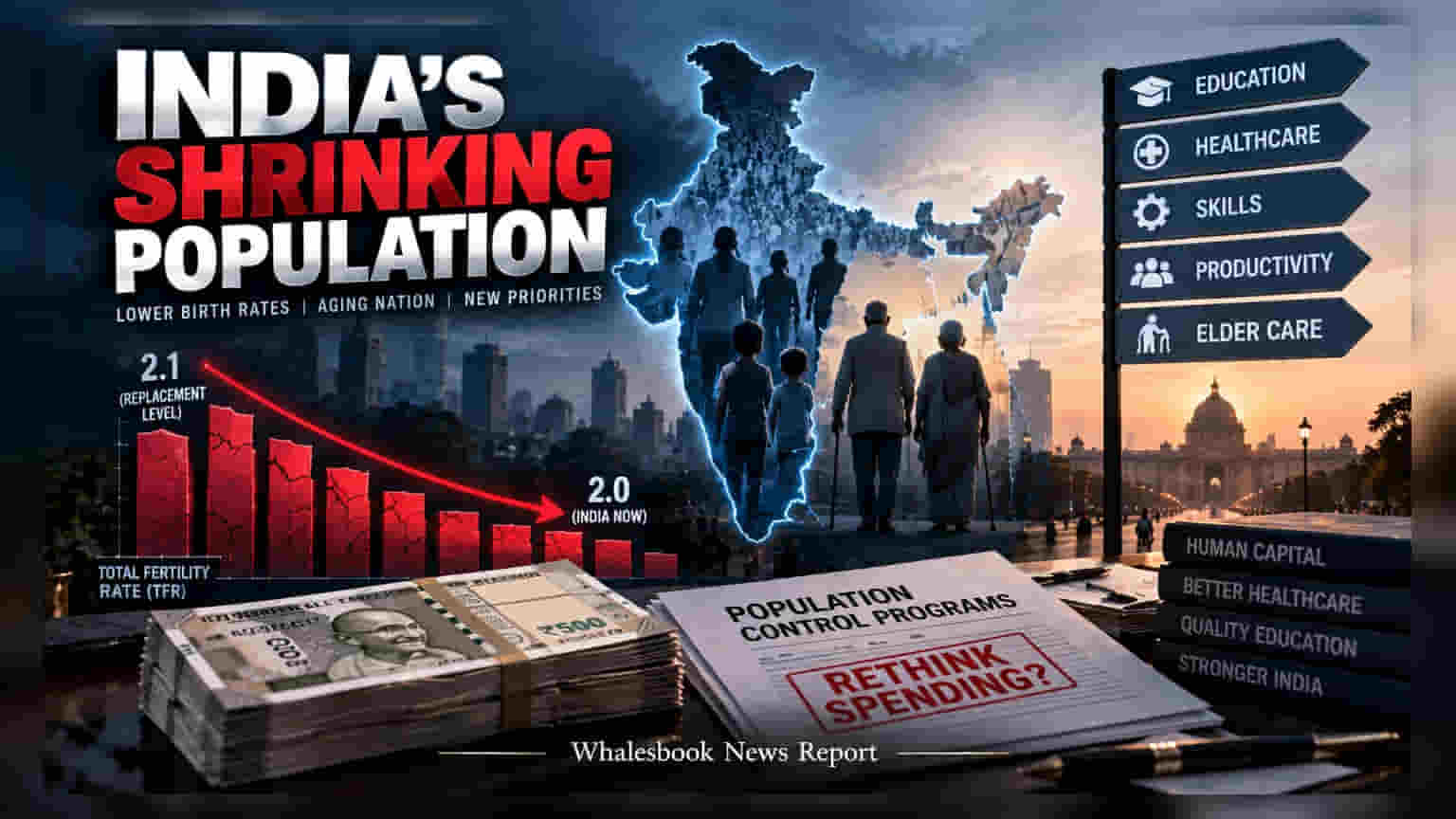
India’s fertility rate has dropped below the replacement level of 2.1, marking a major demographic shift. Sanjeev Sanyal of the Economic Advisory Council argues that continuing legacy population control programs, such as state-led sterilization, is now an inefficient use of public resources. The focus is expected to shift toward human capital development to prepare for a future of aging demographics.
India has reached a significant turning point in its demographic history. Recent data from the National Family Health Survey (NFHS-5) confirms that India’s Total Fertility Rate (TFR) has declined to 2.0, falling below the replacement level of 2.1 required to maintain a stable population over the long term. This milestone indicates that the country is moving past the era where rapid population growth was the primary concern for policymakers.
Sanjeev Sanyal, a member of the Prime Minister's Economic Advisory Council, has pointed out that while the demographic reality has changed, the government’s administrative machinery has not kept pace. He noted that the state continues to spend thousands of crores on population control programs that may no longer be necessary. In many instances, local administrative departments are still operating under directives to promote sterilization and other birth-control measures, a legacy approach that Sanyal describes as misaligned with current demographic data.
For example, Sanyal highlighted that in states like Andhra Pradesh, a significant portion of married women are still sterilized. Critics argue that continuing to dedicate taxpayer money and administrative bandwidth to these programs is an inefficient use of resources that could be better directed toward areas like education, healthcare, and skill development.
This shift brings India into a trajectory similar to other major Asian economies. China is already grappling with a shrinking workforce, with projections suggesting a significant population decline in the coming decades. Similarly, countries like Japan and South Korea have long dealt with the economic impacts of a rapidly aging population and a shrinking labor pool. For India, the challenge is to avoid the mistakes of the past and prepare for the long-term economic implications of this transition.
The most important takeaway for the economy is the need to pivot from managing population numbers to enhancing human capital. As the fertility rate declines, the working-age population will eventually plateau and then shrink. To maintain economic growth, India will need to focus on increasing productivity, investing in better education, and improving the quality of the workforce rather than containment.
Investors and policymakers are likely to watch how the government reallocates resources from these legacy programs in the coming Union Budgets. The key monitorable will be whether funds currently tied to outdated population control measures are shifted toward tangible infrastructure for healthcare, elder care, and advanced educational initiatives, which are essential for navigating an aging demographic profile.