 Whalesbook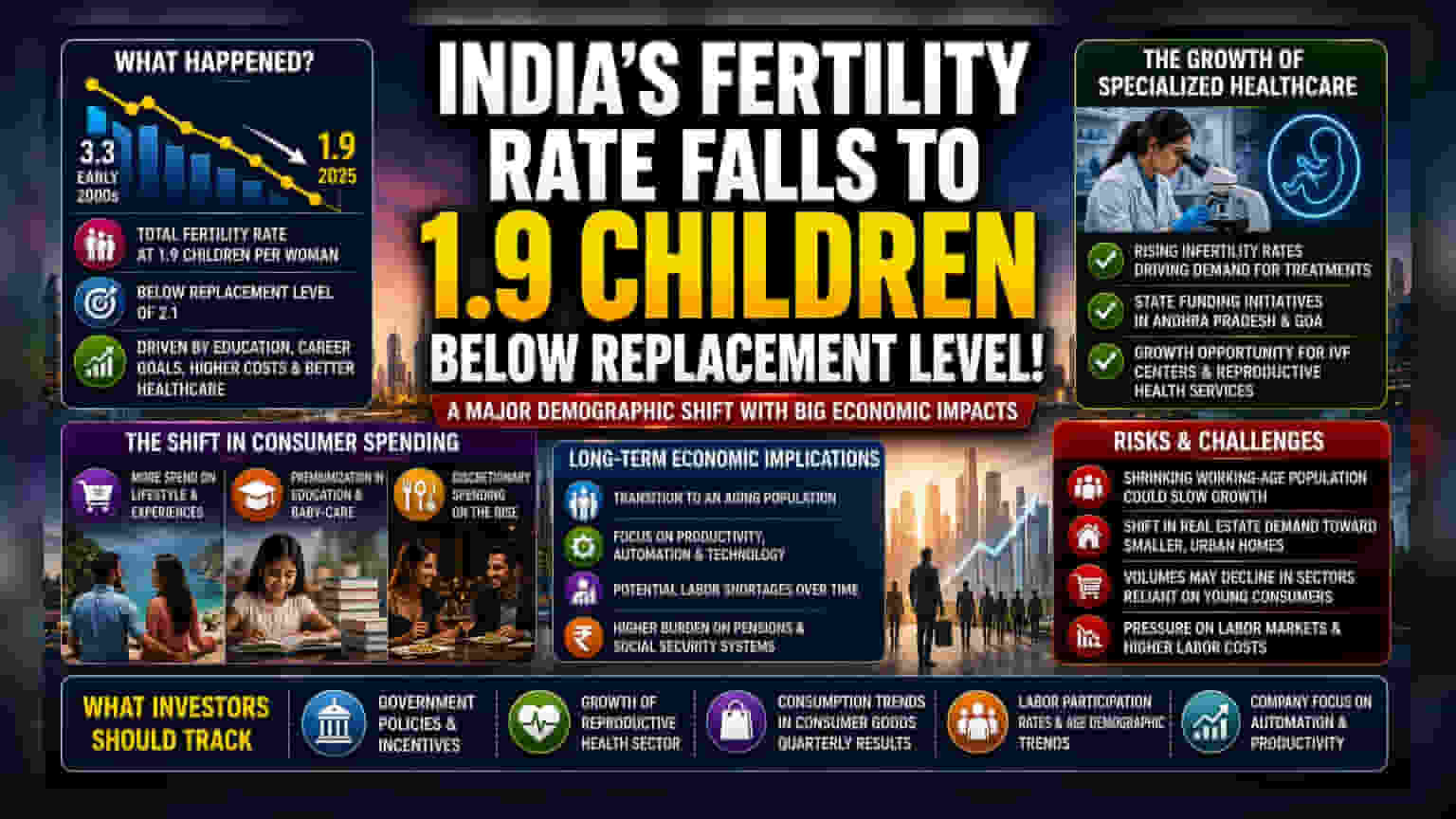


India’s total fertility rate has dropped to 1.9, falling below the replacement level of 2.1. This demographic shift indicates long-term changes in consumer behavior, labor market dynamics, and demand for specialized services. Investors should monitor how these trends influence sectors such as premium consumer goods, reproductive healthcare, and urban housing, as the nation moves from a period of high population growth to a more mature economic cycle.
What Happened
India’s total fertility rate has declined to 1.9 children per woman, according to recent data. This figure is significant because it has fallen below the 2.1 threshold known as the "replacement level," which is the rate required for a population to remain stable over the long term. This decline is a sharp departure from the rates of 3.3 observed in the early 2000s, reflecting a fundamental change in the country's demographic structure. Factors such as improved access to education, shifting career goals, rising living costs, and better access to healthcare have all played a part in this trend.
The Shift in Consumer Spending
For investors, the decline in fertility rates translates to a potential long-term shift in consumer demand. As young families have fewer children, the nature of household spending is changing. There is a noticeable trend where disposable income is increasingly directed toward lifestyle choices, such as travel, dining out, and experiences, rather than child-rearing expenses. This suggests a potential growth avenue for the discretionary spending sector. Furthermore, the focus of the education and baby-care sectors may shift from volume-driven products to high-value, premium segments as parents prioritize quality over quantity in their spending decisions.
The Growth of Specialized Healthcare
With the report noting rising infertility rates, the demand for specialized reproductive healthcare has become a critical area of interest. States like Andhra Pradesh and Goa are already exploring state-funded support for fertility treatments. This points toward a growing business opportunity for clinics, IVF centers, and companies involved in reproductive health services. As the society moves toward later parenthood, the necessity for medical interventions in family planning is expected to increase, creating a dedicated market for health service providers.
Long-Term Economic Implications
From an economic standpoint, India is transitioning from a period of rapid population expansion to a more mature phase. A lower fertility rate typically leads to an aging population over time, which can influence labor markets. While the immediate impact is a focus on the current working-age population, long-term trends suggest that companies will need to rely more on productivity improvements rather than just a large pool of labor. This creates a need for businesses to invest in automation and technology to maintain margins if labor costs begin to rise due to a shrinking supply of young workers.
Risks and Challenges
Investors should be mindful that a declining birth rate is not without risks. As the population ages, the burden on pension systems and social security may increase. Additionally, if the working-age population begins to shrink, it could pose a challenge to economic growth rates. There is also the potential for real estate demand to change, as the requirement for large, family-sized homes may see a shift toward smaller, urban, and lifestyle-oriented housing units. Companies in sectors reliant on high volumes of young consumers may eventually face headwinds if demand growth slows.
What Investors Should Track
Moving forward, the primary monitorables for investors include government policy updates regarding demographic incentives and the evolution of the healthcare sector. Tracking consumption patterns in quarterly results for consumer goods companies will be important to see if the shift toward premiumization continues. Additionally, monitoring the growth rates of specialized health service chains and changes in labor participation data will provide a clearer picture of how these demographic changes are shaping the broader economy.