

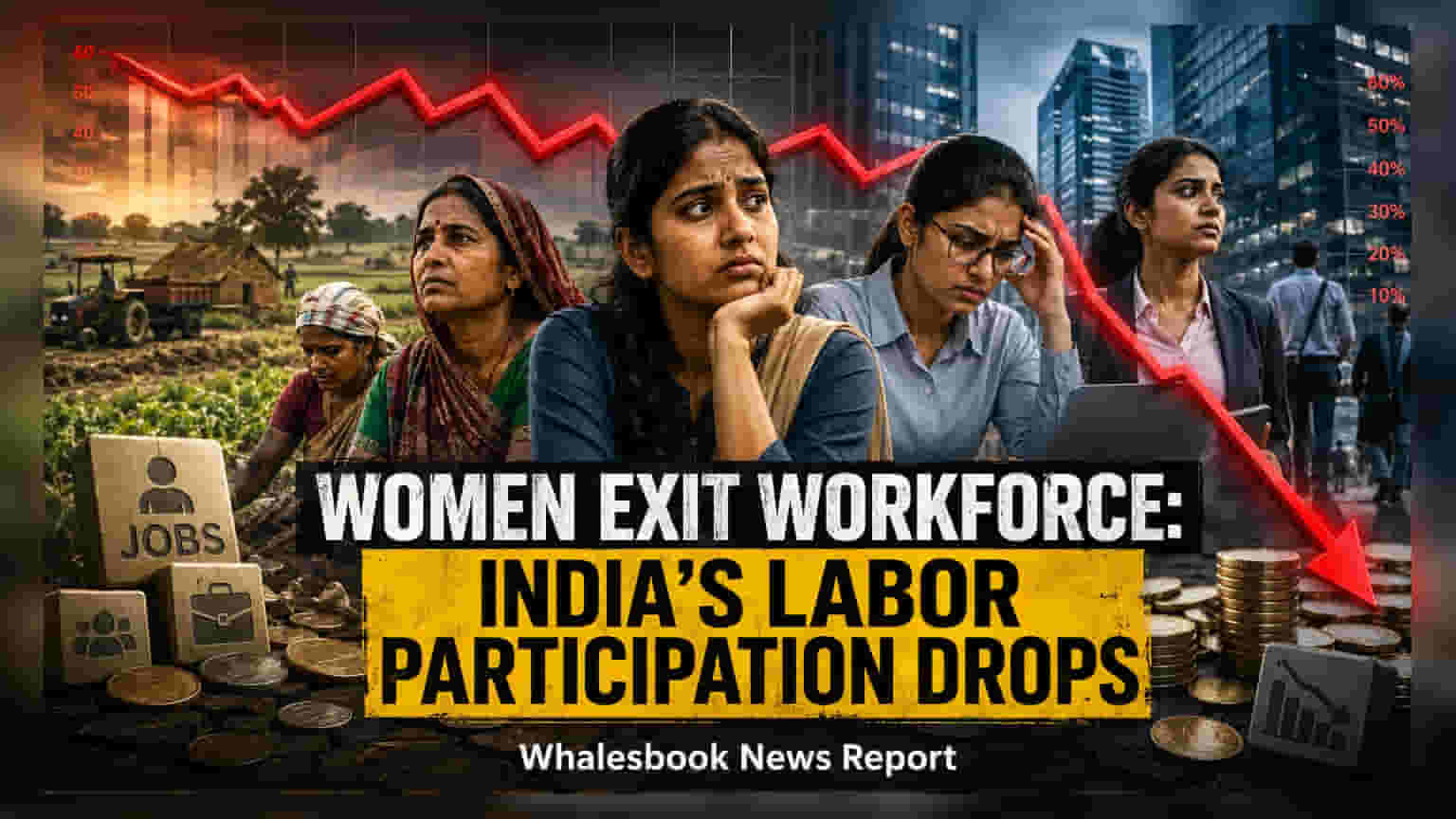
India’s female labor force participation rate declined to 33.2% in the April-June 2026 quarter, down from 34.7% in the previous period. The drop, especially in rural areas, raises questions about the impact on long-term household income and consumption growth. Investors may track how this trend affects spending power and broader economic activity in the coming months.
The latest economic data for the first quarter of fiscal year 2027 reveals that India's Female Labor Force Participation Rate (FLFPR) slipped to 33.2% during April-June 2026. This is a noticeable decline from the 34.7% recorded in the preceding quarter. This metric is a key indicator for economists and market analysts because it measures the percentage of working-age women who are either employed or actively looking for a job.
Impact on Household Income and Consumption
For the broader economy, a lower participation rate can act as a drag on growth potential. When more women participate in the workforce, household incomes typically rise, which boosts spending on everything from consumer staples to durable goods and housing. A decline in this rate suggests that a significant segment of the population is not contributing to the formal or informal labor market, which could potentially limit the growth of domestic consumer demand.
Labor Market Disconnect
The economic data also highlights a broader mismatch in the job market. While the share of regular wage and salaried jobs has seen a slow, steady increase—reaching 16.1% in rural areas and 49.3% in urban areas—the overall unemployment rate has ticked up to 5.4%.
A critical monitorable for investors is the rising youth unemployment rate, which reached a series-high of 15.9% in the same quarter. This creates a challenging environment where the economy is trying to absorb a young population into the workforce, but the available jobs may not be matching the demand or the skills of the applicants. This could lead to social or economic pressure if left unaddressed.
Shifting Employment Patterns
Despite the dip in participation, there are signs of a structural shift in how people work. The reliance on agriculture as a primary source of rural employment is slowly decreasing, with more workers moving into the manufacturing sector. This shift is generally viewed as a positive development for long-term industrial productivity. However, the benefits of this transition are currently being offset by the overall drop in female participation, particularly in rural India, where participation rates fell to 37.2% from 39.2% in the previous quarter.
What Investors Should Monitor
Investors should look beyond the headline numbers and monitor consumer spending patterns in the coming quarters. If the decline in participation persists, it may weaken the growth of discretionary spending, which is vital for sectors like fast-moving consumer goods (FMCG), retail, and automobiles. Additionally, the ability of the manufacturing and services sectors to create enough jobs to lower the 15.9% youth unemployment rate will be a key indicator for the health of India's demographic dividend in the coming fiscal years.