

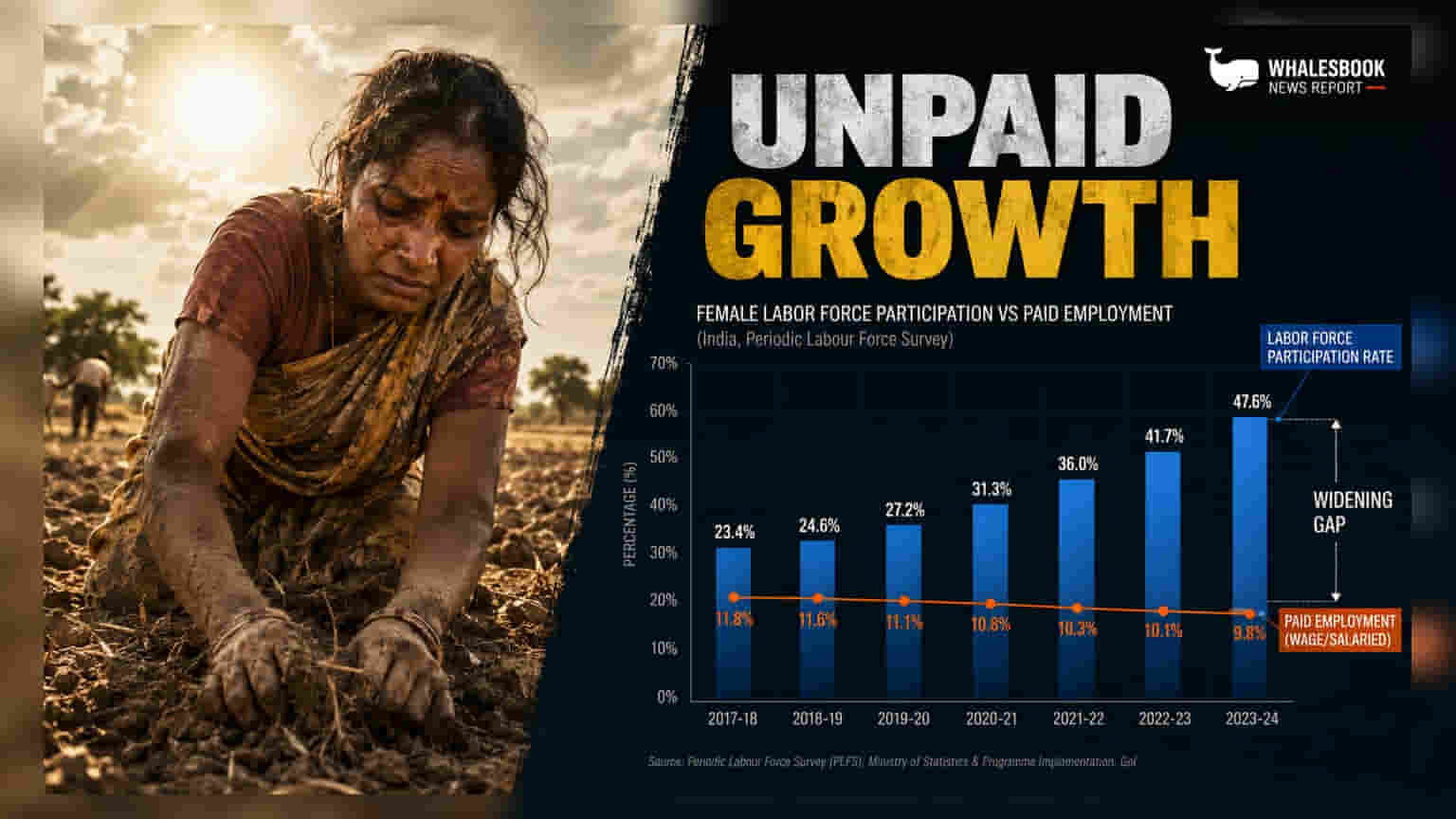
India's female labor force participation is rising, but much of the growth is concentrated in unpaid family agricultural work. This trend suggests women are filling roles left by migrating men rather than entering new paid employment. The shift highlights a quality gap in job creation, with data showing women spend significantly more time on unpaid activities compared to men.
A Shift Toward Unpaid Labor
Recent data highlights a sharp increase in India's female labor force participation, yet the nature of this employment raises questions about long-term economic gains. A report from the Indian Council for Research on International Economic Relations (ICRIER) reveals that the share of women in agricultural employment rose from 27% in 2017-18 to 44% by 2025. Instead of entering new, paid positions, women are increasingly filling vacancies in family-owned farms left by men who have migrated to sectors like construction. This transition is characterized largely as unpaid family labor, rather than a move toward salaried employment.
The Gender Gap in Construction
While the construction sector has seen robust demand-side growth, with gross value added rising at an average annual rate of 7.8% between 2018 and 2025, women have remained largely excluded from this expansion. Government records show that nearly 40% of new rural male workers moved into construction roles, which typically provide direct cash wages. In contrast, rural women have seen their employment growth dominated by self-employment and unpaid family assistance, widening the divide in income-generating opportunities between genders.
Challenges in Urban Job Markets
Urban labor markets reflect a different but equally complex challenge. Although salaried jobs have been a primary driver of urban employment growth, there has been a concerning rise in the share of casual, low-paying labor among women. This trend persists even as urban service and industrial sectors expand. Analysts suggest that the rate of formal job creation in these high-growth sectors has failed to keep pace with the increasing number of women entering the workforce, leaving many to settle for informal, low-wage arrangements.
Hidden Unemployment Realities
National unemployment figures often mask the specific difficulties faced by women. While overall male unemployment has declined, the number of unemployed women has grown. Recent quarterly data indicates an upward tick in the female unemployment rate, suggesting that the current labor market is struggling to absorb new female job seekers effectively. This disconnect between headline economic growth and individual labor market outcomes remains a significant barrier for policymakers.
Time Poverty and Wage Gaps
The Economic Survey 2025-26 points to structural issues that continue to limit women's participation in the paid economy. Women spend an average of 363 minutes per day on unpaid activities, compared to 123 minutes for men. Furthermore, 41% of women aged 15-59 are engaged primarily in caregiving duties, which drastically reduces the time available for formal employment. Even when employed, systemic pay gaps persist, as women’s wages remain significantly lower than men's across many sectors, reinforcing the cycle of limited financial independence.