 Whalesbook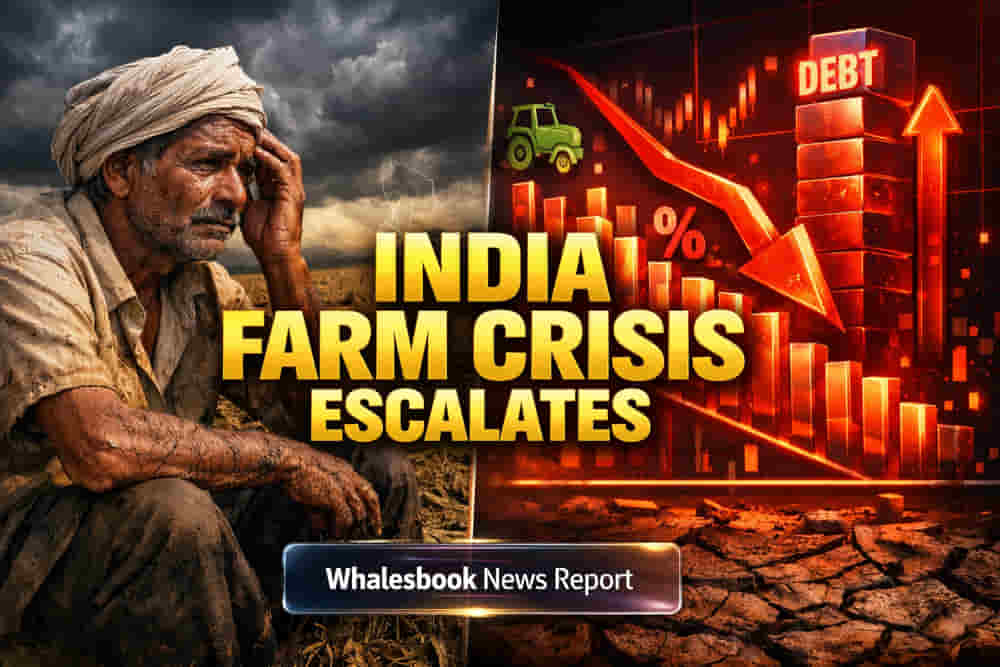
Rural Exodus Deepens
A veteran farmer's stark declaration that "Nobody wants to live in the village" encapsulates the first quarter of this century's devastation for rural India. In Yavatmal's Bhamb Raja, once a model village, half the population has migrated over 25 years. Youth shun farming, unable to find spouses or alternative employment, while even large farmers look to sell land and leave.
Economic Divide Widens
The crisis extends beyond Maharashtra, mirroring struggles in poorer states. The World Inequality Lab reports a stark divide: the top 1% capture 22.6% of national income and 40% of wealth, while the bottom 50%, largely rural peasantry, receive just 15% of income. Agriculture still supports nearly half the workforce but contributes only 16-18% to the GDP, with dwindling per-acre returns and rising labor wages outpacing farm income.
Climate Shocks Trigger Systemic Crisis
Structural fragility in agriculture has been amplified into a systemic crisis by climate change. India experienced extreme weather events on most days in 2025, with prolonged heat waves and erratic rainfall causing widespread crop damage through floods, droughts, and unseasonal rains. These shocks now repeatedly hit within a single agricultural cycle, as evidenced by 30 farmer suicides in Solapur's Kari village over 18 months, many victims in their 20s.
Small Farmers: A Question of Survival
This relentless pressure forces an uncomfortable question: are small farmers meant to survive in India's future food system? Despite policy affirmations of their importance for food security, local economies, and diverse agro-ecological management, the ground reality suggests otherwise. This inquiry will explore whether India chooses to protect its most vulnerable producers against unprecedented heat, volatility, and inequality.