 Whalesbook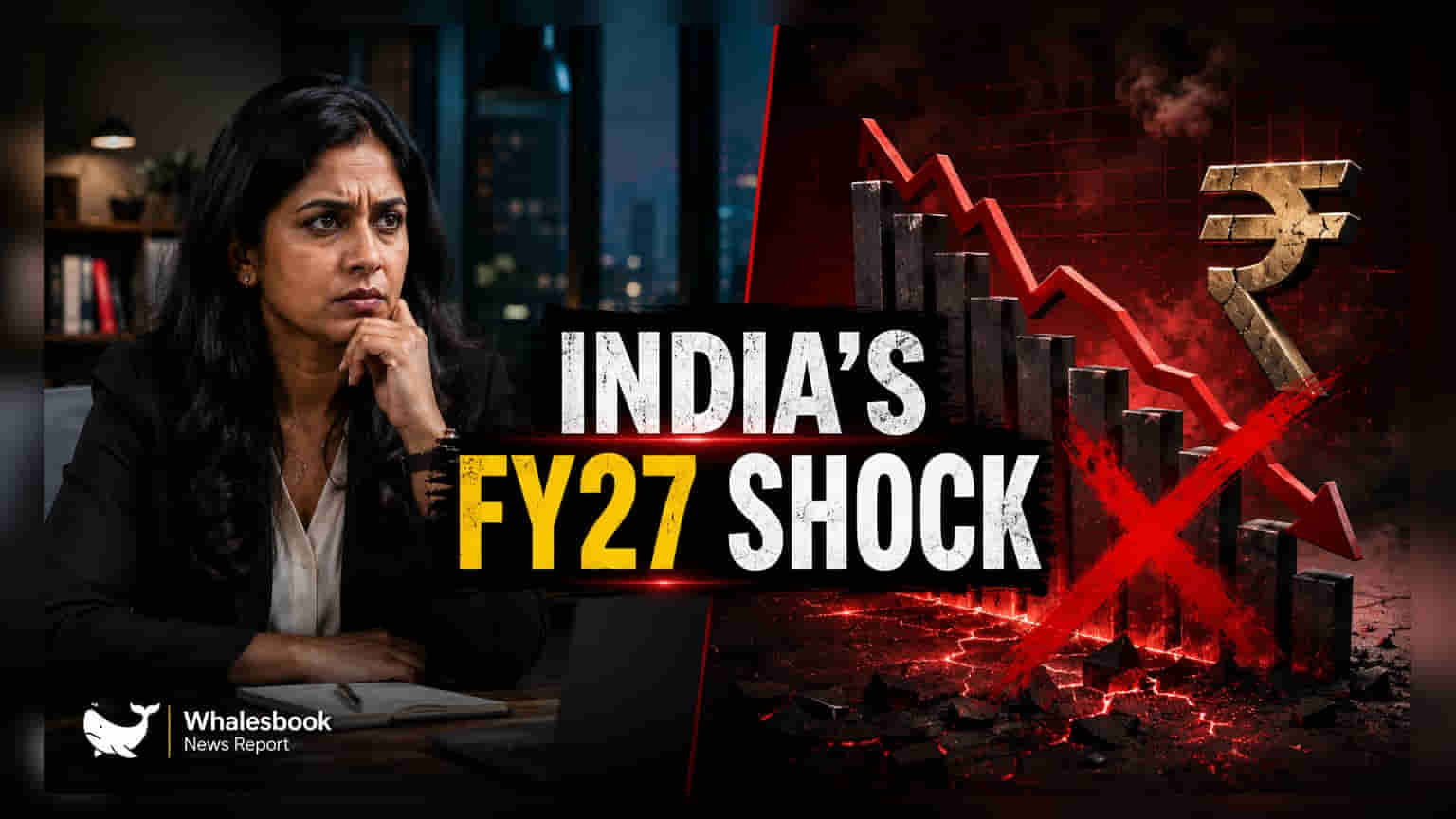


India's Economic Outlook: Growth Slowdown and Inflation Concerns
The Reserve Bank of India (RBI) faces a challenging economic landscape, with forecasts suggesting a slowdown in growth coupled with rising inflation. This situation may prompt the central bank to implement interest rate hikes to maintain price stability while trying to avoid stifling economic momentum. External balance pressures add another layer of complexity for the upcoming fiscal year.
Growth Moderation Amidst Inflationary Headwinds
HSBC anticipates India's Gross Domestic Product (GDP) to grow by approximately 6% in fiscal year 2027, a notable decrease from the estimated 7.5% in FY26. This deceleration is primarily attributed to persistent elevated energy costs and their impact on consumer demand, further exacerbated by rising inflation. Consumer Price Index (CPI) inflation is forecast to average 5.6% for FY27. Key inflation readings are expected to breach the Reserve Bank of India's (RBI) upper tolerance limit of 6% for several months beginning in September. HSBC's risk assessment includes an average oil price of $95 per barrel for the current year, a significant factor contributing to inflationary pressures.
Measured Monetary Policy Response
Despite the inflationary outlook, HSBC projects a measured monetary tightening by the RBI, forecasting two rate hikes, likely in the December and March quarters. This approach signals the central bank's intent to balance inflation control with the need to support economic growth. The RBI's policy decisions will be closely watched as they navigate these competing economic forces.
External Vulnerabilities and Currency Pressures
India faces considerable pressure on its external balances, characterized by a widening balance of payments (BOP) deficit projected around $65 billion for the current year. This deficit, coupled with global bond market volatility and the cost of energy imports, is exerting downward pressure on the Indian rupee. In response, policymakers may need to consider a controlled depreciation of the currency, utilizing foreign exchange reserves to manage disorderly movements. Allowing fuel prices to adjust organically could also help moderate oil demand and reduce import costs.
Strategic Policy Interventions and Weather Risks
To bolster India's external position in the medium term, faster progress on trade agreements with regions such as Europe and the UK, alongside increased foreign direct investment, are suggested. Weather patterns present a significant risk, with the potential for a strong El Niño event leading to heatwaves that could severely impact economic activity, particularly in agriculture and consumption, more than a weak monsoon. This highlights the interconnectedness of climate and economic stability.
Sectoral Impact and Competitor Analysis
The projected economic slowdown and inflationary environment in India could impact various sectors, including manufacturing and services, due to dampened consumer spending and increased input costs. Compared to peers in Southeast Asia which might be experiencing more robust growth, India's dual challenge of inflation and external deficits presents a more complex scenario for monetary policy. For instance, while other emerging markets may focus on growth-led rate cuts, India's RBI is constrained by persistent inflation. The reliance on imported energy makes India particularly susceptible to global oil price fluctuations, a factor that competitors with greater domestic energy resources may not face to the same extent.
Risk Factors and Bear Case
The primary risks to India's economic outlook stem from the persistence of high energy prices and the potential for a severe El Niño event impacting agricultural output and consumption. A larger-than-anticipated BOP deficit could further strain the rupee, leading to increased imported inflation and necessitating more aggressive monetary tightening, which in turn could stifle growth. The effectiveness of policy recommendations, such as allowing fuel price adjustments and accelerating trade deals, will be crucial in mitigating these risks. Failure to manage these external pressures could lead to a more severe economic downturn than currently forecast.