

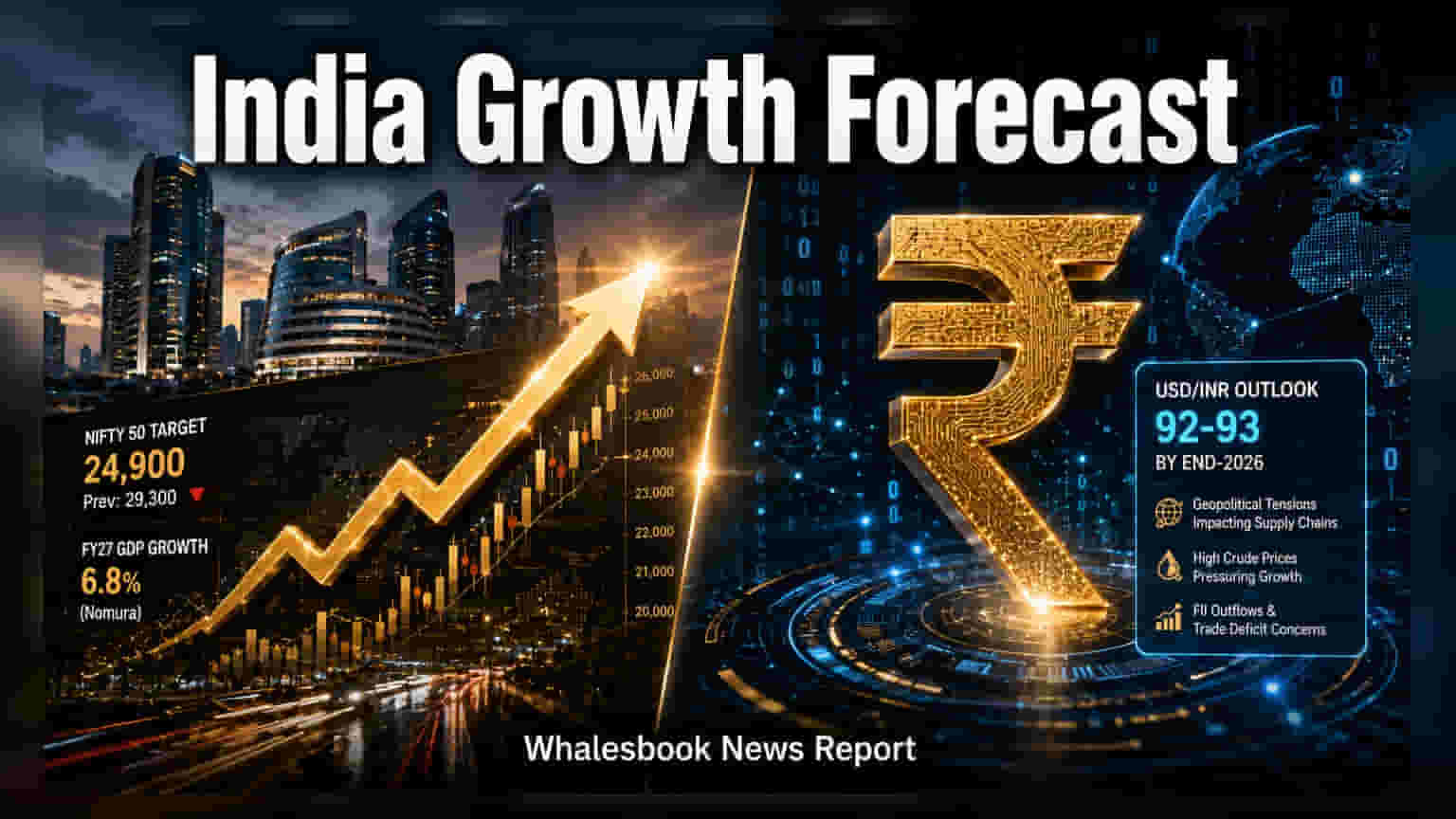
Nomura has revised India's fiscal year 2027 GDP growth forecast to 6.8% citing geopolitical instability in West Asia. Concurrently, analysts from Fitch Ratings and the EAC-PM indicate the rupee may trade in the 92–93 range against the dollar. Investors are monitoring rising crude oil prices and persistent foreign capital outflows as key pressure points.
The economic outlook for India in fiscal year 2027 has undergone revisions as global geopolitical tensions impact supply chains and commodity pricing. Financial institutions have adjusted their growth expectations to account for ongoing instability in West Asia, which has disrupted logistics and kept crude oil prices elevated.
Nomura recently adjusted its FY27 GDP growth estimate for India to 6.8%. This revision reflects a shift toward a more cautious assessment compared to earlier in the year. The brokerage's research highlights that while domestic resilience has been a theme, the broader global environment—marked by geopolitical strain—is creating friction for growth targets.
Currency markets have also reacted to these macro pressures. The Indian rupee has faced downward pressure, with institutions including Fitch Ratings and the Chairman of the EAC-PM suggesting the currency may stabilize in the 92–93 range against the dollar by the end of 2026. This outlook is linked to the broader impact of persistent foreign capital outflows and trade deficit challenges that have emerged throughout the year.
Financial markets have factored these economic changes into their projections. Nomura lowered its December 2026 target for the Nifty 50 to 24,900, reduced from a previous estimate of 29,300. This adjustment highlights concern among analysts regarding potential downside risks to corporate earnings if high energy costs persist for an extended period.
The underlying economic momentum remains a subject of focus for investors. While there is interest in India's role within global supply chains, current risks—such as the potential for further currency volatility and the impact of high interest rates on corporate balance sheets—are influencing sentiment. The primary monitorables for the coming months will be the stability of global energy markets, the trajectory of foreign investment flows, and any updates to the Reserve Bank of India's monetary policy framework as it manages these external economic factors.