 Whalesbook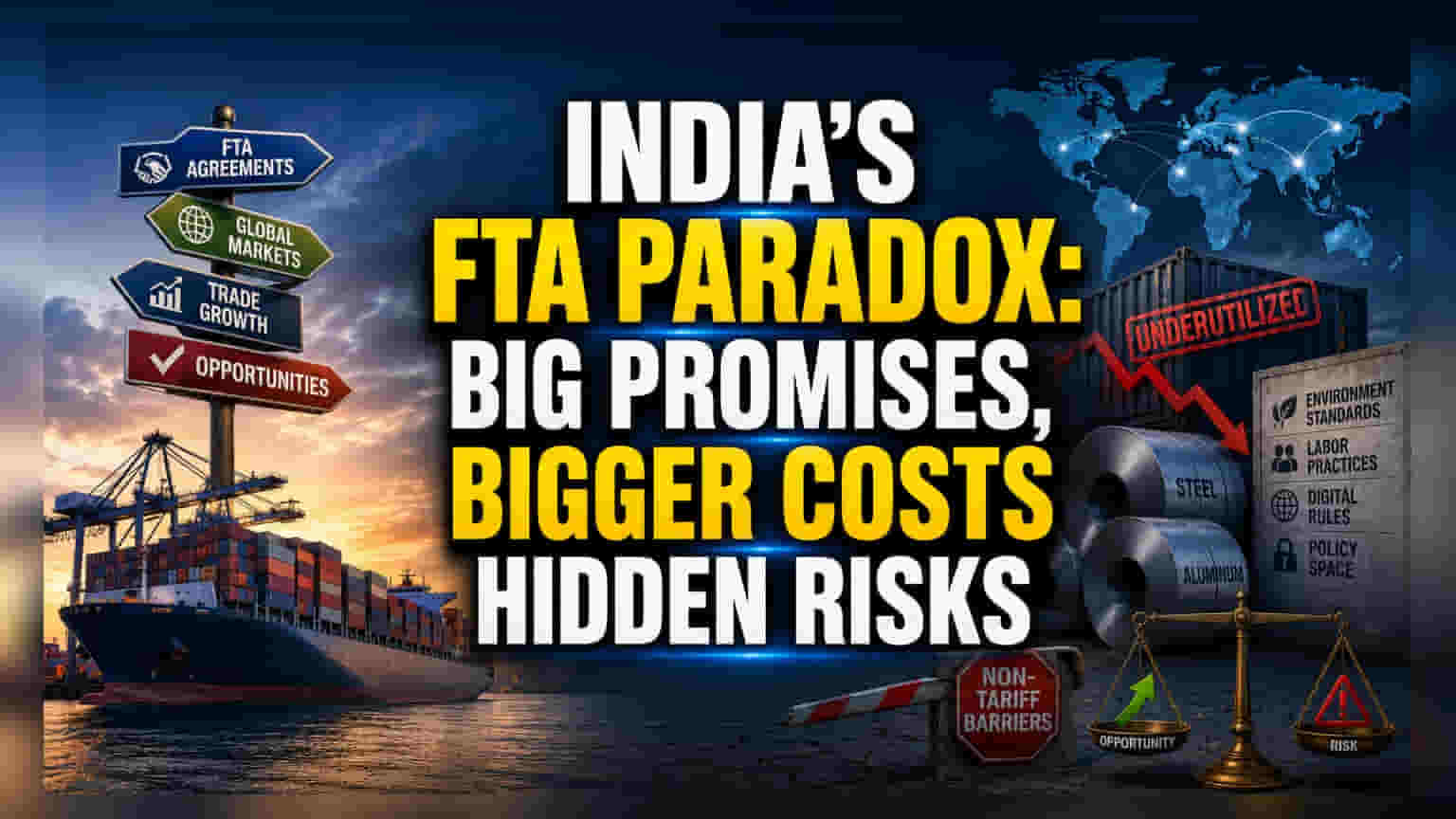


The Institutional Friction of Modern Trade
Trade strategy has become a double-edged sword for the Indian economy. While the official narrative prioritizes global integration through a broad network of fifteen implemented agreements, the operational reality suggests a systemic mismatch. The core issue lies not just in the volume of goods, but in the structural inability of domestic players to leverage these concessions effectively. When utilization rates stagnate below thirty percent, the theoretical promise of market access dissolves into a bureaucratic exercise that favors established entities over the broader industrial base.
Competitive Disadvantages and Inverted Duties
Beyond mere statistics, the current FTA architecture creates a localized competitive disadvantage that hampers domestic manufacturing. By allowing finished goods to enter duty-free while maintaining higher tariff walls on essential raw materials like steel and aluminum, the government has inadvertently incentivized an inverted duty structure. This creates a margin squeeze for local producers who must contend with higher input costs while competing against zero-tariff imports. The resulting trade deficit, which exceeded fifty billion dollars with partners like the UAE and EFTA last year, is not merely a consequence of consumption patterns but a direct byproduct of this misaligned tariff logic.
The Sovereignty Cost of New-Age Pacts
Newer agreements are increasingly shifting from simple tariff reduction to complex regulatory harmonization. Provisions covering environmental standards, labor practices, and digital governance are acting as proxies for non-tariff barriers, effectively limiting the government’s capacity to deploy domestic industrial policy. This encroachment on policy space represents a subtle but significant surrender of regulatory control, where partners in developed economies leverage market access to enforce legal standards that may not align with India’s immediate developmental priorities. The demand for an independent impact-monitoring authority reflects a growing recognition within analytical circles that current oversight mechanisms are insufficient to capture these non-monetary costs.
The Structural Risk Assessment
The long-term risk profile for India’s trade stance is marked by persistent margin compression for export-oriented sectors and the potential for a permanent reliance on imported machinery. As global trade shifts toward a more fragmented model, the failure to address these structural deficits could exacerbate the current account balance. Unlike regional rivals that have managed to synchronize trade openness with robust domestic supply chains, the Indian model faces a scenario where compliance burdens keep small-to-medium enterprises on the sidelines, leaving only the largest players to absorb the costs of navigating these complex, yet underperforming, international frameworks.