

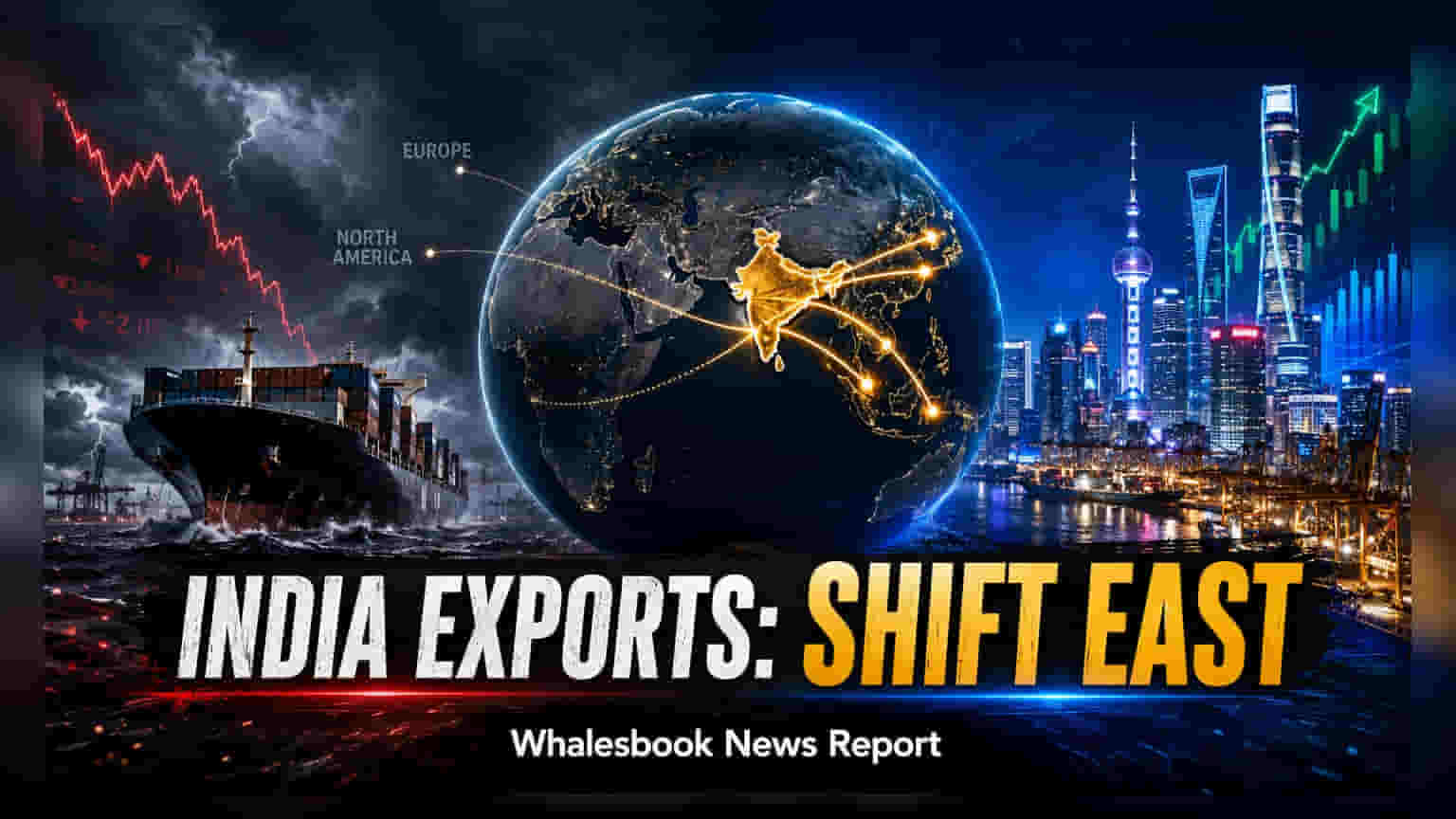
India’s merchandise exports grew 15.9% to $129.32 billion in Q1 FY27, driven by a surge in demand from ASEAN and North East Asian markets. While this diversification offers resilience against Western economic slowdowns, investors are keeping a close watch on the widening trade deficit, which hit a six-month high in July.
India’s export strategy is undergoing a clear geographical shift. During the first quarter of the 2026-27 fiscal year, the country’s merchandise exports reached $129.32 billion, reflecting a 15.9% year-on-year growth. This expansion was not evenly spread across global regions; instead, it showed a strong tilt toward Asian and emerging economies, marking a move away from a heavy reliance on traditional Western partners.
ASEAN and North East Asia Lead the Growth
The most significant trend in the April-June 2026 quarter was the explosive demand from the Association of Southeast Asian Nations (ASEAN) and North East Asia (NEA). Exports to the ASEAN region surged by nearly 62%, reaching $14.61 billion. This growth was largely supported by increased shipments to key economies like Singapore, Malaysia, and Vietnam. Similarly, North East Asia saw robust growth, with exports expanding significantly as Indian producers tapped into new demand channels.
This trend stands in stark contrast to the performance of traditional trade partners. Exports to NAFTA countries, historically the largest market for Indian goods, grew by only 2%, totaling $28.41 billion. Likewise, exports to European nations saw a modest increase of 6%, reaching $25.05 billion. The data suggests that while demand in the West remains subdued, Indian exporters are successfully capturing market share in faster-growing Asian economies.
Trade Deficit and Economic Risks
While the rise in exports is a positive signal for manufacturing and trade balance, the broader macroeconomic picture remains complex. Despite the strong export performance, India’s merchandise trade deficit reached a six-month high of $31.98 billion in July 2026. This deficit has been driven by a high import bill, particularly in sectors such as crude oil, gold, and electronic goods.
For investors, the widening trade deficit is a critical indicator to track. A higher deficit puts pressure on the Indian rupee and the country's current account balance. Furthermore, while the diversification into Asian markets helps mitigate risks from global trade route disruptions and rising shipping costs, the economy remains vulnerable to global economic uncertainty and volatile demand patterns.
Strategy and Outlook
The push into new markets is partly linked to the increased utilization of Free Trade Agreements (FTAs). Official data shows a rise in the issuance of Certificates of Origin, suggesting that companies are actively leveraging trade pacts to stay competitive. However, the reliance on rapid export growth to achieve annual targets faces challenges, including potential import competition in specific domestic sectors due to these expanding FTA networks.
Looking ahead, market participants will monitor whether the momentum in ASEAN and NEA markets can be sustained against the backdrop of shifting global supply chains. The key monitorable for the coming months will be the trade deficit trend and how currency fluctuations and import costs impact the profitability of export-oriented Indian firms.