 Whalesbook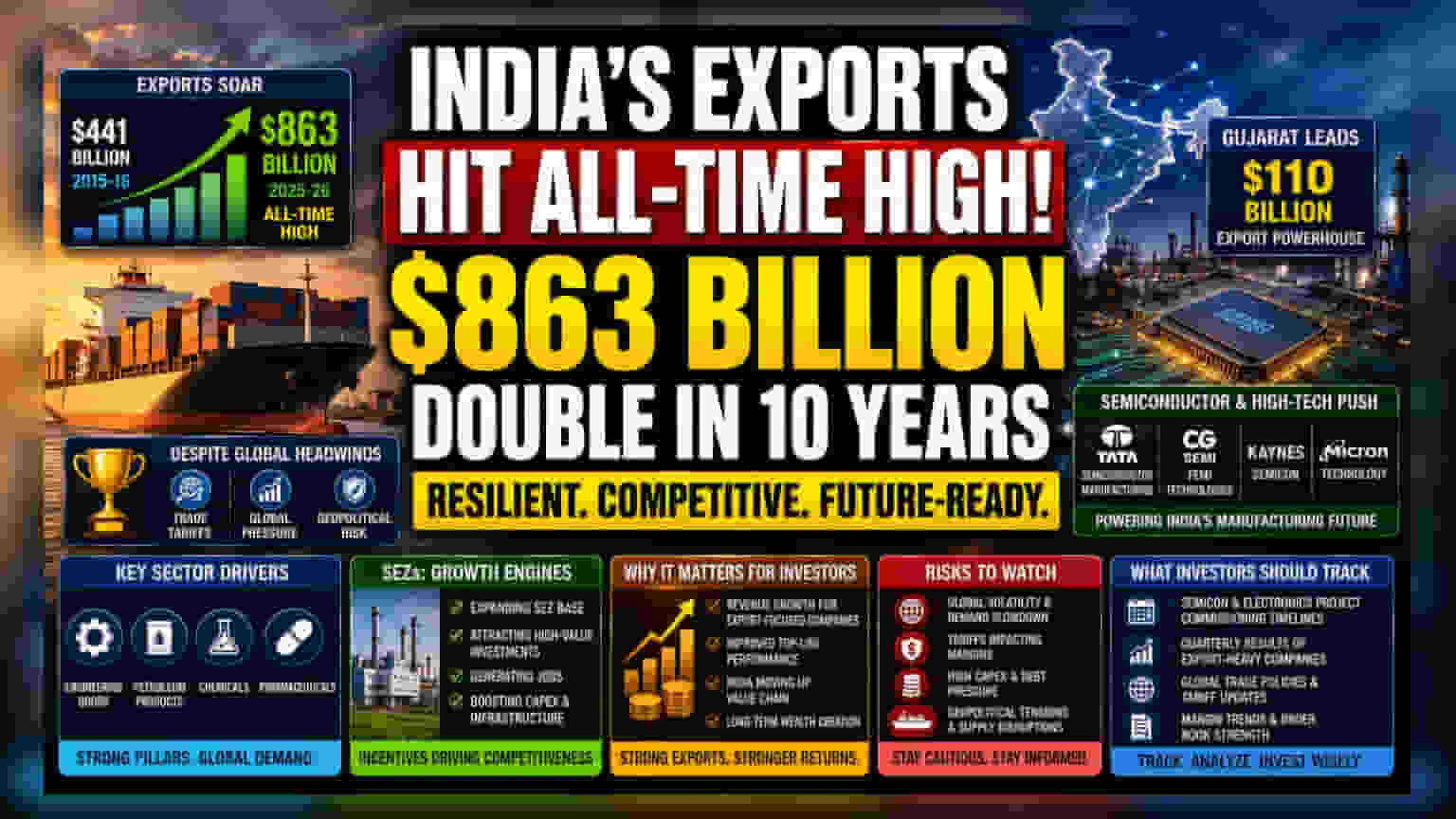


India’s exports reached a record $863 billion in fiscal year 2025-26, doubling in a decade despite global trade uncertainty. This growth, led by sectors like engineering, chemicals, and electronics, highlights stronger manufacturing capabilities. For investors, this trend impacts the earnings potential of export-oriented companies, especially with new semiconductor projects taking shape. We analyze the sector-specific tailwinds, the role of Special Economic Zones (SEZs), and the risks investors should watch in this evolving trade environment.
What Happened
India’s export ecosystem has achieved a significant milestone, with total outbound shipments reaching an all-time high of $863 billion for the 2025-26 fiscal year. This performance represents a major leap from the $441 billion recorded a decade ago, effectively doubling the country's export value over the last ten years. This achievement comes despite ongoing global trade pressure, including new tariff measures from the United States and geopolitical friction in the Middle East. The government noted that this resilience is driven by a mix of established sectors and an emerging focus on high-technology manufacturing.
Why This Matters For Investors
For shareholders, the growth in exports is a key indicator of revenue health for many listed companies. A rising export figure generally signals that companies in sectors like engineering, pharmaceuticals, chemicals, and electronics are finding markets and maintaining competitiveness despite global challenges. When export volumes rise, companies in these segments often see improved top-line growth. Furthermore, the growth in Special Economic Zones (SEZs) suggests that government incentives are successfully driving capital spending among manufacturers. This expansion is critical for companies looking to move up the value chain, particularly in areas like electronics and high-tech hardware, which are currently priority areas for the government.
The Semiconductor And Manufacturing Shift
A major part of this growth narrative is the strategic push toward semiconductor manufacturing. The government has prioritized the development of new SEZs to attract high-value investment. Notably, projects by companies such as Tata Semiconductor Manufacturing, CG Semi Technologies, Kaynes Semicon, and Micron Technology are part of this ecosystem. For investors, this shift is significant because it represents a move toward import substitution and higher-value production. These projects involve large capital spending, which, if executed successfully, could alter the long-term revenue profile of these companies and their supply chain partners.
Sector Drivers And Regional Focus
Several industries have been consistent contributors to this export milestone. Engineering goods, petroleum products, chemicals, and pharmaceuticals remain the primary pillars of India’s export basket. Gujarat has emerged as a particularly strong hub, contributing approximately $110 billion to the total outbound shipments. The state’s focus on SEZ development has created massive employment opportunities and established a robust industrial base. This regional concentration matters because it indicates where the bulk of industrial capacity is being built, affecting the operational efficiency and logistical costs for firms located in these zones.
Risks And Concerns
While the record export number is positive, investors must remain aware of the risks involved. The primary concern is global volatility. Trade tariffs, particularly from major markets like the United States, can create sudden obstacles for Indian exporters, potentially hurting profit margins. Additionally, while the SEZ model is designed to boost production, the success of these zones depends on long-term demand and the ability of companies to manage high capital spending without incurring too much debt. If global demand for engineering or chemical products slows down, companies with high fixed costs could face pressure on their margins. Investors should also note that geopolitical instability in the Middle East poses a risk to supply chains and could lead to cost fluctuations for companies reliant on international logistics.
What Investors Should Track Next
The next important update for shareholders will be the pace at which the new semiconductor and electronics manufacturing plants move from the announcement phase to actual production. Investors may track the commissioning timelines for these projects, as any delay could impact return on capital. Monitoring the quarterly performance of export-heavy companies will also be useful to see if the record national export growth is translating into consistent margin improvements. Additionally, keeping an eye on trade policy changes and global tariff updates will be essential for assessing the future demand for Indian goods in international markets.