

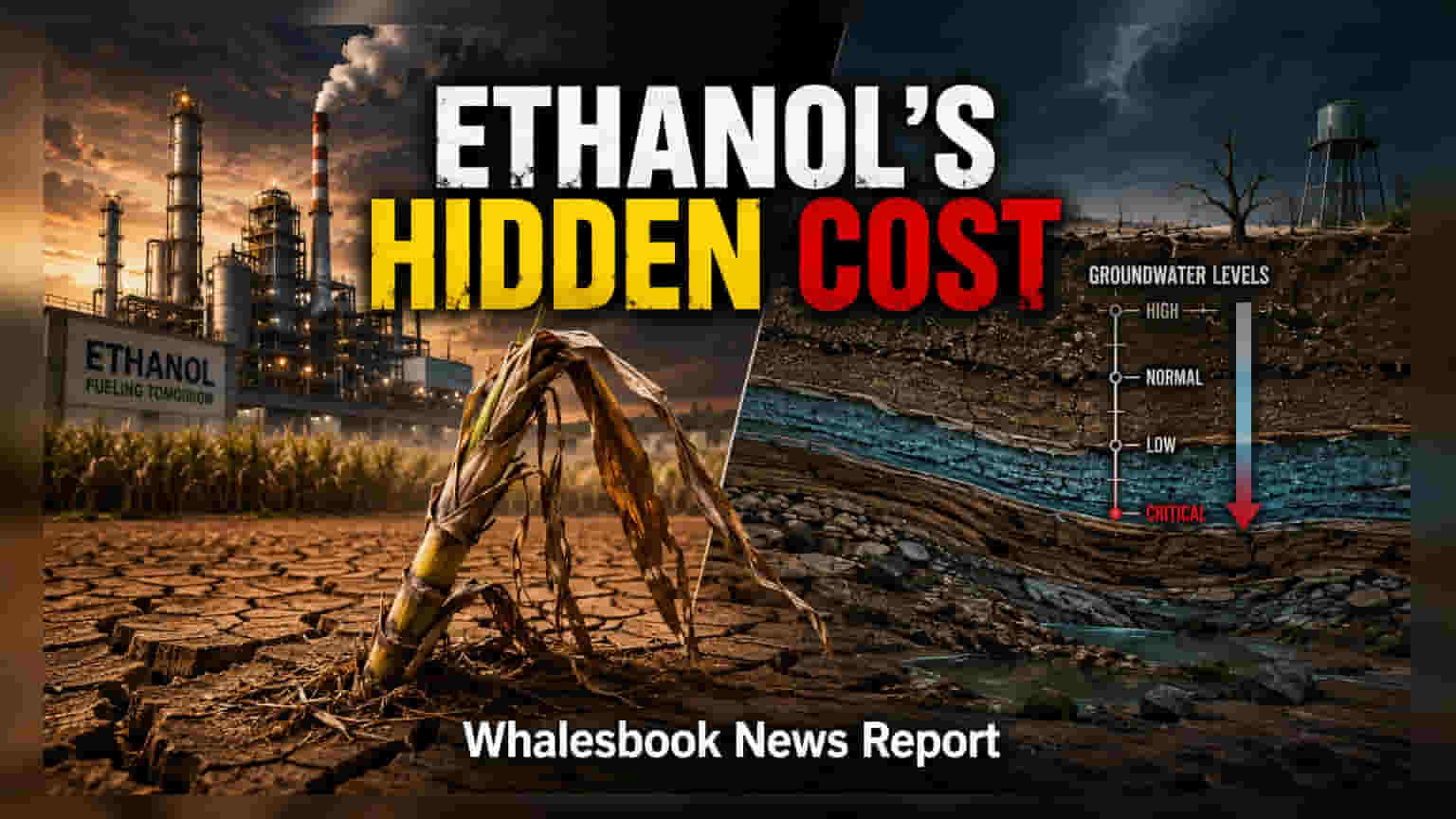
India’s goal to reach 20% ethanol blending in fuel is facing scrutiny over its high water footprint. Because the program relies heavily on water-intensive crops like sugarcane and rice, critics warn it could worsen groundwater depletion. For investors, this creates long-term uncertainty regarding supply chain sustainability and potential shifts in government agriculture policy.
India’s push for a 20% ethanol blending mandate in petrol, while designed to lower the nation’s crude oil import bill, is sparking debate over the environmental cost of its production. The government’s National Policy on Bio-fuels aimed to save approximately ₹40,000 crore annually in foreign exchange, a significant goal given that India spent $137 billion on crude oil imports in FY25. While the program serves as a strategic move to reduce energy dependence and lower carbon emissions, its reliance on food-based feedstock has drawn attention to the strain placed on India’s agricultural resources.
The Resource Challenge of Ethanol Feedstock
Currently, the production of ethanol for the 2025-26 supply year is split between grain-based sources, which make up about 67% of supply, and sugarcane-based feedstocks at 33%. Unlike many developed countries that produce biofuels from non-food waste, India utilizes primary crops including sugarcane, maize, and paddy. The government has stated that the program prioritizes surplus or damaged grains, but the large scale of the E20 mandate means that millions of tonnes of these crops are diverted to fuel refineries annually.
This diversion creates a complex challenge for food security and price stability. With recent fluctuations in maize acreage, producers have at times turned more heavily toward rice, which is among the most water-intensive crops to grow. Agriculture already consumes more than 85% of India’s freshwater, and adding fuel production to this demand has intensified the focus on how water is managed in key agricultural states.
Water Footprint and Groundwater Risks
The water cost of producing ethanol is substantial. Data indicates that a single liter of ethanol derived from sugarcane can have a water footprint of over 3,600 liters. The impact is even higher for rice-based ethanol, where the water usage can exceed 10,000 liters per liter of fuel. With reports from the Central Ground Water Board and the NITI Aayog’s Composite Water Management Index highlighting the depletion of groundwater in major farming belts, the environmental sustainability of the current feedstock model is being closely evaluated.
Implications for Future Policy and Industry
The long-term viability of the ethanol program may depend on a shift in strategy. Analysts and policy groups have suggested that the government could move toward incentivizing less water-intensive crops such as jowar, bajra, and ragi. Furthermore, the industry is seeing calls for mandatory Zero Liquid Discharge systems in distilleries and the adoption of micro-irrigation technologies to reduce the water impact per unit of ethanol produced.
For investors and market observers, the next important development will be how government policy evolves to balance energy goals with resource availability. Future updates on procurement prices for water-efficient crops and potential regulatory requirements for distilleries regarding water usage will be key indicators of how the industry will adapt to these environmental pressures.