 Whalesbook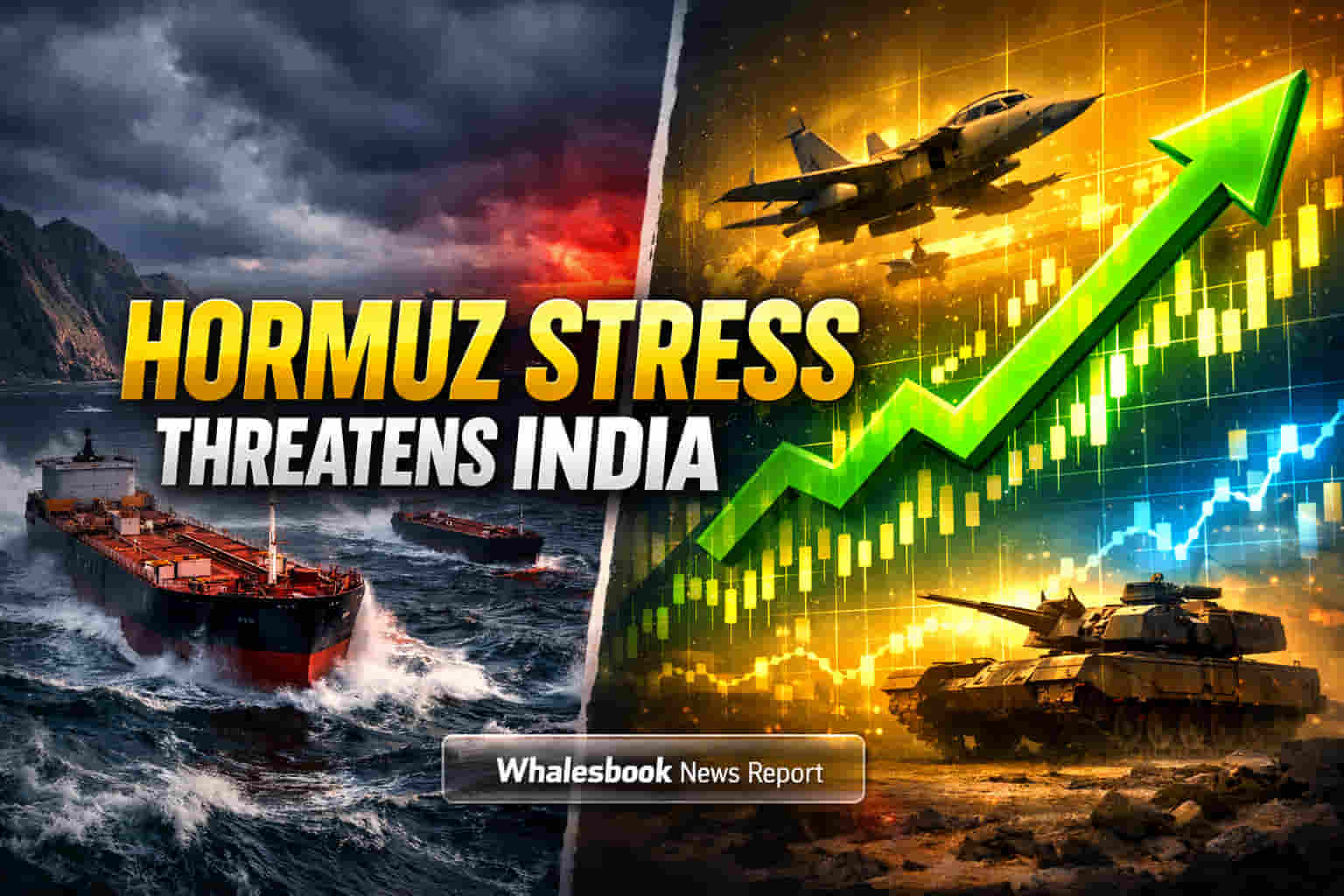


### The Chokepoint Crisis
Geopolitical flashpoints near the Strait of Hormuz are directly testing India's economic resilience. The waterway, crucial for global energy trade, handles approximately half of India's crude oil imports, with similar significant dependencies for Liquefied Natural Gas (LNG) and Liquefied Petroleum Gas (LPG). [5, 6, 35, 38] Recent escalations have pushed Brent crude prices past $72 per barrel, a level last seen in mid-2025, and any prolonged disruption threatens to send prices significantly higher. [30] This situation creates an immediate and uncomfortable policy dilemma for the government. Absorbing higher crude costs directly would likely translate to inflationary pressures, impacting consumer spending and the central bank's monetary policy stance. Conversely, reducing excise duties to shield consumers would directly widen the fiscal deficit, adding strain to public finances which are already targeting 4.4% of GDP for FY26. [11, 15, 20]
### Sectoral Fault Lines and Divergent Fortunes
### The Immediate Impact Zone
Oil marketing companies such as Indian Oil Corporation, Bharat Petroleum Corporation, and Hindustan Petroleum Corporation are on the front lines, absorbing the immediate cost shock. [Source A] With retail fuel prices largely static for over two years, their margins face significant pressure. [Source A] Gas distribution firms like Indraprastha Gas and Mahanagar Gas, which rely on LNG feedstock, are also exposed to price spikes, as the Strait accounts for roughly 15% of global LNG supplies. [Source A] Aviation, exemplified by IndiGo, faces a dual blow: reduced demand on Middle East routes due to potential travel disruptions and higher Aviation Turbine Fuel (ATF) costs tracking crude prices. [Source A] Airports and travel aggregators, along with hospitality firms, are bracing for a slowdown in international tourist arrivals. [Source A] Furthermore, rate-sensitive sectors like banking and non-banking financial companies are vulnerable to tighter financial conditions stemming from elevated inflation or fiscal slippage. [Source A]
### The Strategic Defense Play
In sharp contrast, India's defense sector is poised for sustained growth. Driven by government policy and an increasing allocation towards capital expenditure, companies like Bharat Electronics (BEL), Data Patterns (India), and Hindustan Aeronautics (HAL) are set to benefit. [Source A] BEL, trading at a P/E of 54.78, holds a 'Buy' consensus from multiple analysts. [23, 31] HAL's P/E stands at 29.58, and Data Patterns, despite a high P/E of 72.72, forecasts 20-25% revenue growth. [24, 25, 34] This segment represents a structural play, counter-cyclical to broader economic pressures, as geopolitical instability reinforces the strategic need for domestic defense capabilities.
### The Forensic Bear Case: Structural Vulnerabilities and Policy Tightrope
India's energy security architecture exhibits significant structural weaknesses, particularly concerning LPG and LNG. Unlike crude oil, where strategic reserves and commercial inventories can offer a buffer of up to 60 days, LPG and LNG imports lack comparable deep reserves. [6, 32, 35, 38] Roughly 80-85% of India's LPG and 60% of its LNG needs transit the Strait of Hormuz. [6, 32, 35, 38] Any prolonged closure would severely constrain supply and inflate costs for these essential fuels, impacting household budgets and industrial feedstock. [32] Companies with direct exposure to the Middle East, such as Larsen & Toubro (L&T), which derives over 25% of consolidated revenue from the region, and Newgen Software Technologies, with about 30% of its revenue from the Middle East, face direct commercial risks. [Source A] L&T, currently trading at a P/E of approximately 41, saw its stock open March 2, 2026, with a significant gap down, reflecting immediate market anxieties. [21, 49] The government's challenge is to navigate these dual pressures of energy security and fiscal discipline without triggering a broader economic downturn, a tightrope walk reminiscent of past economic cycles where commodity price shocks led to stagflationary fears.
### Future Outlook
Analysts widely anticipate a short-term market reaction to the Strait of Hormuz tensions, mirroring historical patterns where dips were followed by recovery within a week, provided the disruption is brief. [Source A] However, the underlying vulnerability in India's energy import structure remains a persistent concern. The government's ability to manage inflation and fiscal stability amidst these external shocks will be a key determinant of broader market sentiment. The defense sector, on the other hand, is well-positioned for continued expansion, underpinned by national security imperatives. Meanwhile, companies with diversified revenue streams or significant domestic demand drivers may prove more resilient than those heavily exposed to regional trade or energy price volatility.