

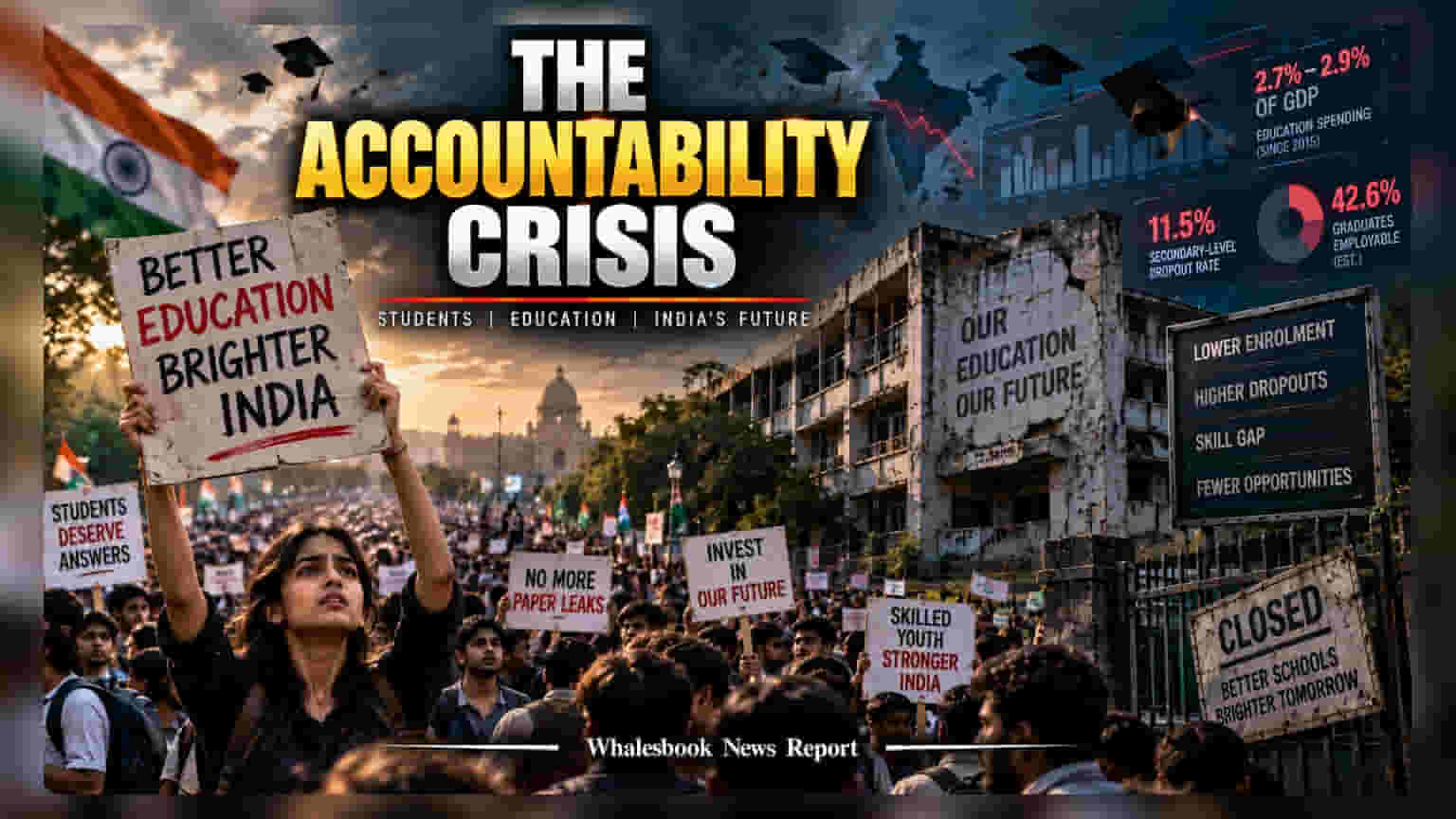
India’s education sector faces structural challenges, with public spending near 2.7% of GDP and a persistent skill gap in the workforce. This disconnect between academic attainment and job readiness threatens to limit the country's long-term economic competitiveness and demographic potential.
India’s education system is facing mounting pressure as structural challenges, including insufficient funding and poor learning outcomes, begin to threaten the country's economic growth prospects. While policymakers have long aimed for a public expenditure target of 6% of GDP, actual spending by central and state governments has remained stagnant between 2.7% and 2.9% since 2015. This consistent gap in capital allocation has led to a decline in school infrastructure and the consolidation or closure of smaller institutions, forcing many students to face significant hurdles in accessing quality education.
The human capital impact is becoming increasingly evident in the labor market. Data from UDISE+ indicates that the national secondary-level dropout rate has reached 11.5%, limiting the number of students who reach higher education. Even among those who do graduate, a significant mismatch exists between academic qualifications and professional requirements. Recent assessments suggest that fewer than half of graduates—approximately 42.6%—possess the skills needed to be immediately employable. For the broader economy, this means a potential productivity bottleneck, as businesses struggle to find qualified talent despite a large supply of degree holders.
The recent public unrest surrounding the NEET-UG 2026 examination has highlighted a growing demand for administrative accountability. Beyond the immediate impact of paper leaks, the situation has drawn attention to systemic issues such as teacher shortages, deteriorating infrastructure, and mismanagement in large-scale testing. Investors and economists are increasingly noting that these educational bottlenecks are not just social concerns but are central to India’s long-term macro-economic performance. A workforce that lacks foundational skills and professional competency can hinder innovation and reduce the efficiency of the domestic industry.
Moving forward, the primary monitorable for the economy will be whether structural reforms can bridge the divide between education and market requirements. Addressing these issues requires more than temporary policy releases; it demands long-term investment in foundational skills and an overhaul of examination governance. The ability of the education sector to adapt will play a decisive role in determining whether India can successfully convert its demographic dividend into sustained economic expansion.