

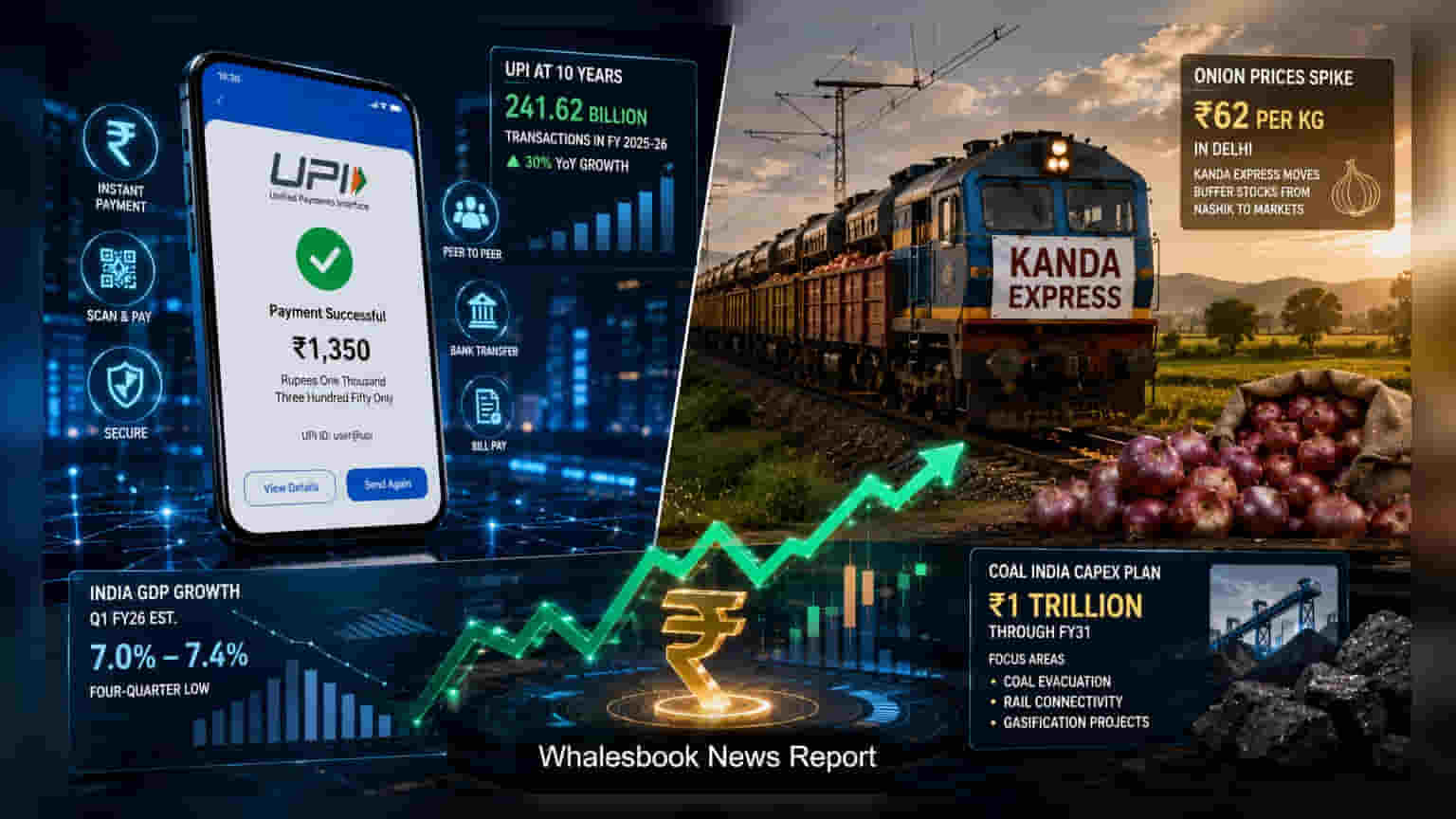
India’s GDP growth faces a recent slowdown while UPI records 241 billion transactions in its 10th year. To control rising onion prices, the government has launched special rail logistics, even as Coal India outlines a massive ₹1 trillion investment plan to boost infrastructure.
India’s economic narrative is currently shaped by a mix of digital success and supply-side pressures. As of late August 2026, the country's GDP growth for the first quarter of the fiscal year is estimated to have eased to between 7.0% and 7.4%. This moderation marks a four-quarter low, influenced by geopolitical tensions in West Asia and a cooling trend in manufacturing activity. Despite these headwinds, India remains a top performer in emerging market rankings, though the pace of industrial output is being watched closely by market participants.
UPI’s Decade of Digital Growth
The Unified Payments Interface (UPI) celebrated its 10th anniversary on August 25, 2026, having transformed from a niche experiment into the backbone of Indian retail payments. In the 2025-26 fiscal year alone, the platform processed 241.62 billion transactions, representing a 30% jump compared to the previous year. The data shows that while the volume is massive, the average ticket size per transaction has settled around ₹1,300, indicating that the system is primarily used for frequent, small-value retail purchases. This widespread adoption has essentially digitized the cash economy at the grassroots level.
Managing Food Inflation
While digital infrastructure thrives, physical supply chains are facing challenges, specifically regarding food inflation. Retail onion prices have seen significant spikes recently, with rates in major centers like Delhi climbing to approximately ₹62 per kilogram. To curb this inflation, the government has deployed the 'Kanda Express,' a dedicated rail initiative designed to transport buffer stocks from production hubs like Nashik directly to consumption centers. This intervention aims to reduce wastage and bridge the supply gap that often causes price volatility in essential vegetables. Investors often watch these measures, as persistent food inflation can impact the disposable income of urban consumers.
Coal India’s Infrastructure Push
In the corporate sector, Coal India Ltd has announced a significant capital expenditure plan of ₹1 trillion through the 2031 fiscal year. The funding is earmarked for modernizing coal evacuation, rail connectivity, and gasification projects. For shareholders, this represents a long-term commitment to improving operational efficiency and supporting the nation's energy infrastructure. However, the execution of such large-scale projects carries inherent risks, including potential delays and the need for consistent capital allocation over a five-year period.
Looking ahead, the market is monitoring how effectively these supply-side logistics interventions control food inflation and whether manufacturing activity can regain momentum. Additionally, the impact of global geopolitical disruptions on energy costs remains a key factor that could influence corporate margins and broader economic performance in the coming quarters.