

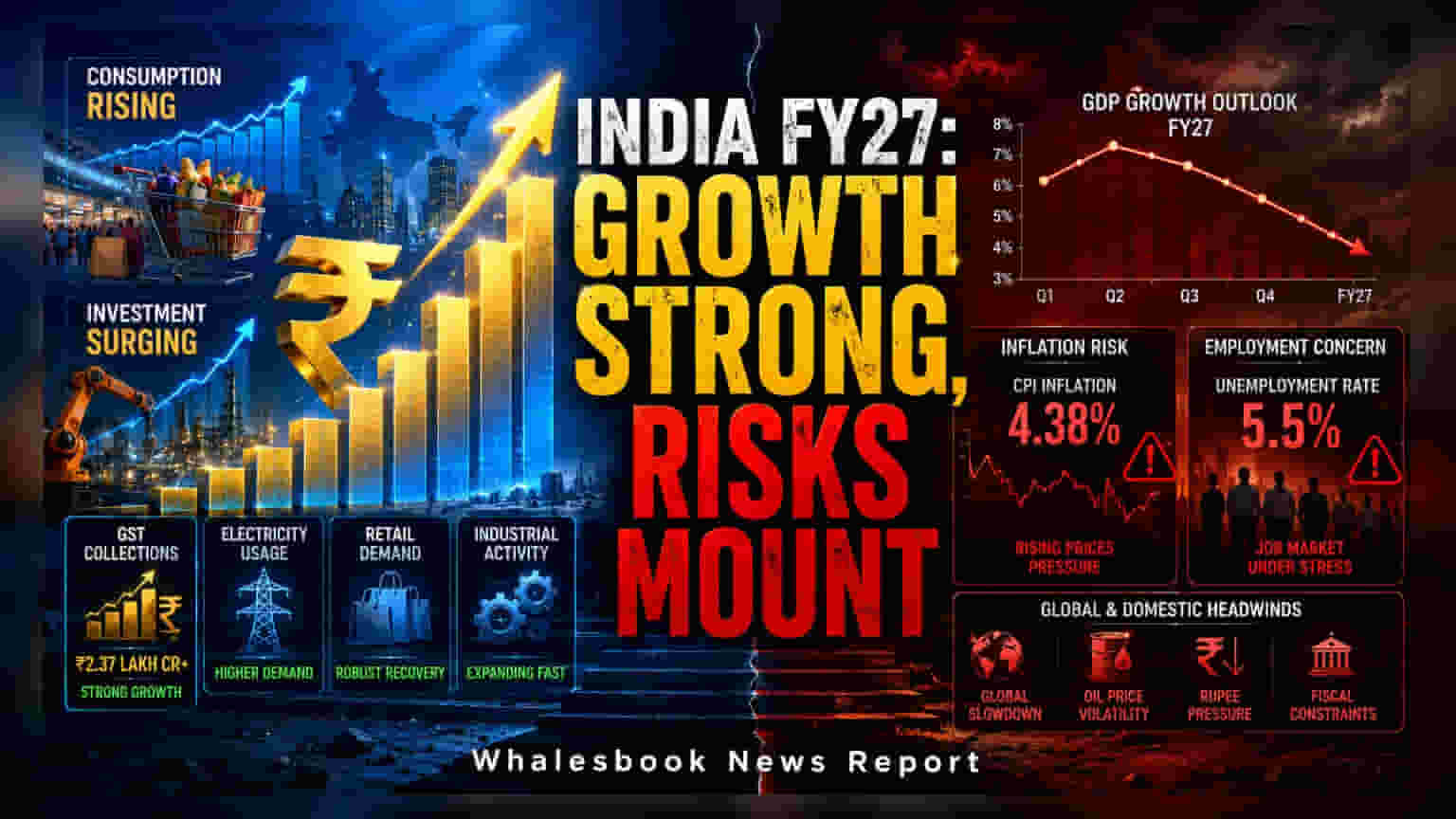
India has entered FY27 with strong domestic consumption and industrial activity. However, retail inflation has crossed the RBI's 4% target, reaching 4.38% in June, alongside persistent unemployment challenges. Investors are now monitoring how these inflationary pressures and global risks impact future interest rate decisions.
India started fiscal year 2027 with resilient economic momentum, supported by steady domestic consumption and a growing investment cycle. High-frequency indicators suggest that the economy has maintained its growth trajectory, with strong numbers in GST collections, electricity usage, and retail vehicle sales in the early months of the year. While the overall picture remains positive, new economic friction points are becoming clearer to market observers.
Industrial output has shown significant health, with capital goods production and investment activity driving capacity expansion. Data indicates that businesses are continuing to spend on growth, which has helped sustain industrial production levels. Both the manufacturing and services sectors have reported expansion, signaling that domestic demand is currently acting as a primary engine for the economy.
However, price stability is re-emerging as a concern. Headline consumer price inflation, or CPI, reached 4.38% in June 2026. This is the first time in recent quarters that inflation has moved past the Reserve Bank of India's (RBI) ideal target of 4%. As a result, the central bank maintained the repo rate at 5.25% in its August 2026 policy meeting, opting to wait for more clarity on how price trends will evolve. This suggests that the cost of borrowing may remain steady for now, but any sustained rise in inflation could limit the RBI's ability to lower rates in the future.
Labour market conditions are also receiving attention. The unemployment rate was recorded at 5.5% in June. While this reflects a generally stable market, it also points to the ongoing difficulty of creating enough jobs for a growing workforce, particularly among younger people. Additionally, the external sector is facing pressure. Global geopolitical tensions, especially in West Asia, and a weakening in global export orders have created a challenging environment for India's trade balance.
The outlook for the remainder of the year will depend on how the economy handles these new headwinds. Risks such as potential monsoon-related disruptions to agricultural output, volatile energy prices, and global supply chain issues are being closely watched by analysts. For investors, the focus remains on whether corporate earnings can continue to grow despite rising input costs and whether the RBI can manage inflation without hurting economic momentum. The next major updates to track will be the central bank’s upcoming monetary policy commentary and inflation data for the coming months.