 Whalesbook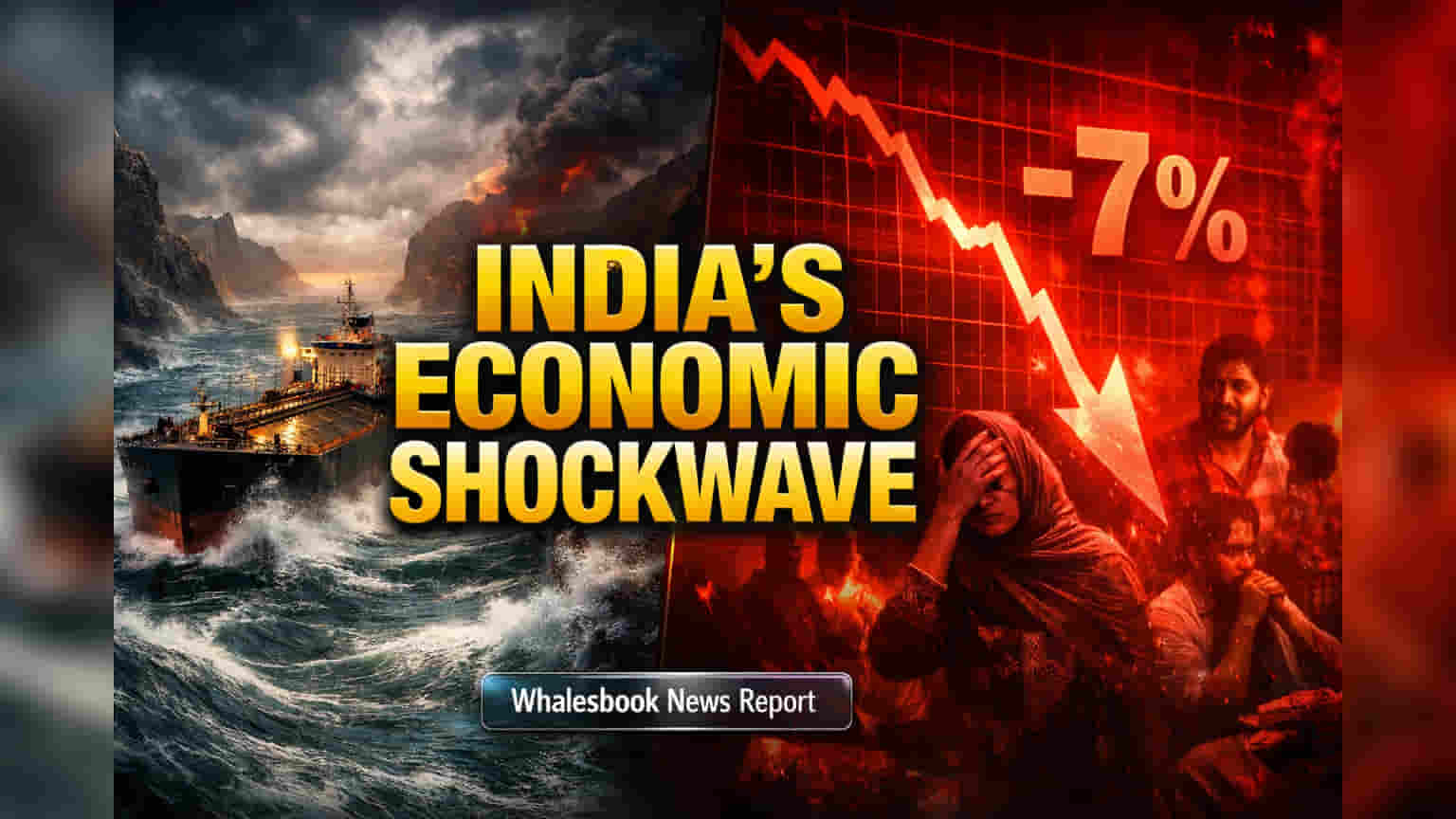


India's Economy Hit by Strait Blockade: Energy & Supplies Squeezed
The crisis in West Asia, with the blockade of the Strait of Hormuz, has disrupted global trade and exposed economic weaknesses, hitting import-dependent nations like India hard. Supply chains are now tighter, especially for energy, agriculture, and manufacturing. This threatens economic progress and worsening inflation. The situation highlights the fragile nature of global trade and the urgent need for better preparation.
The Energy Price Surge
Global oil benchmarks, including Brent crude, have traded around $95.34 per barrel, showing a substantial year-over-year increase. This price jump directly means higher import costs for India, which relies on West Asia for much of its energy. ONGC Chairman and CEO Arun Kumar Singh warned about this over-reliance, noting that India sources nearly half of its crude oil, about 30% of its natural gas, and 85-90% of its LPG from the region. Disruptions to key shipping routes like the Strait of Hormuz, used for roughly 90% of India's LPG imports, reveal a critical supply chain weakness. This has started to fuel inflation, with prices for electricity, gas, and other fuels showing an increase.
Sector Impacts and Export Challenges
The impact spreads through India's industries. Energy-intensive manufacturing sectors face production problems due to supply disruptions. Crucially, the agricultural sector is struggling with fertilizer shortages. India relies heavily on imports for fertilizers, with a significant portion coming from the Middle East. This reliance adds to a large fertilizer subsidy bill, estimated at nearly ₹1.71 lakh crore for 2024-25. The textile industry, a major exporter, faces a double hit. Rising crude oil prices directly increase the cost of man-made fibers and synthetic yarns, squeezing profit margins and reducing export competitiveness. Furthermore, higher shipping costs, with rates reportedly up by 400% on some routes, and blocked trade routes are halting exports and creating uncertainty. India's merchandise exports to West Asia, which made up 16.4% of total exports in 2024-25, are particularly at risk.
Fiscal Strain and Social Impact
Economically, the crisis suggests a wider current account deficit (CAD) and adds to fiscal pressure. The CAD widened to $13.2 billion in the October-December 2025 quarter, driven by a larger merchandise trade gap. Analysts predict higher global energy prices will push up costs, potentially reducing people's spending power. The government faces pressure to increase subsidies for petroleum and fertilizers to cushion retail prices, adding to government spending and potentially causing significant revenue loss if the crisis continues. A United Nations Development Programme (UNDP) report estimates that the conflict could push around 2.5 million Indians into poverty, threatening human development progress and worsening existing social issues. The overall economic outlook is clouded, with the World Bank now forecasting India's GDP growth at 6.6% for FY27, down from previous estimates, due to these pressures. Inflation forecasts also indicate a rise, with projections ranging from 4.5% to 5.0% for FY2026.
Wider Risks and Re-evaluation Needed
The West Asia crisis shows a wider economic risk: the world's, and especially Asia's, heavy reliance on limited energy supply routes. Countries like Japan and South Korea share India's exposure to Middle Eastern energy markets, making them vulnerable to similar price shocks and supply disruptions. Oil price swings from Middle East conflicts, like the 1990-91 Gulf War, have previously caused inflation, budget deficits, and currency drops in India. These repeated events highlight a long-standing dependence that government actions have struggled to fix. The current situation requires more than short-term solutions; it needs a strategic review of energy sources, domestic production, and building stronger strategic fuel reserves, as experts like ONGC's Arun Kumar Singh suggest. Relying on easy energy access just because it's near West Asia is becoming unrealistic in a world with shifting geopolitics and countries protecting their resources.
Outlook: Navigating Uncertainty
As global economic prospects dim, prolonged instability in West Asia poses a threat on par with, or perhaps greater than, the COVID-19 pandemic. India's service exports have hit record highs, but its goods exports face pressure. The World Bank and ADB expect growth to slow, depending on how long the conflict lasts and its impact on global energy. The way forward involves managing current inflation, supporting people, and speeding up efforts to find new energy sources and boost domestic energy security to prepare for future shocks.