 Whalesbook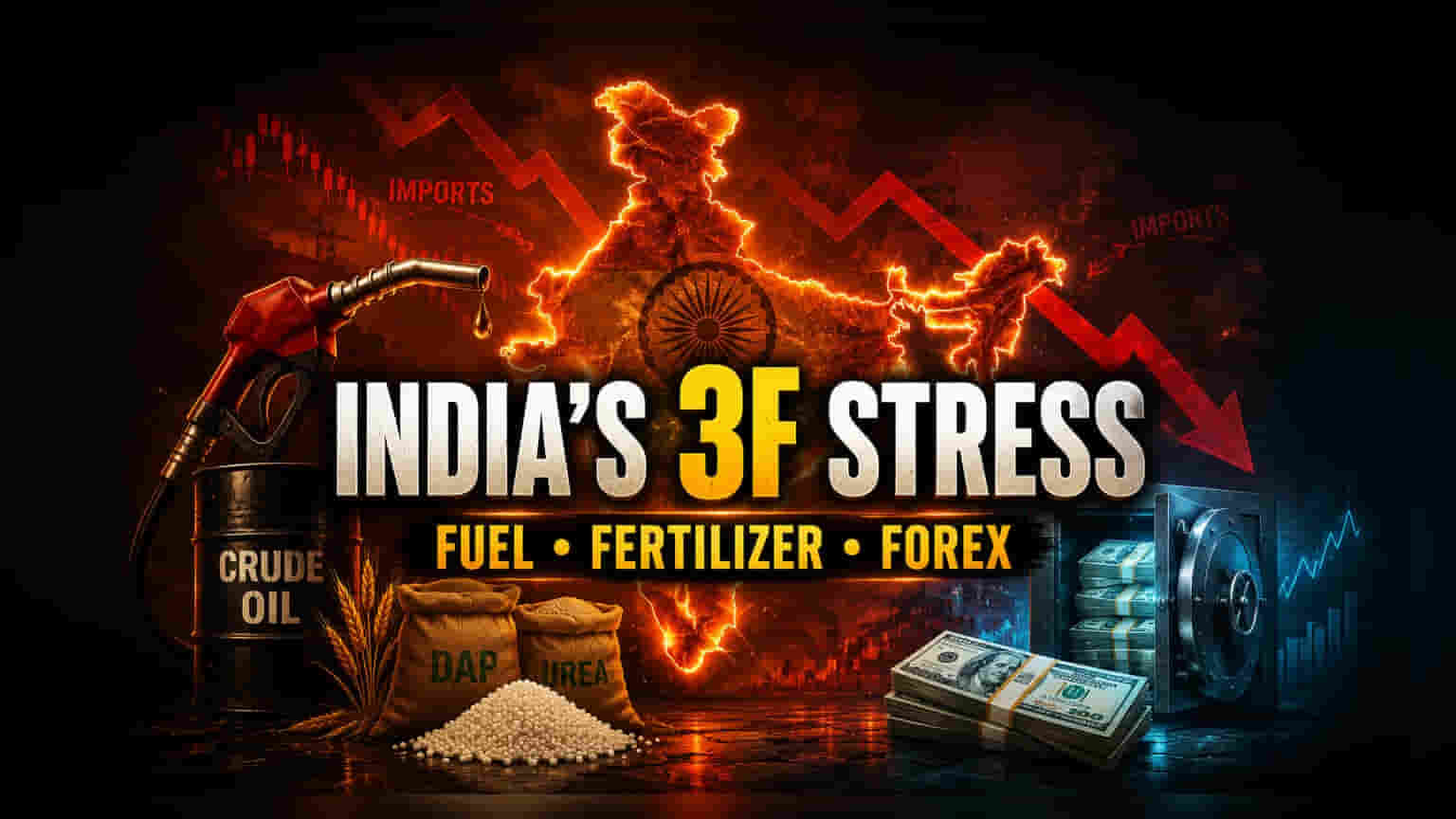


India is facing economic pressure on fuel, fertilizers, and foreign exchange reserves due to geopolitical conflict in the Middle East. These '3Fs' are crucial for growth, and rising costs are raising concerns about inflation, government subsidy bills, and the value of the rupee.
What Happened
India is navigating a period of economic pressure caused by challenges in three critical areas, often referred to as the '3Fs': Fuel, Fertilizers, and Foreign exchange reserves. The current tension between the US and Iran has disrupted global supply chains, directly affecting India because of its high dependence on imports for its energy and agricultural needs. As global prices rise, the cost of bringing these essential goods into the country increases, placing stress on the nation's financial stability and government budget.
The Energy and Agricultural Challenge
India imports over 85% of its crude oil, with a significant amount sourced from the Middle East. Geopolitical unrest in this region has caused oil prices to rise, creating a ripple effect. When crude oil prices go up, the cost of petrol, diesel, and other energy products increases for both consumers and businesses. This can fuel general inflation across the economy.
Similarly, the agricultural sector is under pressure. India relies on imports for a large share of its fertilizer needs, such as urea and diammonium phosphate (DAP), and the Middle East is a key supplier. Disruptions in the supply of natural gas, which is used to make fertilizers, threaten to drive up costs for farmers and inflate the government's subsidy bill. If global prices remain high, the government may need to set aside significantly more money for subsidies than originally planned, which impacts the overall fiscal deficit.
Why Forex Reserves Matter
Foreign exchange reserves are the 'cushion' a country holds to handle international payments and stabilize its currency. As of May 29, 2026, India's forex reserves stood at approximately $682.3 billion. While this provides a substantial import cover of about 11 months, increased spending on expensive fuel and fertilizer imports requires more dollars.
This creates a cycle: higher import bills require more foreign currency, which puts pressure on reserves. If the demand for dollars remains high, it can lead to a weaker rupee. A weaker rupee, in turn, makes all imports more expensive, adding further pressure to the economy.
How Investors May Read This
For investors, these '3Fs' are important indicators of the country's economic health. When fuel and fertilizer costs rise, companies that rely on these inputs—such as Oil Marketing Companies (OMCs) or transport and logistics firms—may face pressure on their profit margins. If the government has to spend significantly more on subsidies to keep prices stable, it may have less room to spend on other infrastructure or development projects.
Investors typically watch how the government manages these costs and whether policy measures, like trade diversification or building strategic reserves, are effective. The Reserve Bank of India’s role in managing currency volatility is also a key area that market participants follow closely to gauge the stability of the external financial environment.
What Investors Should Track
Moving forward, several factors will be important for understanding the economic impact. Key indicators include global crude oil price trends and any changes in the government's fertilizer subsidy budget. Investors may also track the movement of the Indian rupee against the US dollar and updates from the Reserve Bank of India regarding forex reserves. Any policy announcements aimed at reducing import dependency or controlling inflation will also be relevant for understanding the broader economic direction.