 Whalesbook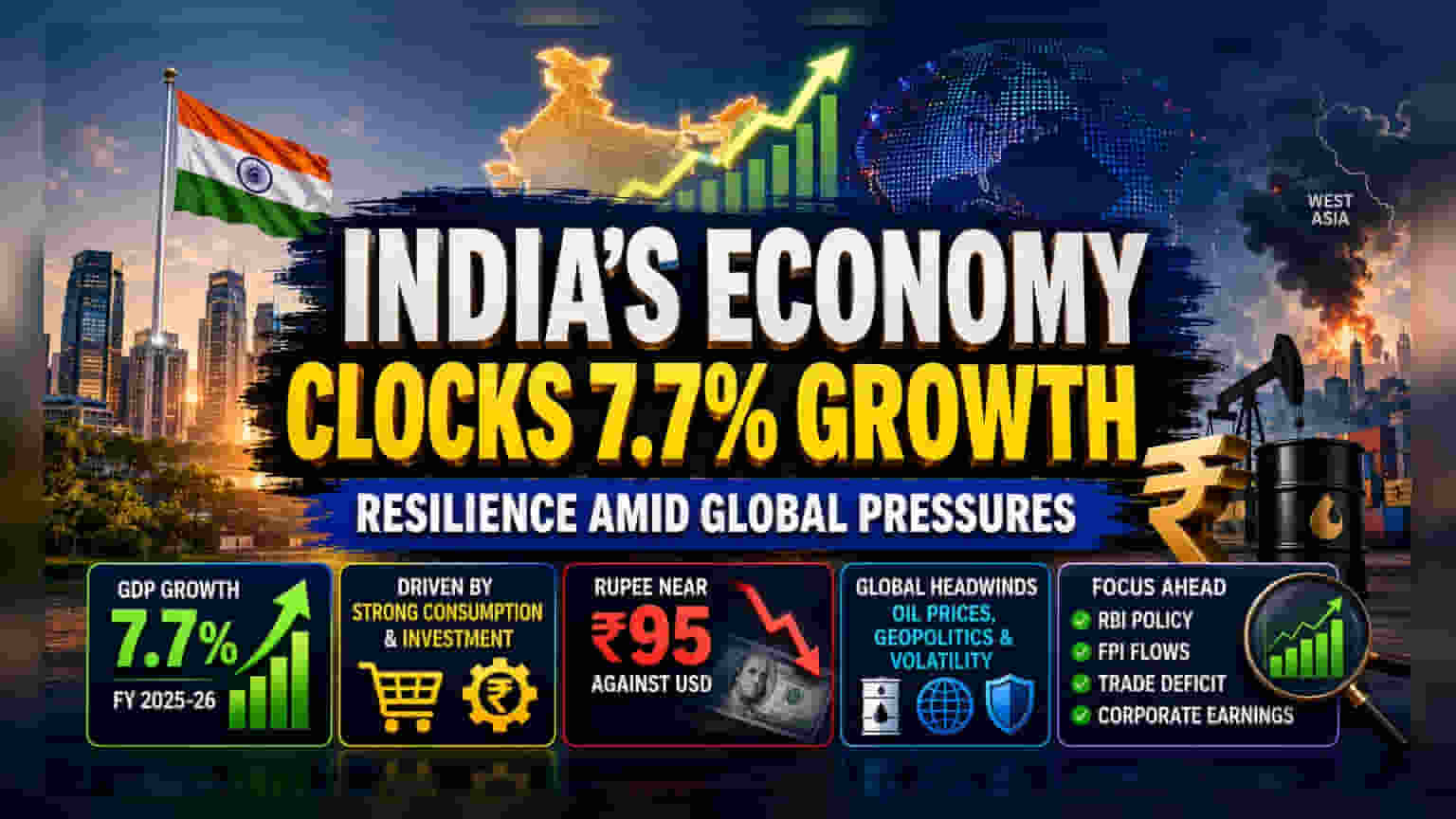


India’s economy recorded a strong 7.7% GDP growth in FY26, even as the country navigates global uncertainties and pressure on the rupee. While growth remains among the fastest globally, investors are tracking headwinds like energy costs and currency volatility.
What Happened
India’s economy closed the 2025-26 fiscal year with a notable growth rate of 7.7%, outperforming several global peers despite a challenging international environment. Data from government sources indicates that this momentum was driven by strong domestic consumption and sustained investment activity. However, the economic landscape remains complex, with significant external pressures including geopolitical instability in West Asia and currency volatility influencing the market sentiment.
Economic Resilience vs. Global Pressures
While the headline growth figures appear strong, the broader economic context is characterized by a balancing act. The Indian rupee has faced downward pressure, recently trading near ₹95 against the US Dollar. This depreciation is largely attributed to higher import costs, particularly for crude oil, and broader capital flow trends. Market analysts observe that while the manufacturing and services sectors have demonstrated resilience, global uncertainties are creating a cautious environment for investors.
How Investors May Read This
For investors, the current economic narrative is one of divergence. On one hand, domestic macroeconomic indicators—such as GDP growth and corporate earnings—have shown structural strength. On the other, external macroeconomic variables like the exchange rate and global energy prices introduce volatility. Investors are currently evaluating whether domestic consumption can continue to offset the costs of a weaker currency and inflationary pressure from global energy imports. The key takeaway for market participants is to differentiate between long-term growth potential and short-term operational risks caused by global macro factors.
The Currency And Energy Impact
The depreciation of the rupee is a critical monitorable for sectors dependent on imports, such as electronics and energy. Higher import bills can influence profit margins for companies with heavy reliance on foreign inputs. Conversely, export-oriented sectors, including IT and pharmaceuticals, often react differently to currency fluctuations. Market observers are closely tracking how the Reserve Bank of India manages these external imbalances while balancing growth priorities.
Risks and Market Context
While India is projected to remain one of the fastest-growing major economies, risks persist. These include the potential for slower investment if global interest rate environments remain restrictive, and the impact of the ongoing conflict in West Asia on commodity prices. Additionally, while overall growth is robust, some analysts continue to emphasize the importance of monitoring rural and urban consumption patterns, as these remain the primary engines of the current economic cycle.
What Investors Should Track Next
Looking ahead, investors may focus on several key indicators. These include the Reserve Bank of India's policy updates regarding currency management and inflation control. Furthermore, trends in foreign portfolio investment (FPI) flows and monthly updates on trade deficits will provide clearer signals on how the economy is managing external headwinds. Monitoring corporate earnings for signs of margin pressure due to input costs remains an essential strategy for navigating the coming quarters.