 Whalesbook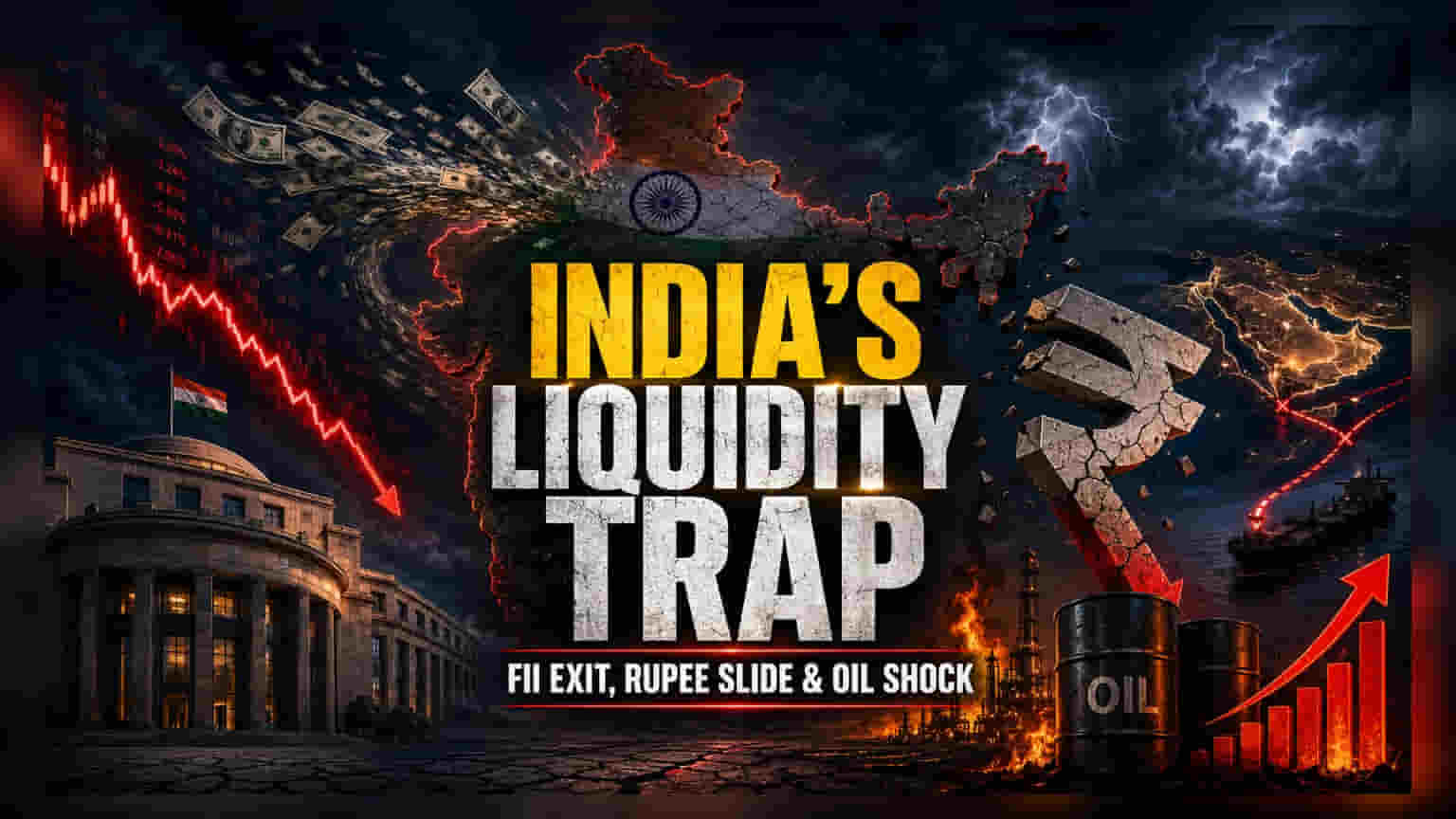


Market Liquidity and the Currency Trap
The abrupt withdrawal of $40 billion in foreign institutional investment has created a liquidity vacuum in the Indian capital markets, placing unprecedented pressure on the Reserve Bank of India. While central bank intervention remains the primary defense against the rupee's double-digit depreciation, the efficacy of these measures is diminishing. Unlike the relatively contained volatility of previous fiscal cycles, the current exodus is occurring alongside a rapid tightening of global trade conditions. The transition from a net-inflow environment to a defensive posture suggests that systemic risk premiums are being repriced across major indices, particularly in sectors dependent on imported inputs or foreign financing.
The Geopolitical Multiplier
Beyond domestic policy, the economy is contending with an external shock multiplier. The escalation of regional tensions in the Middle East has disrupted established energy corridors, driving up the cost of oil and gas. This energy price shock acts as a regressive tax on the broader industrial base, effectively stifling output and further complicating the inflation outlook. Historical correlation studies indicate that when India’s energy import bill rises in tandem with a depreciating rupee, the manufacturing sector often experiences significant margin compression. With the specter of an erratic monsoon season looming due to El Niño patterns, the secondary impact on food prices threatens to undermine the government’s efforts to stabilize household purchasing power.
Structural Risks and Fiscal Fragility
The recent recalibration of foreign investment return protocols signals a shift from a pro-growth stance to one of capital retention. Market participants are interpreting these regulatory adjustments as a move to staunch the flow of exits, yet this approach introduces long-term uncertainty regarding the ease of doing business. If capital controls become a persistent feature rather than a temporary emergency measure, the structural appeal of India as a global manufacturing hub may diminish. Moreover, the reliance on coalition-based governance to manage these crises adds a layer of political sensitivity to every economic decision, as any move to curb inflation via fiscal austerity could be viewed as politically costly.
The Bear Case: Policy Paralysis
The central risk remains a period of policy paralysis where the administration is forced to prioritize short-term populist measures over necessary structural reforms. Persistent shortages in essential agricultural inputs and fuels are creating friction in the rural economy, which serves as a traditional buffer during urban industrial slowdowns. If these sectors fail to perform, the government’s ability to absorb the current economic shock through internal demand will be severely handicapped. Analysts are increasingly watching the fiscal deficit, as any deviation from current targets could trigger further credit rating concerns, compounding the challenges already presented by the ongoing capital flight.