

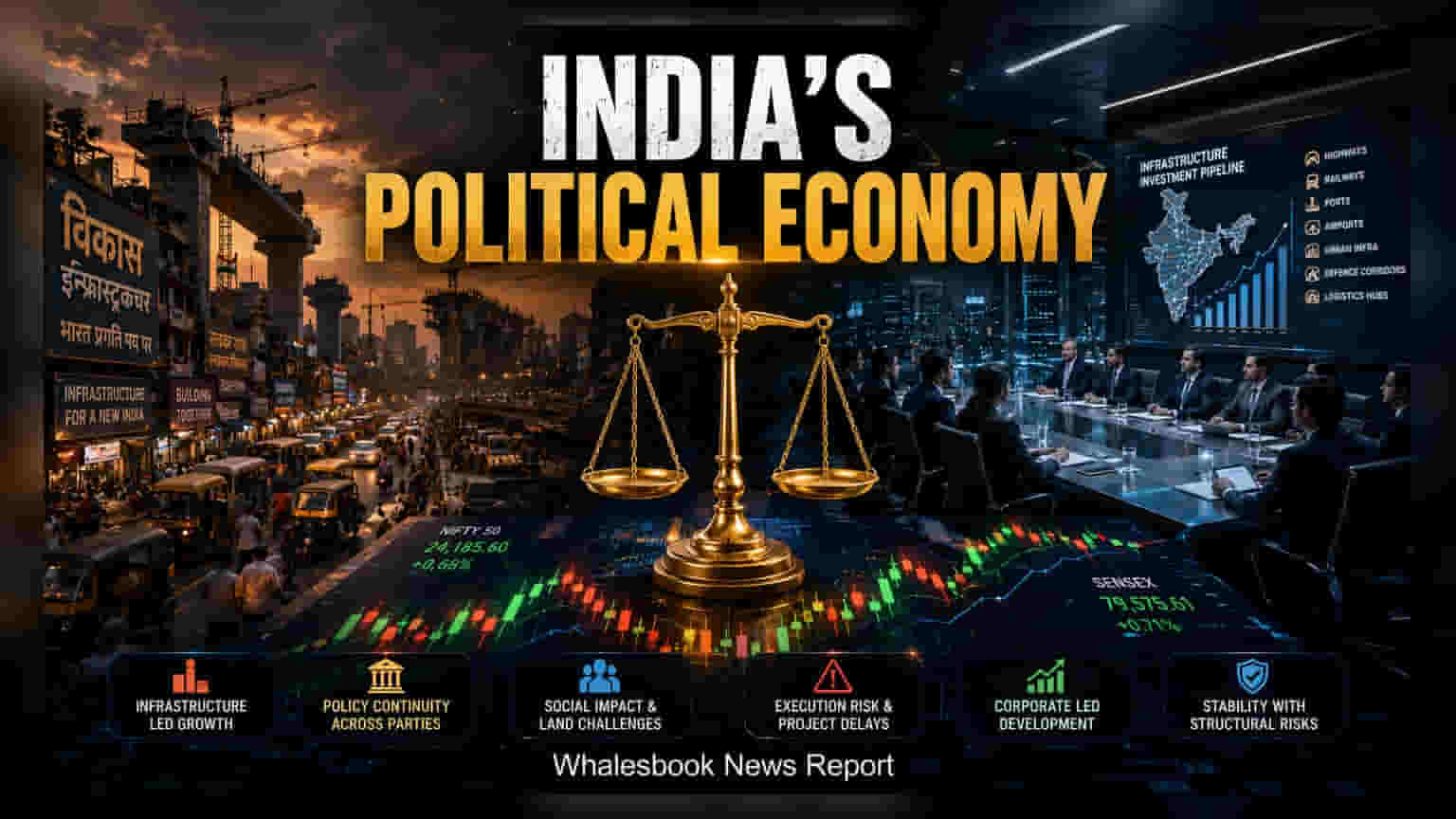
Recent analysis highlights that India's development strategy—prioritizing infrastructure and neoliberal policies—remains largely consistent across different political spectrums. This continuity impacts the business environment, as large-scale projects drive growth while also facing challenges related to land acquisition and social implementation. For investors, understanding this stable yet complex policy framework is crucial for assessing long-term sector trends.
The current economic landscape in India is characterized by a strong emphasis on infrastructure-led growth, a model that has become a defining feature of governance both at the central and regional levels. Analytical discourse recently has focused on how this development path, which prioritizes large-scale capital projects and market-oriented policies, tends to persist regardless of the political party in power. For market participants, this continuity provides a degree of policy predictability, but it also highlights specific structural risks that can impact the investment climate.
At the core of this model is the state’s focus on infrastructure development, often involving significant land acquisition and regulatory support for large projects. Across various states, including those led by different political coalitions, the approach to economic development often mirrors this pattern. This trend suggests that the fundamental economic philosophy, which emphasizes a focus on corporate-led growth and streamlined administrative processes, is deeply entrenched in the current governance framework.
For investors and businesses, this consistency means that the regulatory and project-execution environment remains similar across much of the country. Policies centered on privatization, asset monetization, and infrastructure expansion are likely to remain central to the economic agenda. However, this model also brings certain challenges that investors often monitor. Large-scale infrastructure projects frequently face hurdles related to land acquisition, environmental clearances, and social impact, which can lead to delays or increased costs.
Analysts also note that while this model aims to boost productivity and growth, it can sometimes lead to debates regarding the balance between private sector development and public interest. Disagreements over land use, the displacement of local populations, or the focus on elite-centric urban infrastructure versus broad public utility are recurrent themes in the Indian economic discourse. These social and political frictions, while not preventing development, can impact the speed and execution of projects.
From an investment perspective, the stability of this development model is a double-edged sword. On one hand, it creates a long-term roadmap for industries like construction, logistics, and capital goods. On the other hand, investors often remain cautious about the 'execution risk' associated with complex projects. The key monitorable for market participants is how the state manages the trade-off between aggressive infrastructure push and the social or regulatory challenges that arise during implementation. Understanding these dynamics is essential for assessing the long-term viability and potential headwinds for companies operating in sectors heavily dependent on government policy and project approvals.