

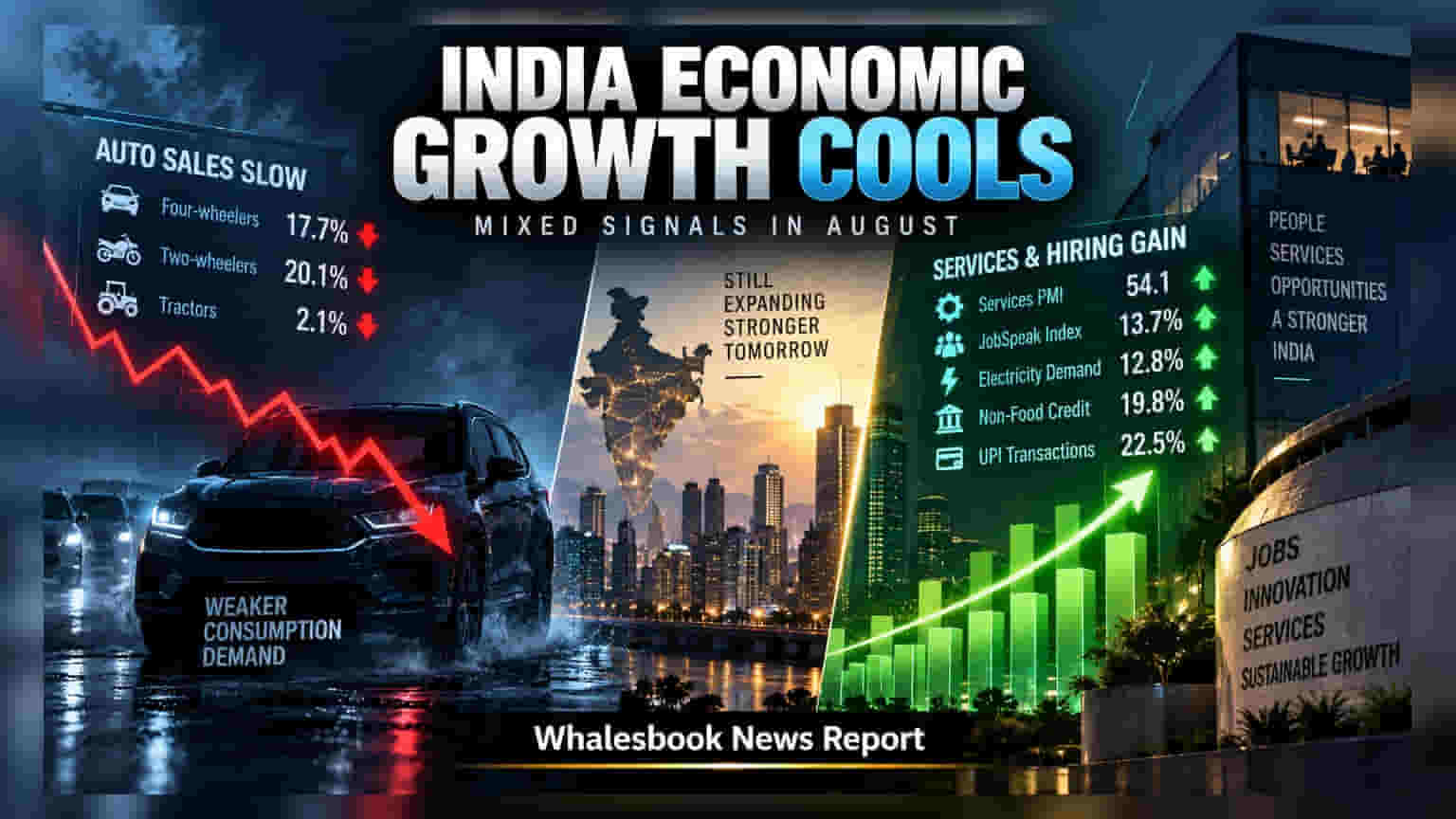
India's economic activity slowed in August, with the Eco Pulse Index dropping to 54.9 from 56 in July. While consumption in sectors like automobiles saw a sharp decline, the services sector and employment figures provided crucial support. The data highlights a shift from rapid broad-based growth toward a more moderate, service-led pace.
The pace of India's economic growth showed signs of cooling in August, according to the latest data from the Eco Pulse Index, which fell to 54.9 from 56 in the previous month. While the index remains above the 50-point threshold—indicating that the economy is still expanding—the decline suggests that the rapid growth seen earlier in the year is moderating.
Cooling Consumption Patterns
The most noticeable shift in August occurred in consumption-sensitive areas, signaling a potential change in discretionary spending. Automobile sales, often seen as a reliable barometer for consumer confidence, faced significant pressure. Growth in four-wheeler registrations dropped to 17.7 percent year-on-year, down from 27.1 percent in July. Two-wheeler registrations also saw a decline, slowing to 20.1 percent from 34.5 percent. The most drastic slowdown was in the tractor segment, where growth plummeted to 2.1 percent compared to 36.9 percent in the prior month. Fuel consumption also showed signs of softening demand, with petrol and diesel growth rates easing to 8.2 percent and 6.8 percent, respectively, as travel demand normalized.
Services and Jobs Provide Support
While physical goods consumption faced headwinds, the services sector acted as a stabilizer. The Services Purchasing Managers' Index (PMI) improved to 54.1 in August from 53.3 in July, successfully balancing a slight softening in manufacturing activity. This sector strength was mirrored in the labor market, where the Naukri JobSpeak Index reported a 13.7 percent growth, a significant improvement from July. This suggests that while consumers may be buying fewer goods, the demand for white-collar services remains robust.
Infrastructure and Banking Resilience
Financial and utility data continue to reflect an economy that retains strong underlying support. Electricity demand grew by 12.8 percent in August, pointing to sustained usage by both industrial and residential consumers. The banking sector also remained stable, with non-food credit growth reaching 19.8 percent and aggregate deposits growing by 17.6 percent. Digital payment activity further confirms this resilience, as UPI transactions maintained a consistent growth rate of 22.5 percent, and credit card expenditure saw a sharp rebound of 8.5 percent.
For investors, this data points to a transition phase. The immediate monitorable is whether the moderation in goods consumption will impact corporate earnings in the upcoming quarters, or if the strength in services and credit can continue to drive the economy. Analysts will likely watch for further trends in auto registration and fuel usage to determine if the August cooling is temporary or the start of a longer period of moderate growth.