

India’s economic growth slowed in July 2026 as manufacturing and services activity softened. However, strong vehicle sales and credit demand kept consumption resilient. Investors are now watching whether these manufacturing hurdles persist or if the slight recovery in August flash data signals a turnaround.
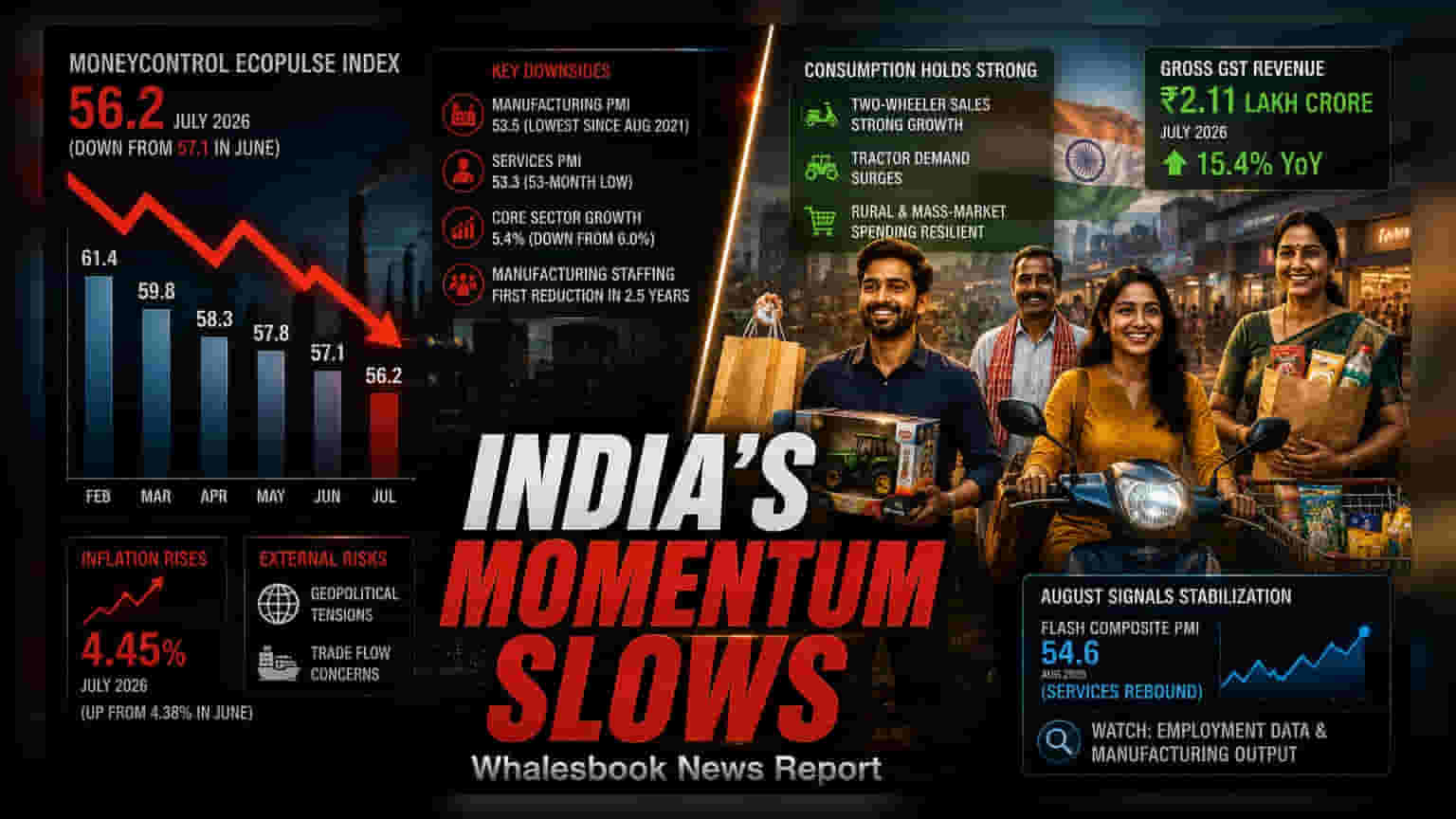
India’s economic activity experienced a cooling phase in July 2026. The Moneycontrol EcoPulse index, a tracker of economic momentum, declined to 56.2 from 57.1 in June. This moderation followed three months of accelerated expansion, highlighting that while the economy continues to grow, the pace has become more measured across key industrial sectors.
The most noticeable pressure came from the manufacturing and services sectors. The HSBC India Manufacturing PMI dropped to 53.5, the lowest level since August 2021. The Services PMI saw a steeper decline to 53.3, reaching a 53-month low. This softening was reflected in broader industrial activity, with core sector growth easing to 5.4% from 6.0% in June. A concerning signal for the labor market was the first reduction in manufacturing staffing levels in two and a half years as of August 2026, marking a shift from the previous trend of hiring.
Despite the industrial slowdown, domestic consumption remained a key support pillar. Demand for two-wheelers and tractors saw significant growth, signaling that rural and mass-market spending holds steady. This resilience was further supported by strong tax collections, with gross GST revenue for July reaching ₹2.11 lakh crore, a 15.4% increase compared to the previous year. Additionally, non-food credit growth remained firm at 19.1%, suggesting that consumers and businesses continue to rely on financial support to maintain activity.
Inflation remains a challenge that investors are monitoring closely. Retail inflation rose to 4.45% in July, up from 4.38% in the previous month. This persistent pressure, combined with external risks such as geopolitical tensions and trade flow concerns, could affect input costs and corporate margins. While consumption currently acts as a cushion, the reliance on credit-led spending remains a factor to watch for long-term sustainability.
Early data for August suggests a potential stabilization. The Flash Composite PMI for August 2026 rose to 54.6, driven by a rebound in the services sector. While manufacturing activity continued to show a slight decline, the improved services performance may hint that the July slowdown was a temporary dip rather than a long-term trend. The market will focus on upcoming employment and manufacturing output figures to confirm if the industrial sector can recover from its recent softening.