

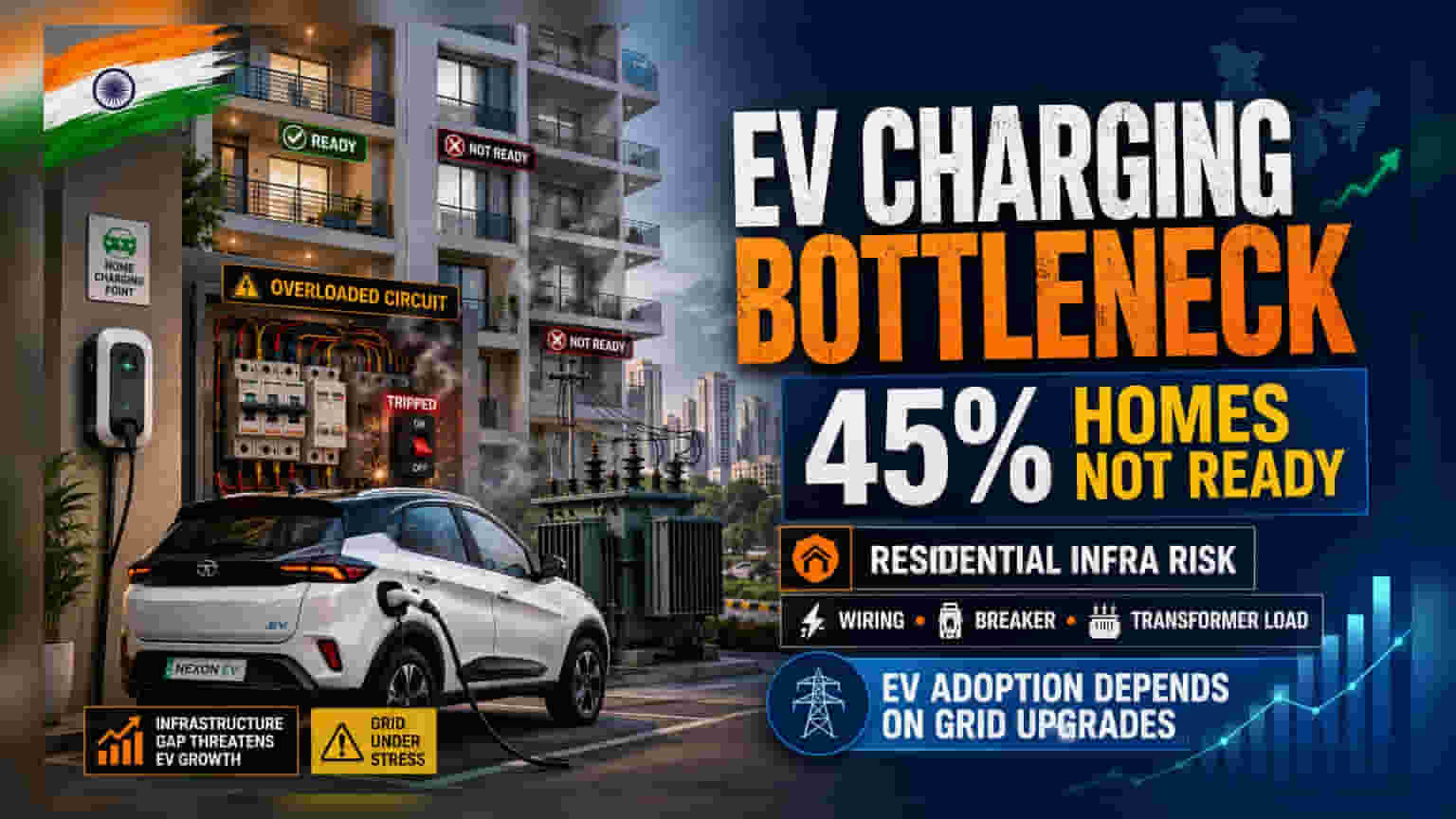
A new industry report by AEEE and Kazam reveals that 45% of Indian households need electrical upgrades to safely support electric vehicle charging. This infrastructure gap may act as a speed bump for India's EV adoption targets. For investors, this underscores a pressing need for grid modernization, which creates potential demand for electrical components, cables, and transformers, while posing a risk to the pace of vehicle sales.
What The Data Reveals
A recent study by the Alliance for Energy Efficient Economy (AEEE) and Kazam has highlighted a significant challenge for India’s electric vehicle (EV) ambitions. The analysis, which looked at over 80,000 residential EV charger installations, found that approximately 45% of Indian households currently have electrical systems that are not equipped to handle the extra load of an EV charger.
Without these necessary upgrades, the existing electrical infrastructure in many homes and apartment complexes faces risks like circuit breaker trips, wire overheating, and potential transformer failures. This reveals that the transition to electric mobility is not just about the vehicle itself, but also about the readiness of the power infrastructure inside homes and residential buildings.
The Infrastructure Bottleneck
The core problem lies in the design of older electrical systems, which were never built to handle the high, consistent power demand of charging an electric vehicle. When multiple chargers are installed in a single building without upgrades, it can cause localized power outages and voltage instability.
Beyond technical grid strain, the study points to practical hurdles. Many urban housing societies have limited dedicated parking space, which makes installing chargers difficult. Furthermore, there are currently no clear national guidelines for how older buildings should be retrofitted to support these chargers. When combined with concerns over fire safety and the high upfront cost of electrical upgrades, these factors create a significant friction point for potential EV buyers.
Why This Matters For Investors
For market observers, this situation creates a clear distinction between the vehicle manufacturers and the infrastructure providers. While EV sales targets depend on consumer adoption, the actual on-ground success depends on whether houses can support these vehicles.
This shift highlights the "pick and shovel" opportunities in the market. Companies involved in the manufacturing of electrical cables, wires, switchgear, and transformers may see a long-term benefit if there is a surge in demand for home electrical upgrades and grid modernization. On the other hand, the high cost of these upgrades—and the potential for slow regulatory progress—could act as a temporary headwind for automobile manufacturers hoping for a rapid shift to electric cars in residential markets.
What Investors Should Track
Investors tracking the EV space should move beyond just looking at vehicle sales numbers. The next important monitorable will be government policy and the creation of a unified regulatory framework for housing societies. Clear building codes and subsidies for grid upgrades could significantly reduce the barrier to adoption.
Additionally, observers may watch for trends in the electrical equipment sector, specifically whether power distribution companies and builders start increasing spending on upgrading residential distribution transformers and internal wiring. The pace of this infrastructure update will likely determine how quickly the mass-market adoption of EVs can move from commercial use to widespread residential use.