

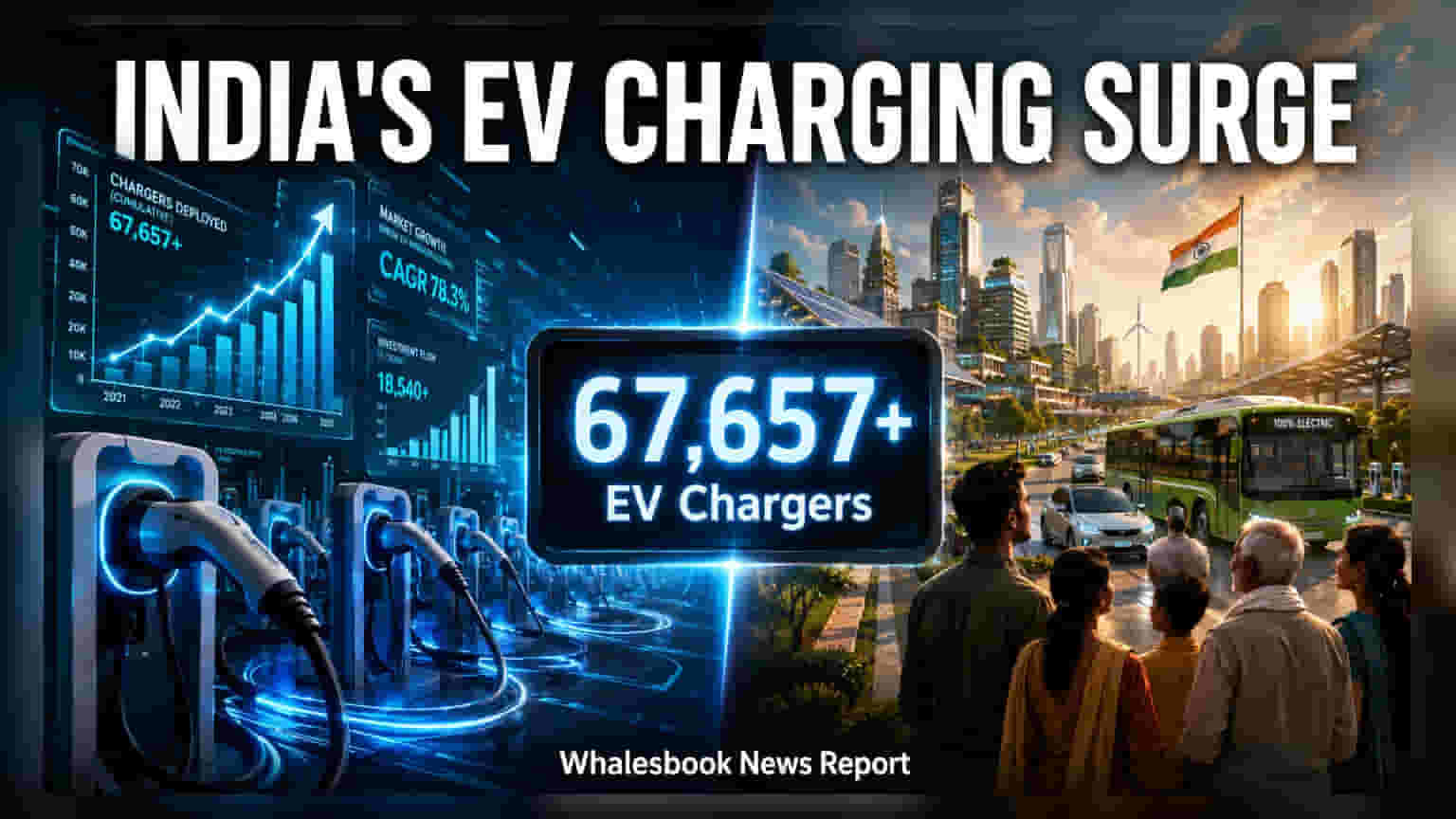
India’s public charging network expanded to 67,657 stations by early August 2026, supported by schemes like PM E-DRIVE. While this reflects growing EV adoption, investors should watch for the risks of high installation costs, grid pressure, and the sector's dependence on government subsidies.
India’s electric vehicle (EV) infrastructure has reached a significant milestone, with public charging stations growing to 67,657 installations as of August 2026. This growth is being driven by a steady transition in government support, moving from the concluded FAME-II scheme to the newer PM E-DRIVE program. With an outlay of ₹10,900 crore, the PM E-DRIVE scheme is now central to the government’s efforts to maintain momentum in EV adoption across the country.
The shift in policy from FAME-II to PM E-DRIVE is a crucial development for stakeholders. While FAME-II was instrumental in early adoption—supporting the sale of 1.67 million vehicles and the deployment of over 5,000 electric buses—the new framework aims to provide a more sustainable long-term structure. Alongside these direct incentives, the reduction of Goods and Services Tax (GST) on vehicles and charging equipment to 5 percent, combined with the use of green license plates, has created a more favorable environment for both consumers and fleet operators.
However, for investors, the story is not just about the number of chargers installed. Building an electric vehicle ecosystem requires massive capital spending on equipment and land, which can pressure the balance sheets of charging point operators. Profitability for these companies depends heavily on utilization rates—meaning how often these chargers are actually used by EV owners. If the growth in charging infrastructure outpaces the growth in the number of EVs on the road, operators may face financial strain due to low returns on their investments.
Another practical risk involves the power grid. As the number of electric vehicles rises, the demand for electricity at specific charging hubs could place significant stress on local power infrastructure. Upgrading grid capacity to handle this increased load requires time and money, which could lead to project delays or higher operating costs for companies setting up large-scale fast-charging networks.
Investors should also keep in mind that the sector remains highly sensitive to government policy. Because much of the current growth is tied to subsidies and manufacturing incentives like the PLI schemes for automobiles and battery storage, any changes to these programs could directly impact the growth trajectory of the entire EV ecosystem. Moving forward, the key factor to track will be whether private and public operators can achieve sustainable business models without relying solely on government support, and how effectively the electricity grid can scale to meet the rising demand.