

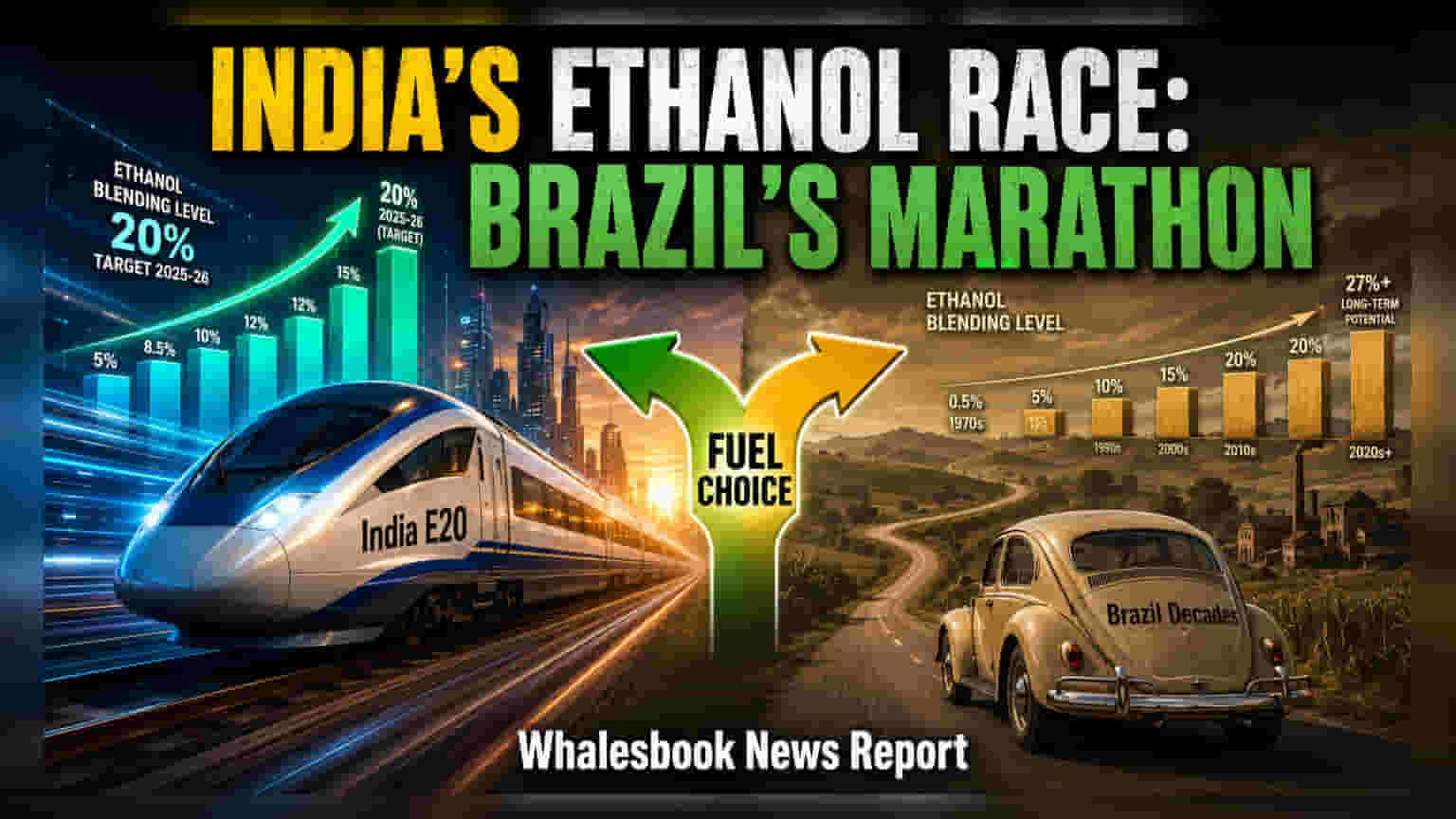
India has accelerated its target for 20% ethanol-blended petrol (E20) to 2025, aiming to reduce fuel imports. However, this rapid rollout faces hurdles as many existing vehicles remain incompatible with higher ethanol blends. Investors should monitor how automakers manage this transition and whether public resistance affects fuel consumption patterns.
India is working toward the widespread availability of E20 petrol, which contains 20% ethanol and 80% gasoline. This transition is part of the government's broader objective to lower crude oil import costs and encourage the use of biofuels produced from sugarcane and other agricultural sources. While the policy aims for a major shift in fuel composition, the implementation speed is noticeably faster than the historical transition seen in global markets like Brazil.
Comparing India and Brazil
Brazil is frequently studied as a benchmark for ethanol adoption, having started its journey in the 1930s. The country faced a significant catalyst during the 1973 oil crisis, which led to the 1975 National Alcohol Programme. Over the following decades, Brazil developed a dedicated ecosystem that included mandatory blending, specialized infrastructure, and, most importantly, the widespread introduction of flex-fuel vehicles in 2003. These vehicles allow engines to adjust automatically to different ethanol-petrol mixtures, providing drivers with flexibility based on current fuel costs.
Challenges for Domestic Vehicle Compatibility
In India, the primary challenge remains the technical compatibility of the existing fleet. Many vehicles currently on the road were engineered for lower ethanol blends, such as E10. As the country moves toward the E20 mandate, older vehicles may face risks related to engine wear, corrosion, and fuel system issues if not designed for higher concentrations of ethanol. Unlike the Brazilian model, where flex-fuel technology was integrated over time, the Indian market must navigate the rapid replacement of older, incompatible vehicles or the adaptation of new models to handle higher blend levels.
Market and Consumer Sentiment
Beyond the technical aspects, public acceptance is a factor that could influence the success of the ethanol program. Market surveys suggest that a portion of the consumer base is hesitant about the impact of E20 fuel on vehicle performance and maintenance costs. For fuel retailers and oil marketing companies, this creates a situation where maintaining supply chain efficiency and consumer trust is essential. If demand patterns shift due to public concern, it could influence the volume of fuel sold at retail outlets.
Monitorables for Investors
The impact of this transition will unfold across several areas. Investors may track how major automobile manufacturers update their engine lineups to ensure compatibility and whether the government provides further incentives for flex-fuel adoption. The pace at which the oil marketing companies upgrade their storage and distribution infrastructure to handle higher ethanol volumes will also be important. Finally, the long-term sustainability of the E20 program will depend on a consistent supply of ethanol and the ability of the automotive sector to minimize the risk of technical issues for end users.