 Whalesbook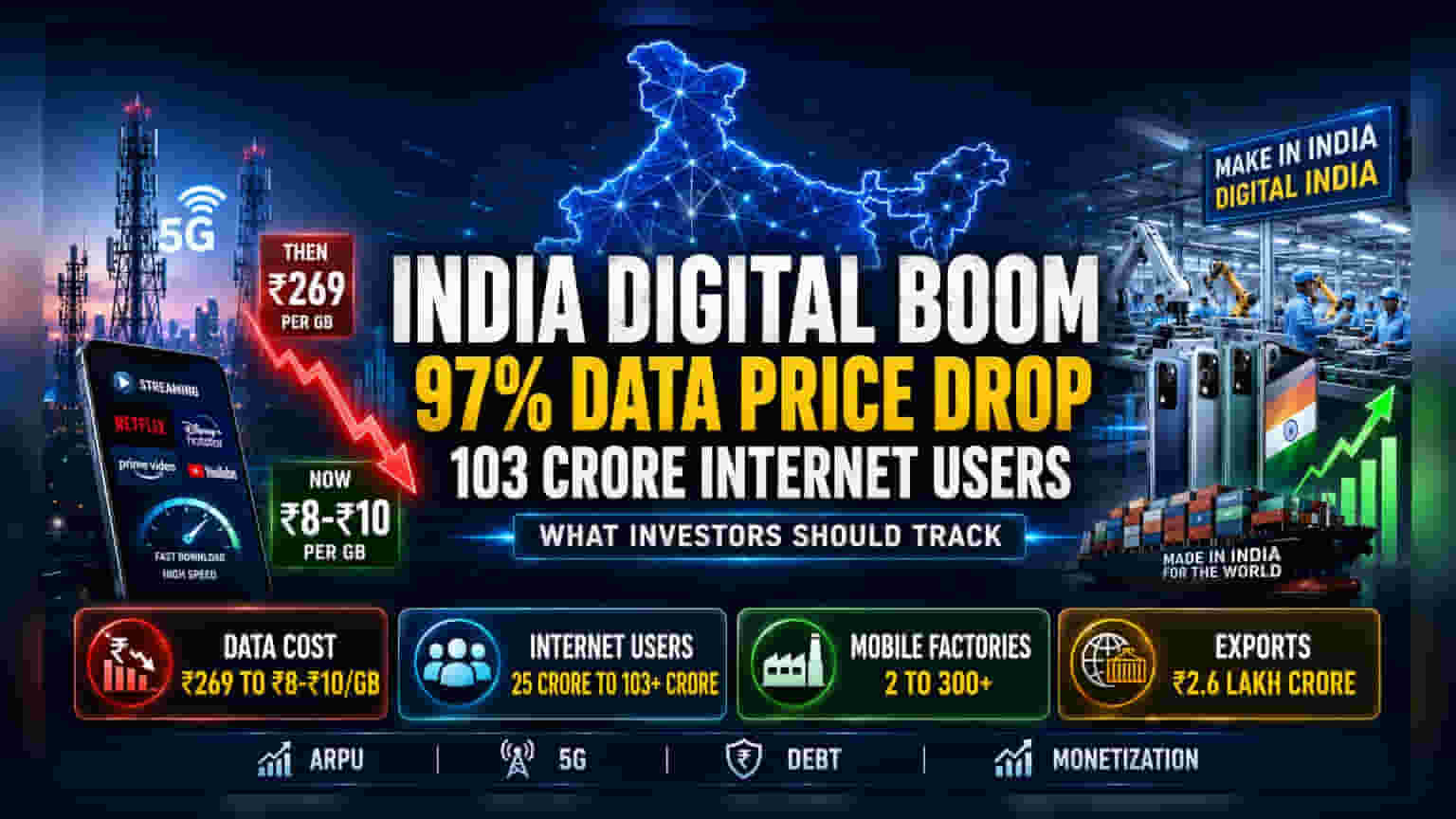


Mobile data costs in India have plunged 97% since 2014, driving a massive increase in broadband and internet usage. While this digital transformation has boosted India's mobile manufacturing and created a large digital economy, it has also fundamentally reshaped the telecom sector, forcing companies to adapt their business models amidst intense competition.
What Happened
India has seen a massive change in its digital landscape over the past twelve years. Mobile data costs have fallen from approximately Rs 269 per GB in 2014 to roughly Rs 8 to Rs 10 currently, representing a 97% reduction. This sharp decline has been a key factor in the surge of internet accessibility across the country. Official data indicates that the number of internet users has risen from 25 crore in 2014 to over 103 crore by late 2025. Simultaneously, broadband connections have jumped seventeen-fold, reaching nearly 100 crore, significantly expanding connectivity even in rural regions.
Why This Matters For Investors
The telecom sector, which forms the backbone of this digital growth, faced a difficult transition during this price war. The drastic fall in data costs led to a period of intense competition, causing financial pressure on several service providers. This resulted in significant industry consolidation, leaving the market dominated by a few large players. Investors may note that the era of aggressive pricing forced telecom companies to shift their focus. They are now moving away from just offering cheap data to finding ways to increase the 'Average Revenue Per User' (ARPU) by offering bundled services and higher-value plans. The sustainability of this digital economy depends on the ability of these companies to monetize their massive user base without triggering a return to unhealthy price wars.
The Manufacturing Push
Beyond just internet usage, the government’s push for local manufacturing has had a clear economic impact. The shift from importing mobile phones to becoming a significant exporter was supported by the Production Linked Incentive (PLI) scheme. This policy encouraged companies to set up domestic units, with the number of manufacturing facilities growing from just two in 2014 to over 300 today. Export numbers for mobile phones have surged to Rs 2.6 lakh crore, changing India's standing in the global mobile supply chain. For investors, this sector provides a different angle, focusing on electronics manufacturing and the broader digital infrastructure supply chain.
How Investors May Read This
The digital economy is now estimated to account for over 11% of India's national income, with potential to reach nearly 20% by 2030. This growth benefits a wide range of sectors beyond telecom, including e-commerce, digital payments, and fintech services. However, investors should remain aware of the risks. The telecom industry remains highly capital-intensive, requiring constant investment in 5G infrastructure and new technology. High debt levels at some companies and the need for continuous technological upgrades are factors that can impact financial performance. While the user base is large and growing, the profitability of the companies serving this base depends on balancing competitive pricing with sustainable revenue growth.
What Investors Should Track
The next phase for the industry will likely focus on monetization and efficiency. Investors may track whether telecom companies can successfully raise average revenue per user through tariff hikes or better service offerings. Another key factor is the success of mobile manufacturing exports, which depends on global demand and continued government policy support. Monitoring the pace of 5G adoption and the financial health of telecom operators, specifically their ability to manage debt while funding infrastructure upgrades, will be important for assessing the long-term potential of the digital sector.