 Whalesbook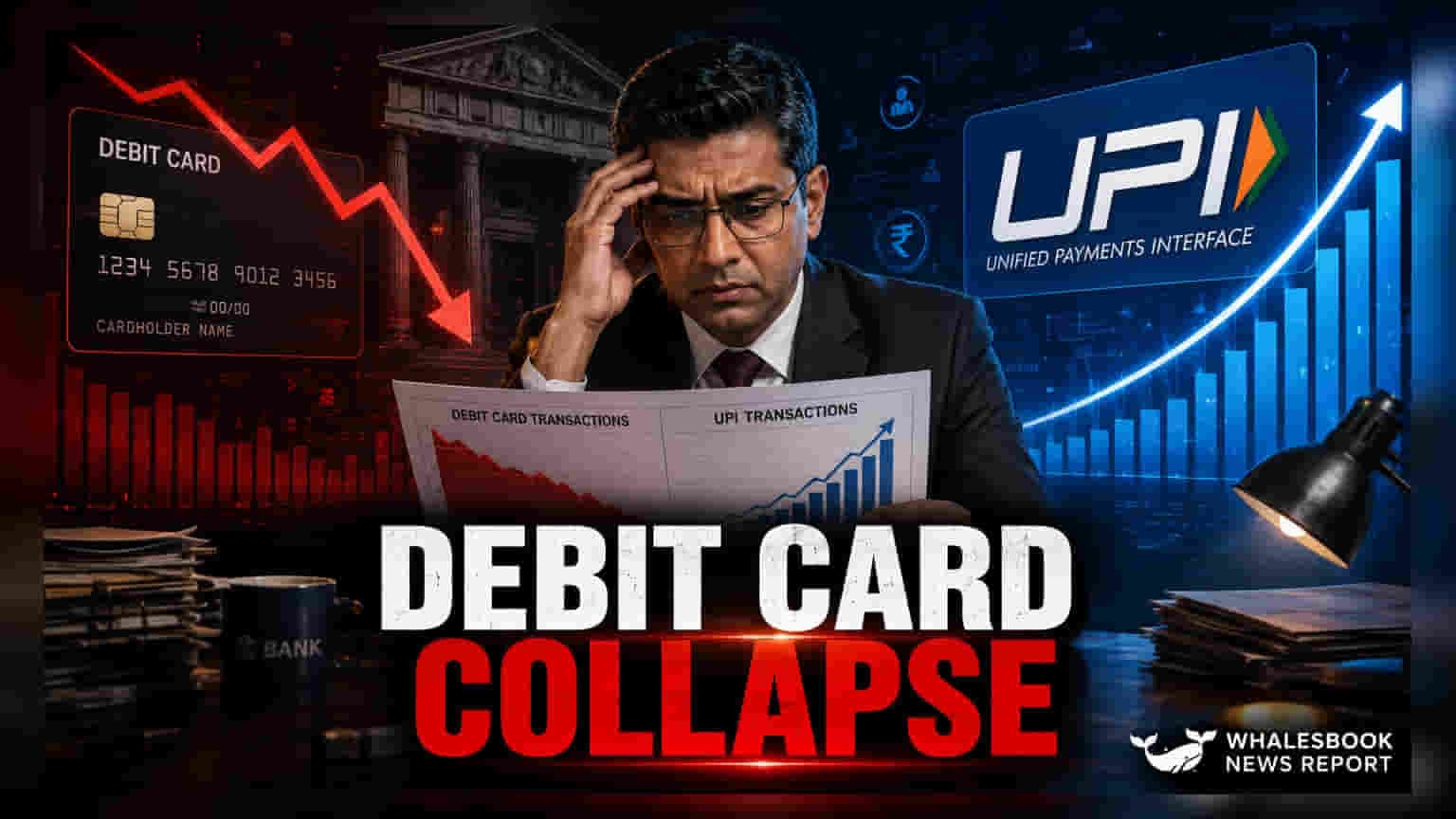


The Structural Revenue Erosion
The rapid migration toward the Unified Payments Interface has fundamentally broken the traditional debit card revenue model. Banks previously relied on a trifecta of interchange fees, annual maintenance charges, and cross-selling opportunities derived from card usage. As transaction volumes move toward instant, low-cost digital rails, the cost-to-serve for physical and virtual plastic has decoupled from the value generated. This discrepancy forces financial institutions to confront an uncomfortable reality where the issuance of debit cards is shifting from a profit center to a liability, particularly as active card usage becomes increasingly sporadic.
The Competitive Asymmetry
Unlike traditional card networks which operate on a legacy cost structure involving physical manufacturing and complex backend settlement, UPI functions as a public good with near-zero marginal cost for the end user. When benchmarking Indian retail banks—such as HDFC Bank, ICICI Bank, and State Bank of India—against this digital pivot, the disparity in transaction fee income becomes stark. While these institutions maintain extensive POS networks, the real-world utility of a debit card has been relegated to an emergency fail-safe or a tool for cash-heavy, rural ATM withdrawals. Furthermore, international competitors entering the Indian fintech sphere continue to prioritize UPI-first architectures, leaving traditional players burdened with the overhead of maintaining card-based ecosystems that fewer consumers utilize for daily commerce.
The Forensic Bear Case
Investors must account for the silent margin compression occurring within retail banking portfolios. There is a palpable risk that institutions clinging to legacy card-maintenance fees will face significant regulatory scrutiny or customer attrition. Should the Reserve Bank of India continue to prioritize the expansion of digital public infrastructure, the push for fee transparency will likely intensify. Furthermore, the reliance on card-based income was already fragile; the acceleration toward cardless cash withdrawals via UPI means that even the ATM-access moat is drying up. Banks that fail to pivot their revenue models toward value-added financial services, rather than stagnant maintenance charges, risk seeing their retail fee income growth evaporate as UPI dominance approaches saturation.
Future Outlook
Expect a aggressive shift toward tiered service models where physical cards become an elective, premium feature rather than a default banking utility. Market signals suggest that institutions will eventually decouple card issuance from standard savings accounts to mitigate the cost of dormant portfolios. While the industry is currently cushioned by the sheer scale of the Indian banking population, the long-term trend points toward a consolidated payment environment where the traditional debit card is essentially an obsolete hardware relic.