 Whalesbook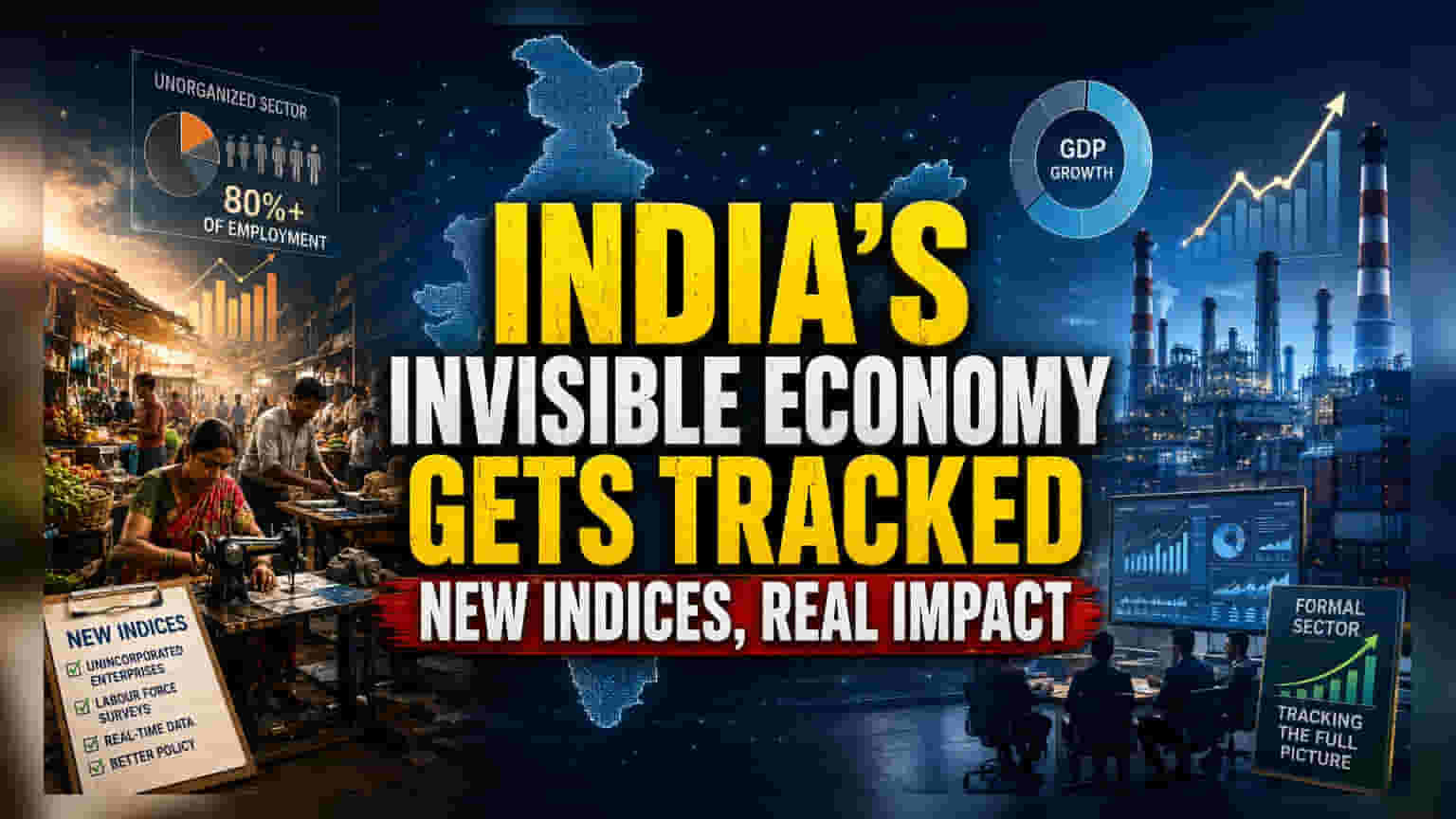


Beyond the Formal Proxy
The reliance on formal sector output as a barometer for the broader Indian economy has long served as an institutional crutch. By assuming the unorganized sector—which accounts for a massive portion of national employment—tracks in lockstep with corporate performance, policymakers have been operating with a distorted view of economic reality. This new initiative to launch dedicated indices represents a fundamental shift in statistical methodology, moving from indirect inference to direct observation. The move is not merely an administrative upgrade but a direct response to the massive data voids exposed by the pandemic, where small-scale enterprises faced structural collapses that official GDP data failed to capture in real time.
The Mechanics of Market Distortion
The current practice of using formal production indices to extrapolate informal sector performance creates a recurring risk of policy error. When the formal sector experiences capital-intensive expansion, the informal sector often undergoes simultaneous contraction due to labor market pressures or liquidity constraints. By integrating granular data from the Annual Survey of Unincorporated Sector Enterprises and the Periodic Labour Force Survey, the statistics ministry is building a mechanism to detect these decoupling events. Investors should note that a more precise measurement of the informal economy could lead to volatility in headline growth projections. If the informal sector is found to be performing worse than proxy estimates suggested, market participants may have to recalibrate expectations for domestic consumption and rural demand.
Risks of Increased Statistical Visibility
While improved data accuracy is theoretically beneficial, it introduces a significant risk factor: the potential for downward revisions to historical growth metrics. If the new indices prove that the unorganized sector has been a drag on the economy rather than a stable mirror of formal industry, current inflation and growth targets may appear overly optimistic. Furthermore, the administrative burden on small-scale enterprises to participate in expanded surveys could introduce new compliance costs, potentially hindering the very sector the government intends to support. Institutional observers must also consider that better data collection often precedes more aggressive tax enforcement. As the unorganized sector becomes more visible, the transition toward formalization may accelerate, creating temporary friction in labor-heavy industries that have historically operated outside the tax net.
Future Implications for Monetary Policy
Moving forward, the Reserve Bank of India will likely incorporate these indices into their policy toolkit. A more accurate reflection of the informal economy will almost certainly lead to more nuanced interest rate decisions, as the central bank will no longer rely solely on formal manufacturing data to gauge domestic heat. Market analysts anticipate that the full integration of these indices will take several fiscal cycles to stabilize, meaning the current period will likely see continued reliance on traditional, albeit flawed, high-frequency indicators.