 Whalesbook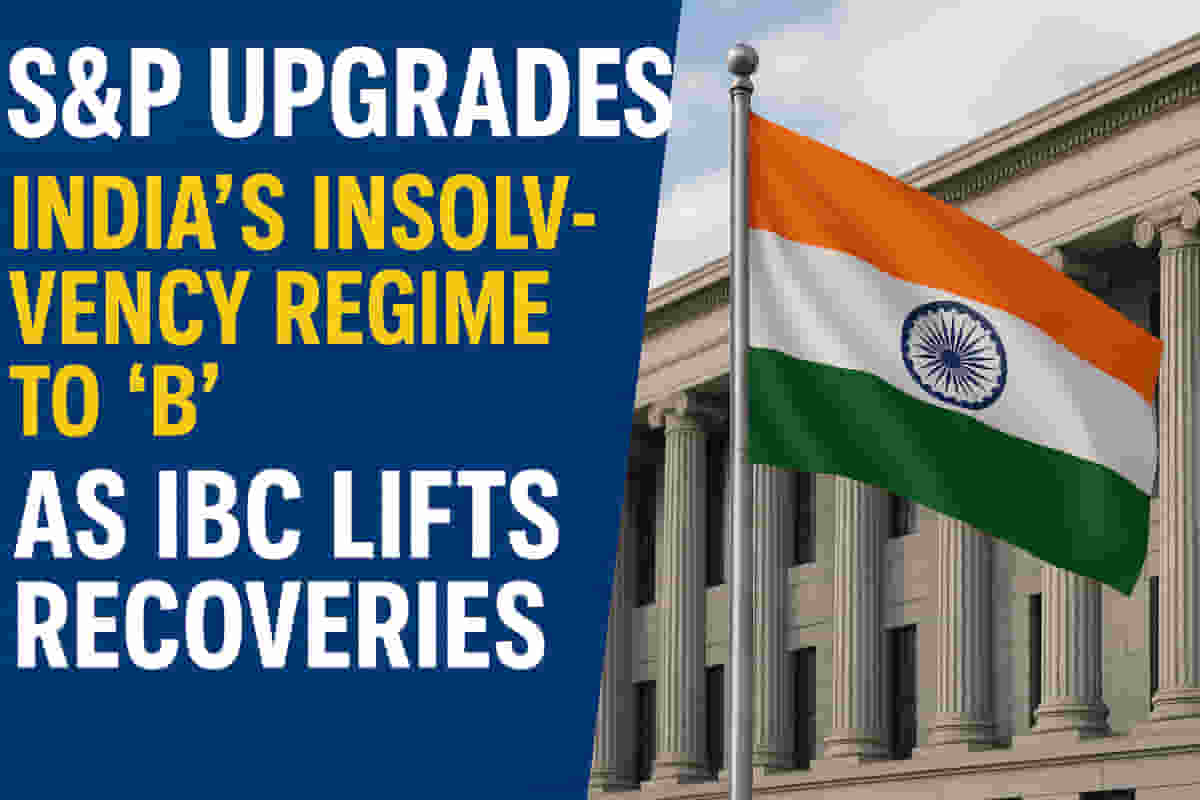
S&P Global Ratings has elevated India's insolvency regime ranking from 'C' to 'B', marking a significant positive development for the country's economic and financial landscape. This upgrade reflects ongoing enhancements in the effectiveness of creditor-led resolutions.
S&P's Rating Upgrade
- The upgrade signifies S&P's acknowledgment of India's progress in strengthening its insolvency framework.
- The new 'B' ranking indicates a medium level of protection for creditors' interests and a more predictable resolution process.
- This move is driven by a continuous record of successful resolutions led by creditors under the Insolvency and Bankruptcy Code (IBC).
Key Improvements Under IBC
- Average recovery values for creditors have more than doubled, rising to over 30% under the IBC, compared to the 15-20% seen under prior bankruptcy laws.
- The IBC is credited with strengthening credit discipline by making promoters risk losing control of their businesses, a notable shift from earlier systems.
- The average resolution time for bad loans has been reduced to approximately two years, down from a previous range of six to eight years.
What the Ranking Assesses
- A jurisdiction ranking assessment evaluates the degree to which a country's insolvency laws and practices safeguard creditors' rights.
- It also gauges the predictability of insolvency proceedings, which is crucial for investor confidence.
- S&P categorizes insolvency regimes into Group A (most robust), Group B, and Group C (least robust) to assess recovery prospects.
Persistent Challenges and Shortcomings
- Despite the upgrade, India's insolvency regime still lags behind more established Group A and some Group B jurisdictions.
- Average recovery rates of around 30% are considered comparatively low on a global scale.
- Recoveries tend to be higher in asset-intensive sectors like steel and power, and for secured debt compared to unsecured debt.
- Potential issues include secured and unsecured creditors voting together, which could disadvantage secured creditors, especially if unsecured debt is substantial.
- The effectiveness of safeguards, such as ensuring recovery values meet liquidation values and court oversight for fair distribution, requires continued monitoring.
- Unpredictability and delays can still occur, often due to legal challenges during the resolution initiation and implementation phases.
Importance for Investors
- An improved insolvency regime enhances investor confidence by providing greater assurance of recovery in case of default.
- This can lead to a lower cost of capital for Indian businesses and attract more foreign investment.
- The clarity and efficiency of the resolution process are key factors in the ease of doing business.
Impact
- This upgrade is a positive signal for foreign and domestic investors looking to lend to or invest in Indian companies.
- It is expected to improve overall credit market conditions and reduce perceived risk.
- The enhanced predictability of creditor rights can foster a more stable business environment.
- Impact Rating: 8/10
Difficult Terms Explained
- Insolvency Regime: The set of laws, procedures, and institutions governing how companies or individuals handle overwhelming debt and financial distress.
- Creditor-Led Resolutions: Processes where creditors (those owed money) take the lead in deciding how a struggling company will be restructured or liquidated.
- Insolvency and Bankruptcy Code (IBC): India's primary law designed to consolidate and amend laws relating to insolvency and bankruptcy of individuals, partnerships, and companies.
- Recovery Values: The amount of money creditors manage to recover from a defaulting borrower or bankrupt entity, expressed as a percentage of the original debt.
- Jurisdiction Ranking Assessment: An evaluation by an agency like S&P that rates a country's legal and regulatory framework for insolvency and its impact on creditors' ability to recover debts.
- Liquidation Values: The estimated net realizable value of a company's assets if it were to be sold off piecemeal, typically less than a going-concern value.
- Secured Creditors: Lenders who hold collateral (assets) against their loans, giving them priority in repayment if the borrower defaults.
- Unsecured Creditors: Lenders who do not hold collateral, meaning their claims are paid only after secured creditors and are therefore riskier.