 Whalesbook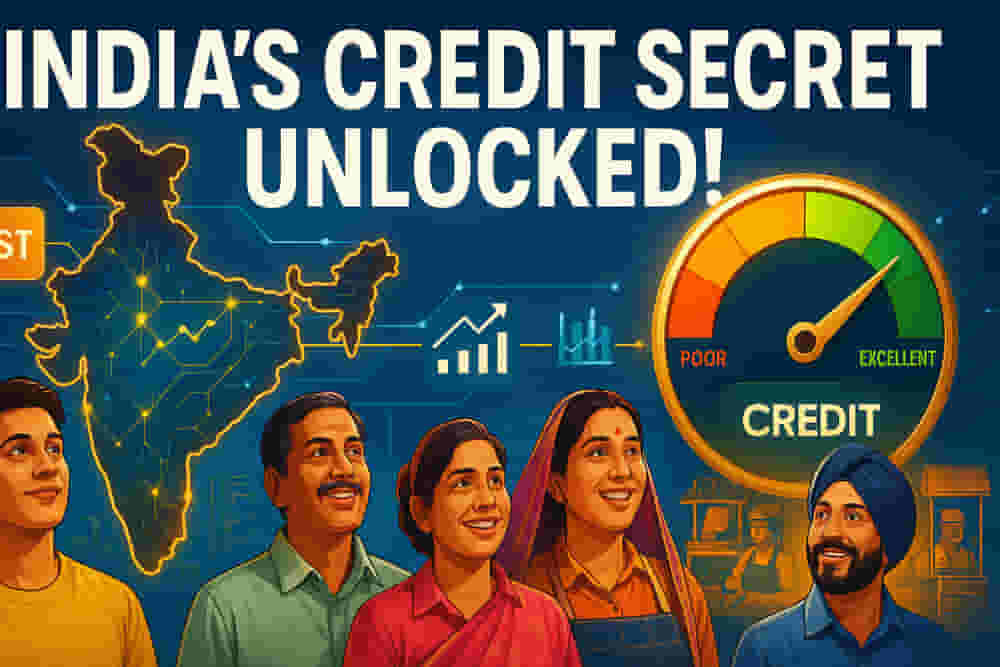


Credit rating agencies in India are advocating for expanded access to diverse datasets to enhance credit assessments for individuals and Micro, Small, and Medium Enterprises (MSMEs). Currently, credit information companies primarily rely on traditional financial data, such as loan repayment history, credit card usage, and personal details. However, with India's robust digital infrastructure, including systems like the Goods and Services Tax (GST), Unified Payments Interface (UPI), and the account aggregator network, agencies believe significantly more granular information is now available.
V. Anantharaman, chairman of TransUnion Cibil, highlighted this during pre-budget consultations, stating that a broader framework is needed for the "responsible use of alternate data while maintaining privacy." This approach, already practiced globally, can provide a clearer picture of a borrower's cash flow and overall risk profile. The goal is to enable more accurate credit evaluations, potentially leading to better access to credit for individuals and the vital MSME sector, which often faces challenges in obtaining financing.
India currently has four major credit information companies: TransUnion Cibil, Equifax Credit Information Services, Experian Credit Information Company of India, and CRIF High Mark Credit Information Services. These companies play a crucial role in the lending ecosystem by providing credit reports to banks and financial institutions.
Anantharaman also advised borrowers to regularly monitor their credit scores and promptly report any inaccuracies to the credit information companies. He clarified that credit data changes must originate from banks, not directly from the credit bureaus, and that a 30-day window exists for resolving complaints, with potential compensation for delays. Furthermore, he emphasized that credit reports should be one of several factors in a lender's decision, not the sole determinant, echoing a recent government clarification that no specific minimum credit score is mandated by the Reserve Bank of India for loan applications.
Impact: This development could significantly improve the efficiency and reach of the credit market in India. By enabling more accurate risk assessment using diverse digital data, it could lead to increased lending to MSMEs and individuals, boosting economic activity. Banks might become more confident in lending, potentially lowering borrowing costs for some segments. The broader adoption of alternate data could lead to a more inclusive financial system. Rating: 7/10.
Terms Explained:
- Credit rating agencies: Companies that assess the creditworthiness of borrowers (individuals, companies, governments) and provide ratings based on their ability to repay debt.
- Granular datasets: Highly detailed and specific information, as opposed to broad summaries.
- Credit assessments: The process of evaluating a borrower's ability and willingness to repay a loan.
- Individuals: Natural persons.
- MSMEs: Micro, Small, and Medium Enterprises – businesses of varying sizes crucial for economic growth.
- Credit information companies (CICs): Entities that collect, maintain, and disseminate credit information of individuals and entities.
- Pre-budget consultations: Meetings held by the government with various stakeholders before finalizing the annual budget.
- Digital infrastructure: The network of digital technologies and systems that support economic and social activities.
- Alternate data: Information sources beyond traditional financial transaction data, such as utility payments, rental history, or digital footprints.
- Privacy: The right of individuals to keep their personal information from being accessed or shared without their consent.
- Traditional credit data: Standard financial information like loan history, credit card payments, and default records.
- Borrower information: Details about the person or entity seeking a loan.
- PAN: Permanent Account Number, a unique identifier for financial transactions in India.
- Facilities: Types of credit offered, such as credit cards, mortgages, or personal loans.
- Repayment records: History of how a borrower has paid back loans or other credit obligations.
- Days past due: The number of days a payment is overdue.
- Default history: Records of instances where a borrower failed to meet their debt obligations.
- GST: Goods and Services Tax, a consumption tax levied on the supply of goods and services in India.
- UPI: Unified Payments Interface, an instant payment system developed by the National Payments Corporation of India.
- Account aggregator network: A framework allowing individuals to share their financial data from various sources (banks, NBFCs, etc.) with regulated entities.
- Cash flows: The movement of money into and out of a business or individual's accounts.
- Risk evaluation: The process of identifying, assessing, and prioritizing risks.
- Credit reporting: The process of compiling and providing credit information.
- Credit scores: A numerical representation of a person's creditworthiness, calculated based on credit history.
- Inaccuracies: Errors or mistakes in the credit data.
- Resolution of complaints: The process of addressing and settling disputes or issues raised by a customer.
- Compensation: Payment made to someone for loss or injury.
- Lenders: Financial institutions or individuals who lend money.
- Decision-making processes: The steps taken to reach a conclusion or make a choice.
- Standalone qualifying criterion: A single factor that is sufficient on its own to meet a requirement.
- Finance ministry: The government ministry responsible for managing public finances.
- Parliament: The legislative body of a country.
- RBI: Reserve Bank of India, the central bank of India.
- Minimum credit score: The lowest acceptable credit score required for loan approval.