 Whalesbook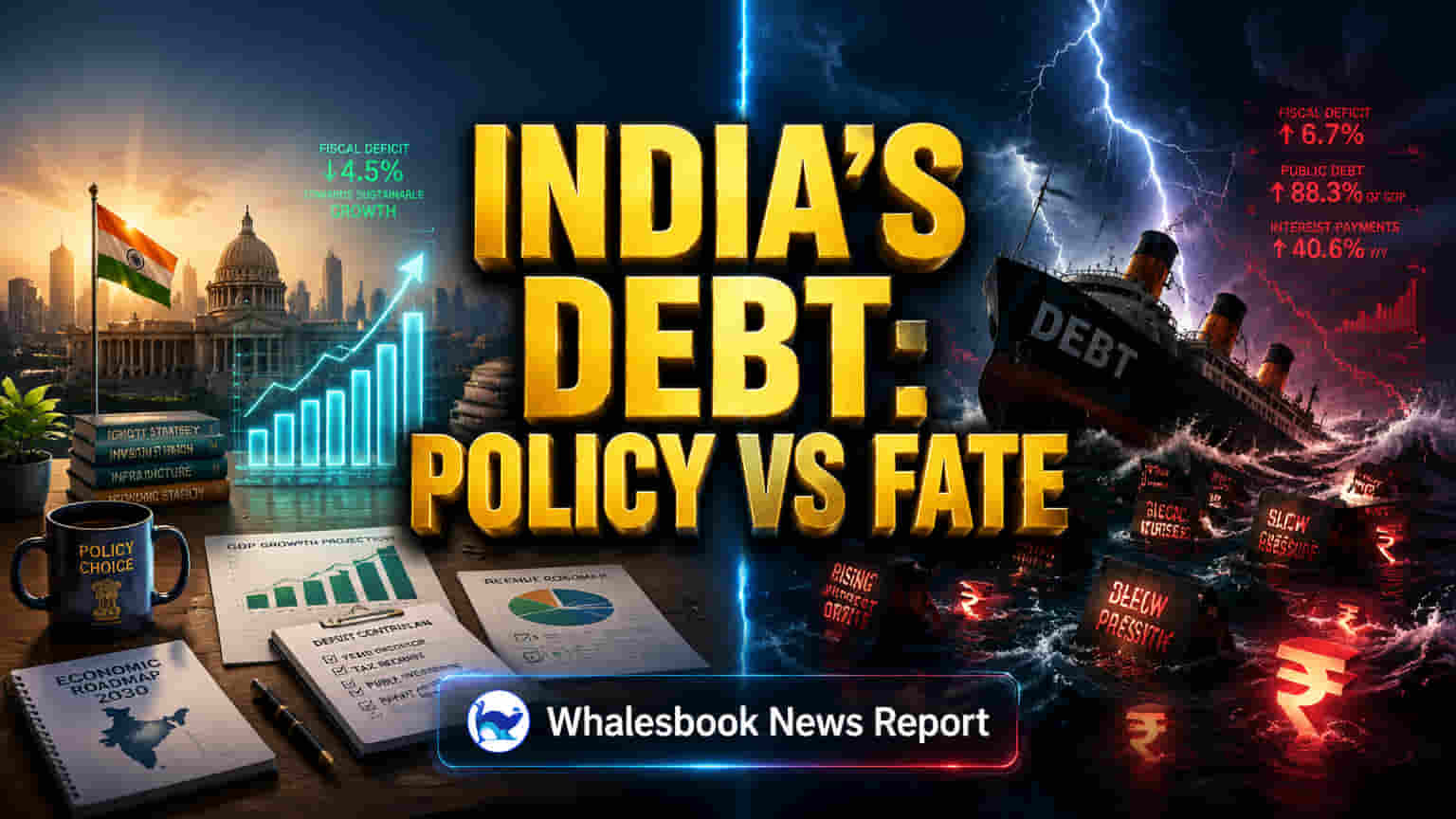


Credibility on the Line
India's fiscal situation is serious, though not yet a crisis. The main worry is the tendency to make small adjustments rather than taking swift, decisive action. The real risk isn't India's current debt-to-GDP ratio, estimated at 56.1% for FY26 and falling slightly to 55.6% by FY27. Instead, the danger is losing credibility with investors if ambitious plans to sell assets and attract foreign direct investment (FDI) are not carried out with speed and discipline, similar to private deals. This delay could reduce the country's ability to make major structural changes when a bigger problem eventually emerges. Global rating agencies like S&P, Moody's, and Fitch are watching this closely.
Monetizing Assets: A Billion-Dollar Hurdle
India has significant potential to raise funds through initiatives like the National Asset Monetisation Pipeline (NAMP) and the proposed National Land Monetisation Corporation (NLMC), with estimates ranging from $180 billion to $200 billion. However, the key challenge is execution. The updated National Monetisation Pipeline 2.0 (NMP 2.0) aims to mobilize ₹10 lakh crore over five years (FY26-30), with a total monetization potential of ₹16.72 lakh crore, including ₹5.8 lakh crore from private investment. The previous NMP 1.0 met 89% of its target. For success, these projects must be treated as major deals needing focused government oversight, ideally from the Cabinet Secretariat. This would attract global infrastructure funds and sovereign wealth funds with long-term investment horizons and industry expertise. Using the money raised to pay down debt, not for day-to-day spending, is vital for reducing the debt-to-GDP ratio. Similar approaches have succeeded in countries like Australia and Japan.
FDI: From Passive to Proactive Deals
India's strategy for attracting foreign direct investment (FDI) needs to shift from broad sector goals to actively pursuing specific deals. While FDI inflows were strong in April-September 2025, rising 18% year-on-year to $35.18 billion, there have been significant withdrawals by foreign portfolio investors (FPIs), totaling over ₹2 lakh crore in 2026. These outflows, fueled by global economic uncertainty, inflation fears, and geopolitical tensions, weaken the rupee and increase inflation. Key growth areas like semiconductors, defense manufacturing, and green hydrogen offer major opportunities, but each requires dedicated government support and clear investment terms, managed like actual investment banking deals. Using free trade agreement corridors as FDI platforms is also essential. Institutions such as DPIIT and Invest India must develop a mindset focused on closing deals, rather than just offering assistance.
India's Debt Picture and Investor Fears
Emerging markets are typically compared based on debt levels and fiscal management. India's central government debt-to-GDP ratio of about 55-56% is lower than advanced economies, but its overall government debt, including states, reaches around 82%. This puts India in a less favorable position compared to the emerging market average of roughly 73%, or below 60% for emerging markets excluding China. If fiscal discipline weakens, there's a risk of a credit rating downgrade, especially after S&P's upgrade to BBB in August 2025. Continued FPI outflows, intensified by geopolitical events like the Iran war and rising oil prices, directly threaten the rupee's stability and investor trust, pushing the currency to record lows. Moody's has already lowered its growth forecast for India to 6% for 2026-2027 due to energy price shocks, underscoring the vulnerability of economies heavily reliant on imports. Failing to effectively sell assets and attract FDI could create a cycle of unchecked government spending, making future borrowing too costly and limiting strategic choices. This is critical as India's total public debt is significant, and recent large foreign investment inflows have been swamped by record outflows, with $21 billion leaving Indian stocks in May 2026.
The Way Ahead: Execution is Crucial
While India's economic managers have the capability, the system's ingrained resistance to acting urgently without a crisis is the main hurdle. The current situation calls for a shift from administrative tasks to proactive deal-making. This could unlock vast untapped potential from household gold, overseas capital, and urban land, providing significant financial flexibility. Revitalizing frameworks like NAMP and NLMC with clear oversight and a focus on attracting private investment is crucial. The government's goal to lower the debt-to-GDP ratio to about 50% by 2031 depends entirely on the swift and disciplined execution of these asset sales and investment plans. India's economic future relies on smart use of its balance sheet, rather than delaying essential actions until a more difficult conversation is forced.