

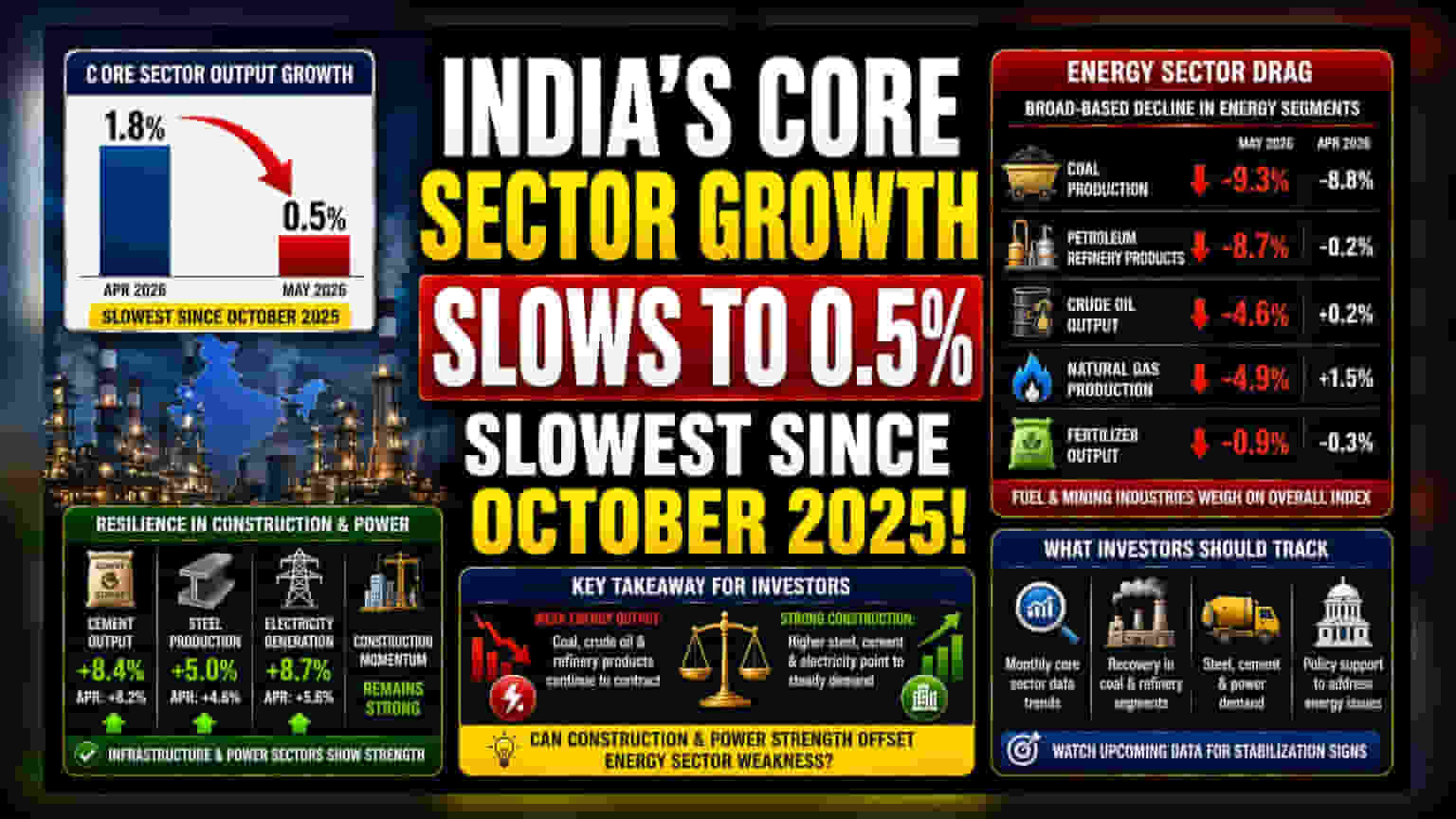
India's core sector output growth dropped to a seven-month low of 0.5% in May 2026, driven by sharp contractions in fuel and energy segments. While cement, steel, and power generation remained resilient, the overall slowdown suggests a pause in the pace of industrial activity.
What Happened
India’s core sector output growth slowed significantly in May 2026, falling to just 0.5 percent. This is the slowest growth rate since October 2025. The core sector, which tracks the health of major industries like coal, steel, and cement, had shown signs of recovery earlier this year, reaching 1.8 percent in April. However, the data for May indicates that this momentum has stalled, raising questions about the pace of industrial and infrastructure activity in the country.
The Energy Sector Drag
The primary reason for the sharp slowdown is a broad-based decline in energy-related segments. Fuel and mining industries witnessed significant contractions, which weighed down the overall index. Coal production fell by 9.3 percent in May, worsening from an 8.8 percent decline in April. Petroleum refinery products also saw a sharp drop of 8.7 percent, a stark difference from the marginal dip seen in the previous month. Additionally, crude oil output contracted by 4.6 percent, and natural gas production decreased by 4.9 percent. Fertilizer output remained weak as well, shrinking by 0.9 percent.
Resilience In Construction And Power
Despite the decline in energy production, not all core segments are weak. Construction-linked sectors showed resilience in May. Cement output grew by 8.4 percent, up from 8.2 percent in April. Steel production also held up, recording a growth of 5 percent. Electricity generation stood out as a strong contributor to the headline numbers, accelerating to 8.7 percent growth in May, compared to 5.6 percent in the previous month. This suggests that while fuel-related industries are struggling, there is still underlying demand for infrastructure-related materials and power consumption.
What Investors Should Track
For investors, the contrast between the weak energy output and the resilient construction sectors is the key monitorable. While higher steel and cement production points to continued construction activity, the consistent contraction in coal and petroleum refinery products may affect industrial input costs or suggest energy supply chain issues.
Investors may watch whether the government or industry can address the bottlenecks in the energy segments to support a broader recovery. The central question remains whether the strength in construction and electricity can offset the weakness in fossil fuel production in the coming months. Market participants will likely watch upcoming monthly data to see if the core sector growth stabilizes or continues to face pressure from these energy-intensive industries.