 Whalesbook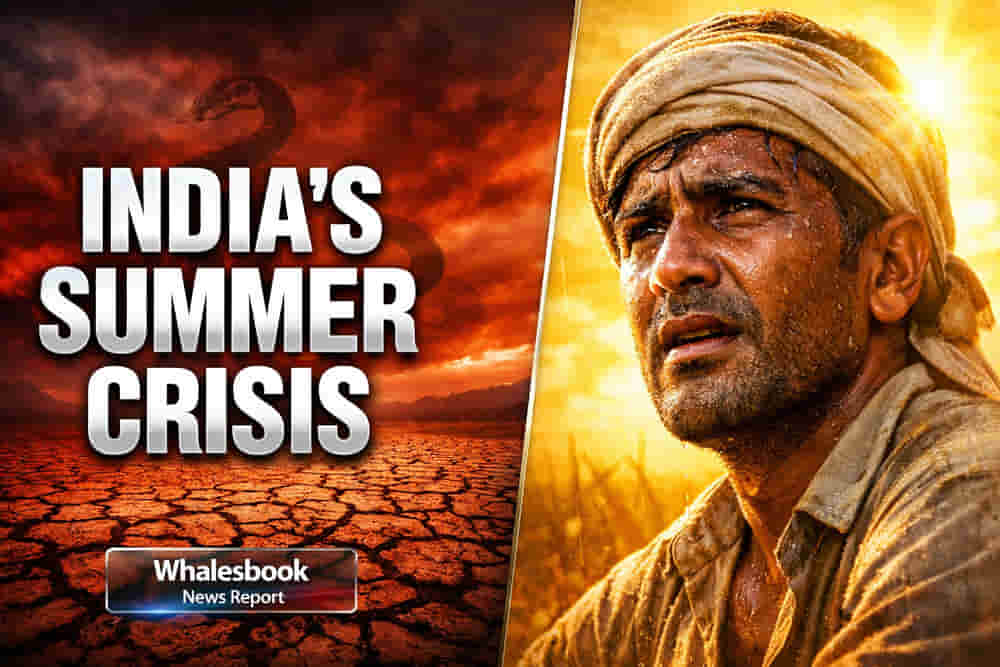
### Economic Contraction Looms Amidst Rising Temperatures
India's economic growth trajectory is increasingly threatened by the escalating frequency and intensity of heatwaves, a direct consequence of global warming. Projections from international bodies and economic analysts paint a stark picture: by 2030, heat stress alone could reduce India's Gross Domestic Product (GDP) by as much as 4.5%, translating into an estimated loss of 34 million full-time jobs [2, 5, 10, 11]. This significant economic fallout is primarily attributed to the severe impact on labor productivity, especially in sectors heavily reliant on outdoor and manual work. Approximately 75% of India's workforce, totaling around 380 million individuals, is exposed to heat-related stress, with agriculture and construction identified as the most vulnerable sectors [2, 8, 12, 21, 33]. The economic repercussions extend beyond direct productivity loss, including increased operational costs for cooling, potential damage to infrastructure, and strain on energy grids due to higher demand for air conditioning [11, 18, 21]. The World Bank estimates that India could account for nearly half of the global job losses stemming from heat stress by 2030, disproportionately affecting lower-income segments of society and potentially reversing progress in poverty reduction [5, 11, 16]. This persistent economic vulnerability highlights a critical systemic risk that requires urgent, multi-faceted adaptation strategies.
### Public Health Emergency Intensifies Amidst Preparedness Gaps
Beyond economic considerations, India grapples with a deepening public health crisis directly exacerbated by climate change. The nation already holds the grim distinction of the world's highest annual snakebite fatality rate, estimated between 46,000 and 60,000 deaths annually [3, 4, 6, 9]. Emerging evidence suggests that warmer, drier weather may alter venom composition, and shifting snake habitats due to climate change are predicted to increase human-snake interactions, potentially escalating these already dire figures into new regions [3, 4, 6, 9]. Compounding this is the rise in heatstroke cases, with over 44,000 recorded in 2024 alone during prolonged heatwaves [Original Text]. Despite the establishment of national frameworks like the National Action Plan for Prevention and Control of Snakebite Envenoming and various Heat Action Plans (HAPs), their effectiveness is critically undermined by systemic deficiencies. A significant portion of HAPs nationwide—as high as 95%—lack detailed risk and vulnerability assessments, a prerequisite for accessing crucial disaster mitigation funds [Original Text, 16]. This gap between policy frameworks and on-the-ground implementation means that local authorities often lack the concrete data and financial resources necessary to effectively combat heat waves and their associated health threats [Original Text, 25]. The consequences are dire for millions of outdoor workers, vulnerable urban dwellers, and the elderly, who remain inadequately protected against life-threatening heat stress and its long-term health impacts [Original Text, 16].
### The Forensic Bear Case: Systemic Vulnerabilities Undermine Resilience
The current approach to climate adaptation in India, particularly concerning heat stress and snakebite envenoming, reveals significant structural weaknesses. While national and state-level plans exist, their impact is hobbled by a 'relief-oriented' approach rather than a proactive, adaptive governance model [25]. Numerous studies highlight that many Heat Action Plans are incremental, lacking the transformational, system-wide agendas needed to address complex challenges like heat-resilient building codes or integrated grey-green-blue infrastructure solutions [25]. Funding mechanisms for disaster mitigation are often inaccessible due to the absence of granular vulnerability mapping in most HAPs [Original Text]. This deficiency means that while frameworks are in place, their practical application is severely limited, leaving populations exposed. For instance, despite being identified as high-risk for heat waves, West Bengal's HAP offers only generalized advice without substantive state actions or resource allocation [Original Text]. Furthermore, the predictive models for snakebite risk, while sophisticated, are limited by data quality issues and the compounded effects of land-use change and urbanization, making precise intervention challenging [3]. The current strategies also struggle to keep pace with the accelerating climate crisis, which is making heat events longer, more intense, and occurring earlier in the year [15, 25]. The projected GDP losses and job displacement underscore that current adaptation measures are insufficient to counter the scale of the threat [2, 5, 10, 11, 21].
### Future Outlook: Escalating Risks Demand Transformational Action
Looking ahead, the outlook for India's climate resilience is fraught with increasing challenges. Projections indicate a continued rise in temperature extremes, with heatwaves expected to become more severe and last longer [Original Text, 15, 25]. This intensifying climate reality implies a sustained and escalating threat to India's economic stability, public health, and social fabric. The continued inadequacy of preparedness mechanisms, particularly the lack of data-driven vulnerability assessments and robust financial support for HAPs, suggests that millions will remain exposed to significant health risks and economic hardship. Experts and international organizations consistently point to the need for a paradigm shift, moving from incremental measures to systemic, transformative agendas that integrate climate resilience into core development strategies [2, 5, 16, 25]. Without substantial investment in adaptive technology, infrastructure, enhanced early warning systems, and greater emphasis on climate-smart agriculture, the potential for reversing developmental gains and increasing poverty and inequality remains substantial. The interconnectedness of climate impacts means that failures in one sector, such as agriculture or public health, can have cascading negative effects across the broader economy, demanding a cohesive and urgent response.