

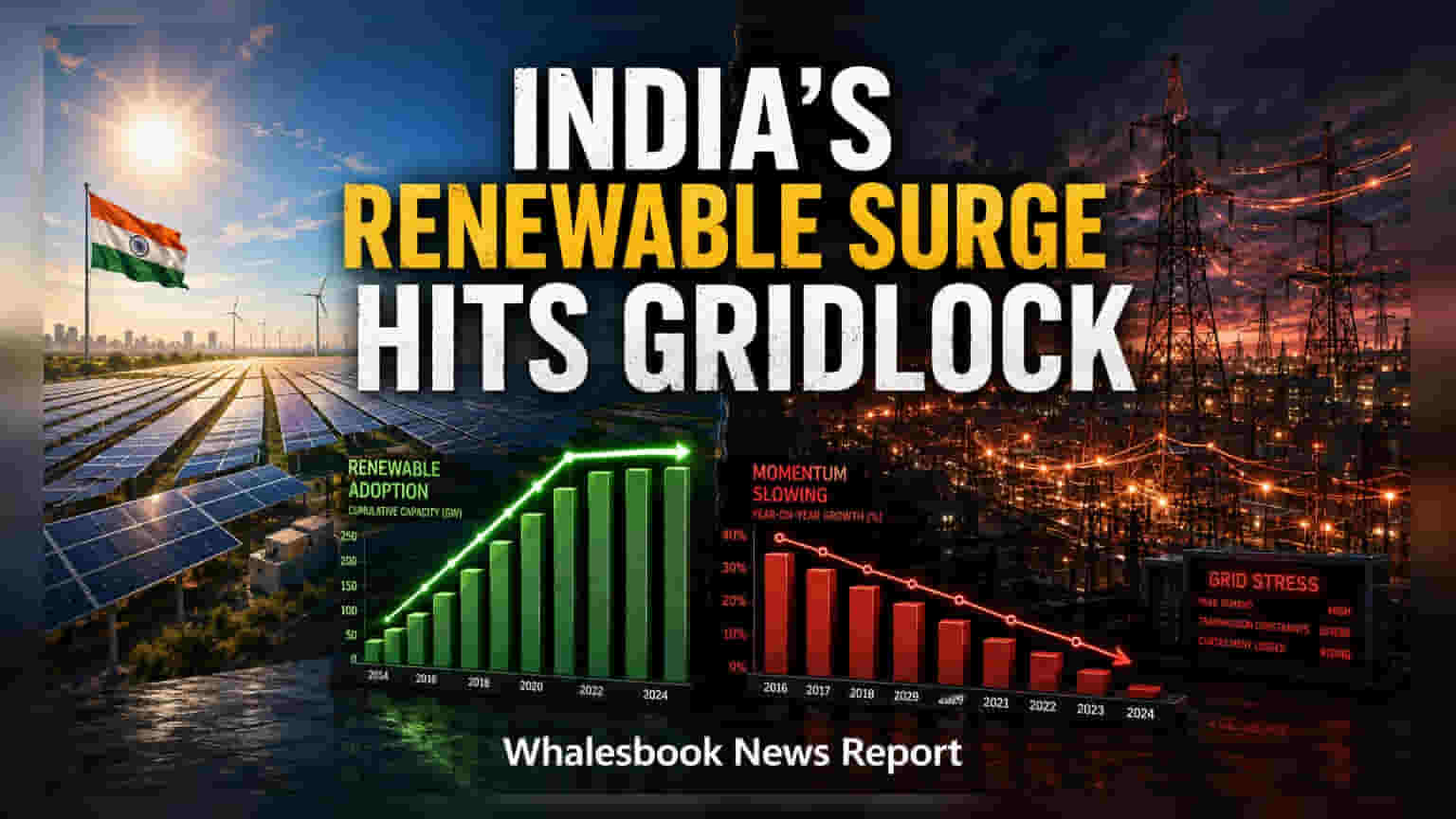
India’s rapid renewable energy expansion faces a grid integration crisis, with 8,133 GWh of solar power lost in the April–June 2026 quarter alone. As grid infrastructure lags behind generation capacity, developers face mounting revenue risks and operational challenges. Investors should now monitor grid connectivity and storage integration as key indicators of long-term project viability.
India has reached a massive milestone in its green energy transition, with total non-fossil fuel capacity hitting 283.46 GW as of March 31, 2026. However, this aggressive pace of building power plants is now running into a significant roadblock: the national electricity grid is struggling to keep up with the supply.
During the April–June 2026 quarter, approximately 8,133 GWh of solar electricity was lost because the grid could not safely transmit or store it. This loss, known in the industry as curtailment, means that even though renewable projects are built and ready to produce power, they are often forced to shut down or reduce output to protect the grid from overloading. This mismatch creates a direct challenge to the profitability of clean energy developers.
The core issue is a structural disconnect in how energy projects are built. Developing a renewable power plant usually takes 12 to 18 months, while building the high-voltage transmission lines required to carry that power to consumers can take 36 to 60 months. This lag in infrastructure creates a dangerous gap where generation capacity exists, but the physical means to deliver it does not. Currently, nearly 21 GW of India’s renewable energy capacity is operating under Temporary General Network Access, meaning these projects lack the permanent, dedicated transmission lines needed for stable operations.
To bridge this gap, the government has begun prioritizing storage solutions. The Pradhan Mantri Surya Sarovar Yojana, approved on July 31, 2026, is a key step in this direction, targeting the development of 5,000 MW of floating solar capacity paired with 10,000 MWh of energy storage. Such initiatives aim to store excess power generated during peak hours and release it when the grid can handle it, reducing the need to simply waste the energy.
For investors, this shift changes the evaluation of renewable energy companies. It is no longer enough to look at how many megawatts a company has added to its portfolio. The financial health of these companies is increasingly tied to the reliability of their grid connectivity. Companies with projects in areas where transmission infrastructure is delayed face higher operational risks, including lower-than-expected revenue and the financial strain of managing stranded assets.
Moving forward, the primary factor for investors to track is the progress of grid integration and storage projects. Future revenue for developers will depend heavily on whether their projects have stable, permanent access to the grid or if they remain reliant on temporary and less reliable networks. As the sector matures, the ability to successfully integrate and deliver power will be just as important as the ability to build the capacity itself.