

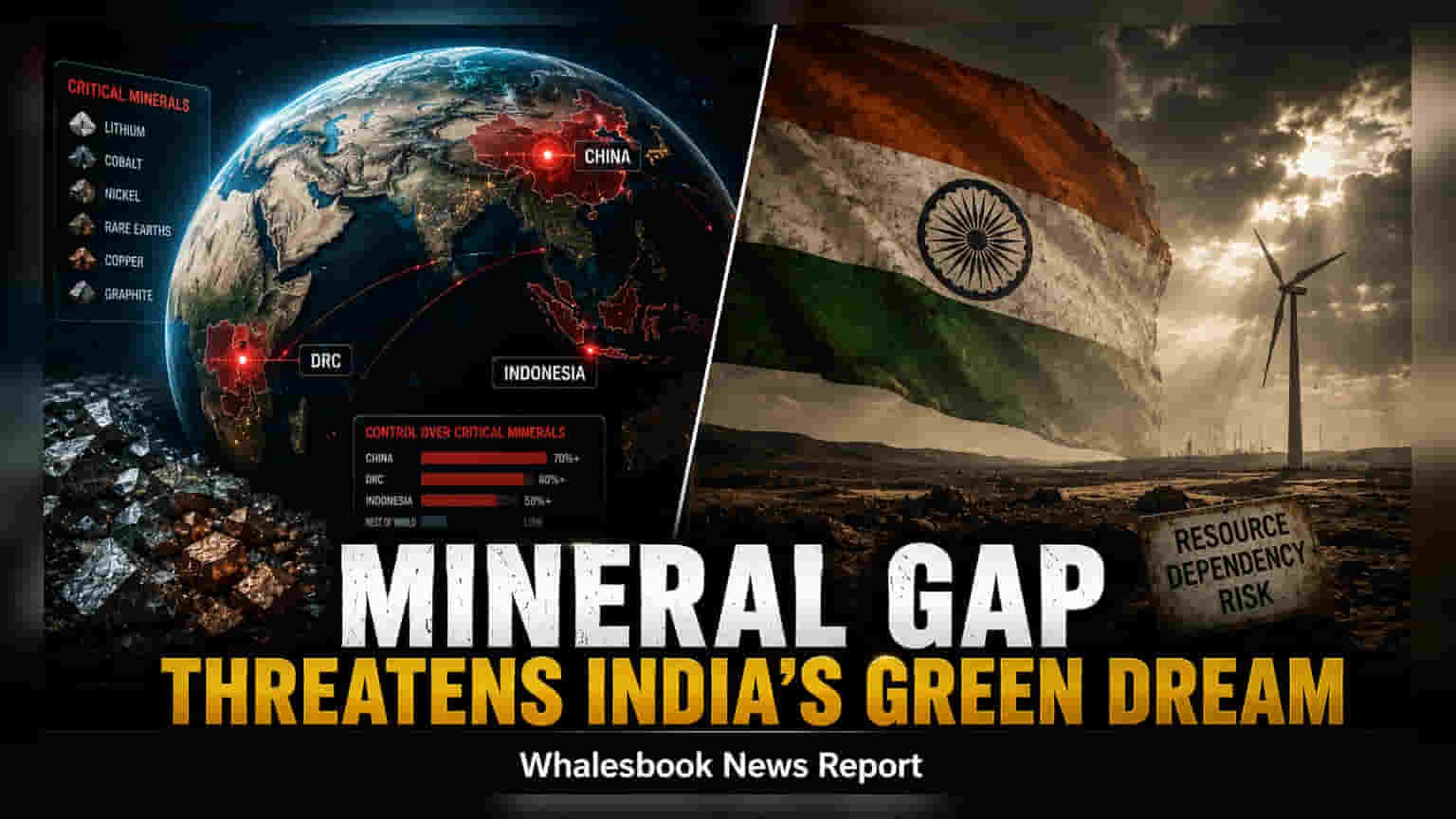
India relies heavily on imported minerals like lithium, cobalt, and rare earths to fuel its renewable energy and electric vehicle goals. With global supply chains concentrated in countries like China, this import dependency creates strategic risks for domestic industrial growth. Investors should watch how policy shifts and international partnerships address these supply vulnerabilities in the coming years.
India’s transition toward renewable energy and the widespread adoption of electric vehicles relies heavily on a steady supply of critical minerals such as lithium, cobalt, graphite, and rare earth elements. These materials are essential for manufacturing batteries, wind turbine magnets, and electric motors. However, the current structure of the global market presents a significant challenge for India's domestic energy ambitions.
Global Supply Concentration and Refining Dominance
The global production of these minerals is highly centralized. Official data shows that just three nations control over 80% to 90% of the world's supply for key minerals like cobalt, rare earths, and lithium. More importantly, the refining process—where raw minerals are turned into usable industrial materials—is heavily dominated by China. This concentration gives a limited number of countries significant leverage over global pricing and supply availability, creating a potential bottleneck for importing nations.
Strategic Risks for Industrial Expansion
India has set a target of achieving 500 GW of renewable energy capacity by 2030, alongside an aggressive push for electric vehicle manufacturing. The country currently produces very little of these minerals domestically and maintains limited refining infrastructure. This makes the industrial sector vulnerable to sudden export restrictions or global price volatility. Unlike nations such as the United States or Japan, which have invested heavily in strategic mineral reserves and dedicated subsidies to secure supply chains, India is still in the early stages of building a similar buffer.
Policy and Partnership Challenges
While India has begun exploring bilateral partnerships to secure resources in regions like Africa and Latin America, the pace of these efforts remains a point of focus. The global market for these resources is highly competitive, with major economies already securing long-term supply agreements. Analysts note that while India possesses rare earth deposits, the ability to effectively mine and process these materials at a competitive cost is essential to reduce import reliance. A lack of swift action could lead to increased costs for manufacturers, potentially putting pressure on profit margins across the electric vehicle and renewable energy sectors.
What Investors Should Track
For investors, the long-term impact of this mineral dependency will depend on how the government and private companies navigate these challenges. Key monitorables include future policy announcements regarding mineral exploration, government-backed subsidies for domestic refining capacity, and the success of international diplomatic efforts to secure stable supply chains. The transition to clean energy is a multi-year trend, and the ability of Indian firms to localize their supply chain will be a critical factor in maintaining cost-efficiency and long-term business sustainability.