 Whalesbook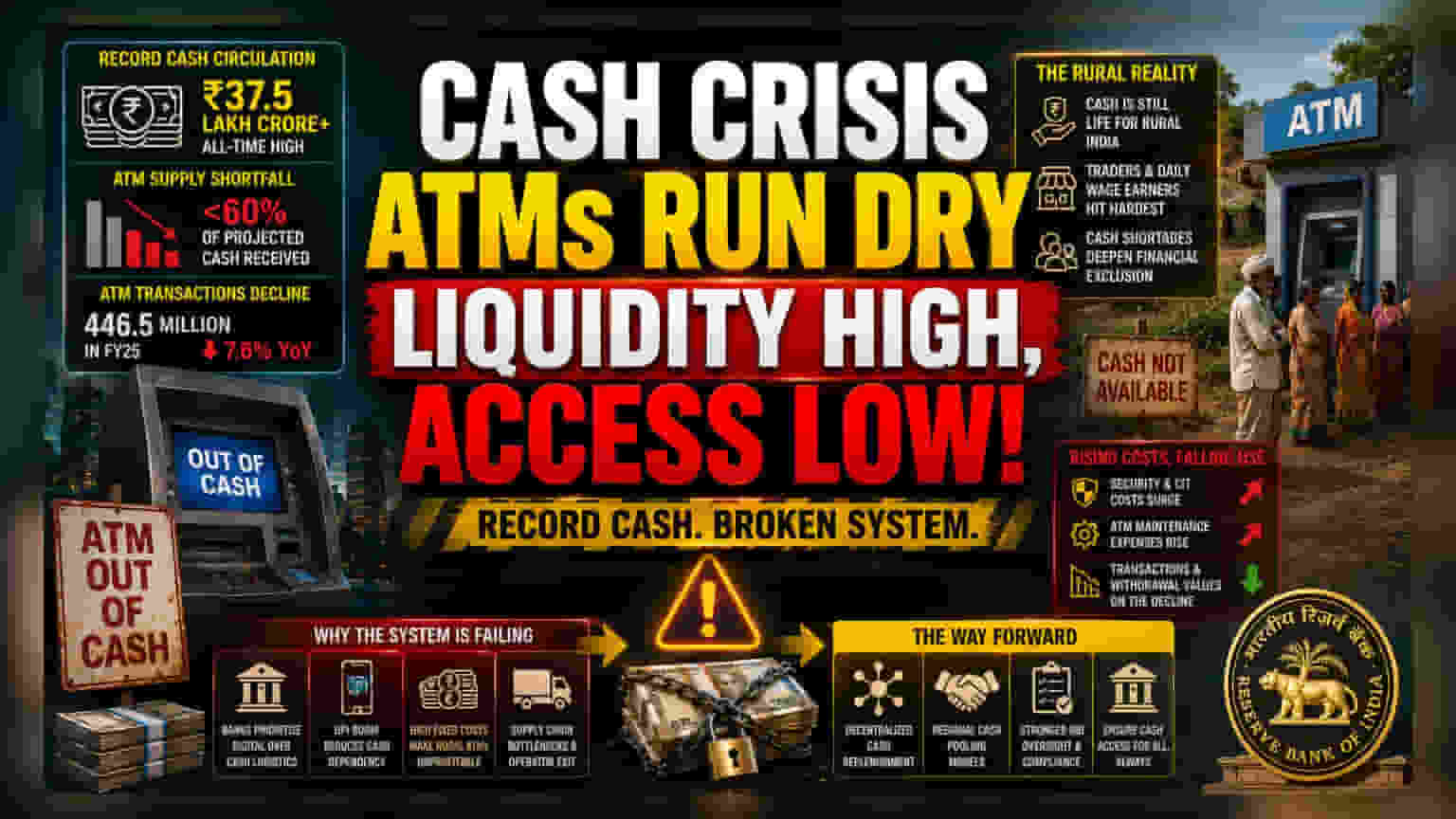


The Efficiency Trap in Cash Logistics
The record-high currency circulation masks a fundamental breakdown in the last-mile distribution network. While the Reserve Bank of India (RBI) reports aggregate liquidity at unprecedented levels, the operational mechanism governing ATM replenishment is failing to keep pace with the evolving demands of the financial sector. The supply-side gap, where operators received less than 60% of their projected needs in recent months, suggests that banks are increasingly prioritizing digital treasury management over the cost-heavy logistics of physical cash transit.
Digital Acceleration vs. Fixed Infrastructure Costs
The economic pivot toward the Unified Payments Interface (UPI) has fundamentally altered the utility of physical ATM networks. Financial institutions are navigating a paradoxical environment where the maintenance costs for physical kiosks—including security, cash-in-transit (CIT) premiums, and wage inflation for specialized personnel—are rising even as transaction volumes and withdrawal values contract. Because ATM service contracts are often fixed-cost heavy, the decline in throughput to 446.5 million transactions annually forces operators to absorb higher per-transaction costs, effectively disincentivizing the consistent stocking of rural and semi-urban terminals.
The Structural Weakness of Rural Access
Unlike urban centers where redundant payment options like digital wallets and QR-based merchant settlements provide a safety net, rural geographies remain tethered to the physical ATM network. The current supply disruption acts as a hidden tax on the rural economy. When cash replenishment fails, small traders and welfare beneficiaries suffer immediate liquidity constraints. This creates a widening gap in financial inclusion, as the profitability of maintaining an ATM in low-velocity areas becomes increasingly untenable for private operators who are not subsidized by central banking initiatives.
Regulatory Pressure and the Path Forward
Central bank mandates require banks to maintain uptime, yet the current incentive structure provides little cushion for the rising overhead of the CIT industry. Should cash shortages persist, the RBI will likely tighten its oversight on bank-level logistics protocols. The industry is reaching a threshold where the traditional model of cash distribution may require a shift toward decentralized replenishment or regional pooling to mitigate the threat of regulatory penalties. The primary risk remains a systemic withdrawal of service providers from remote regions, which would necessitate emergency central bank intervention to ensure that the record cash circulation actually reaches the hands of those who still rely on physical currency for daily survival.