 Whalesbook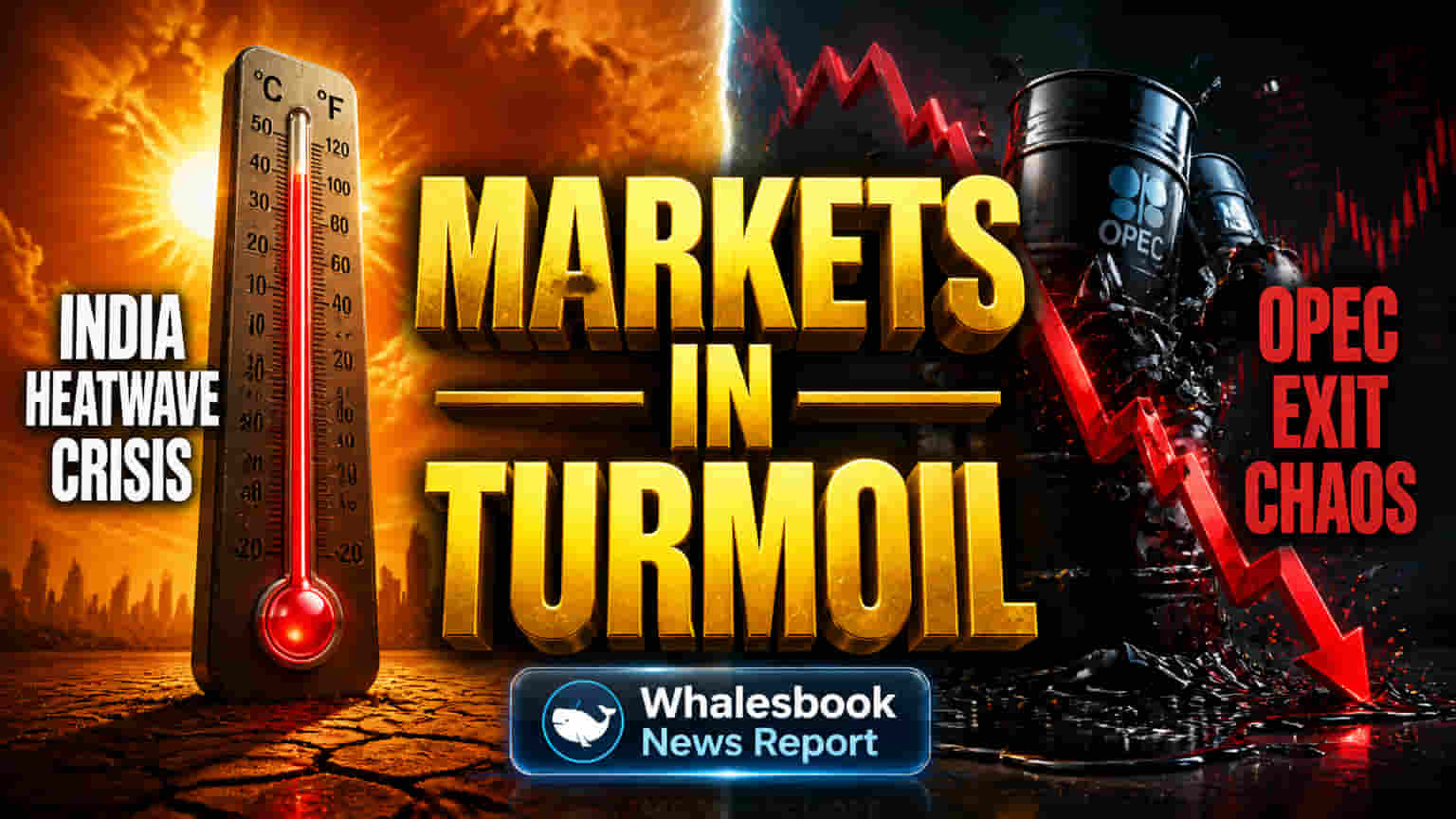


Global Energy Markets Shift as UAE Exits OPEC
The United Arab Emirates' decision in late April to leave OPEC and OPEC+ starting May 1st has reshaped global energy markets. As one of OPEC's biggest producers, the UAE gains more flexibility to increase its own output. While some analysts predict lower oil prices in the long run, the immediate period shows increased volatility. This is worsened by the ongoing conflict involving the US and Iran, and disruptions near the Strait of Hormuz. Brent crude has stayed above $110 a barrel, a major concern for import-reliant nations like India.
India Faces Inflation and Weakening Rupee
India faces several economic challenges that could slow its growth. High crude oil prices significantly increase the country's import costs, weakening the Indian rupee which has hit record lows against the US dollar, nearing 95. This currency drop, combined with foreign investor outflows and global inflation worries noted by the US Federal Reserve, creates a difficult situation. Additionally, the ongoing severe heatwave across parts of India adds further economic pressure, potentially affecting agriculture and consumer mood.
Auto Sector Shows Strong April Sales Despite Pressures
Despite the challenging economic outlook, India's automotive sector showed strong performance in April 2026 sales. Tata Motors saw passenger vehicle sales jump 31% year-over-year to 59,701 units, and commercial vehicle sales rise 28% to 34,833 units. The company's electric vehicle sales grew over 72%. Eicher Motors' commercial vehicle division reported a 6.9% volume increase. These numbers point to solid domestic demand, with Tata Motors becoming the second-largest passenger vehicle maker for April. However, this sales strength must be considered alongside current economic pressures. The P/E ratios for auto companies reflect different investor outlooks: Tata Motors at about 20.57, Maruti Suzuki at 28.39, Mahindra & Mahindra at 22.57, Bajaj Auto at 31.44, and Eicher Motors at 36.79. These figures suggest the market expects growth, but external factors are increasingly challenging its continuation.
Risks to Profits and Demand Emerge
The strong April sales figures may hide significant risks. Continued high oil prices mean higher logistics costs for companies and greater expenses for consumers, which could reduce spending on new vehicles. A weak rupee makes imported parts more expensive for automakers. Historically, sharp oil price increases have often coincided with currency depreciation, putting pressure on auto sector stock values. Because companies depend on imported components, a weaker rupee can shrink profit margins even if sales volumes are steady. Geopolitical instability near the Strait of Hormuz and US-Iran tensions also create an uncertain energy supply, which is vital for an industry dependent on stable fuel prices and consumer confidence.
Outlook Hinges on Global Stability
While recent sales data is positive, the future for India's auto sector depends on easing global energy market swings and a more stable Indian rupee. The UAE leaving OPEC could offer India a chance to secure oil supplies more flexibly and negotiate better prices in the long term, potentially easing inflation. However, the near future remains uncertain. The strong April sales will need to overcome higher fuel costs, increased expenses from currency devaluation, and potential drops in consumer spending as economic pressures grow. Companies will be watched on how they manage their supply chains and pricing amidst these ongoing global and domestic challenges.