 Whalesbook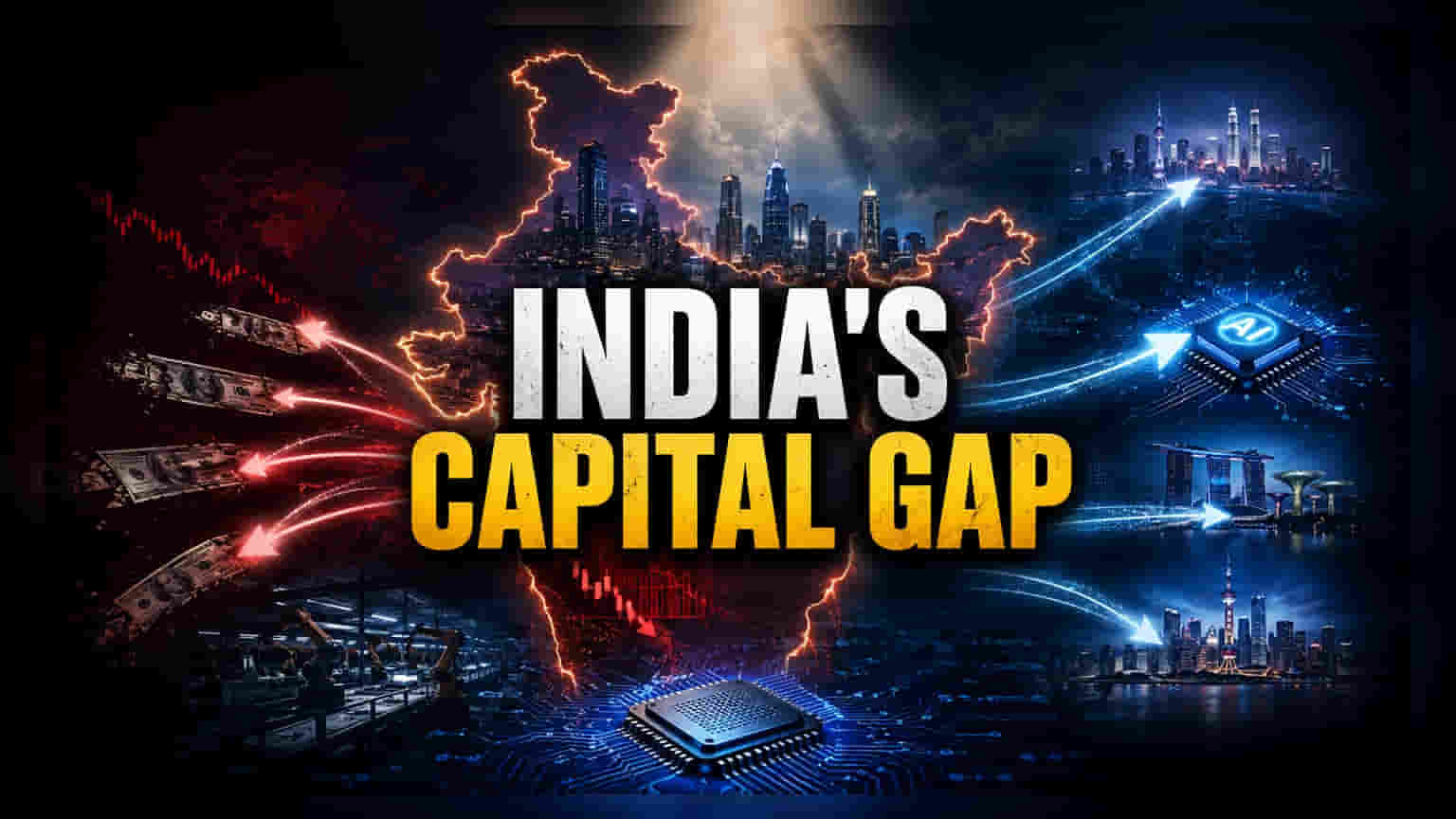


The Capital Allocation Gap
Global capital markets are entering a phase of extreme selectivity, shifting away from emerging markets that rely solely on macroeconomic stability. The recent cooling of foreign direct investment and portfolio flows into India reveals a deeper friction: a disconnect between India’s established growth trajectory and the aggressive capital allocation mandates of global institutional investors. While the current account deficit sits at a manageable 2%, the reliance on these volatile inflows exposes the economy to liquidity crunches if the broader investment narrative fails to evolve.
The Failure of the Current Growth Narrative
Investors are currently looking past India’s fiscal discipline and inflation management, focusing instead on the tangible returns generated by private sector capital expenditure. The prevailing issue is not a lack of interest, but an absence of a high-conviction story surrounding India’s role in the artificial intelligence value chain. While peers like Taiwan and South Korea have entrenched themselves in the hardware and semiconductor foundation of the AI era, India remains perceived primarily as a service-delivery hub. This perception creates a valuation ceiling for domestic equities, as international funds prioritize regions that offer direct exposure to the AI infrastructure boom rather than those facilitating peripheral software implementation.
The Structural Weakness in IT Services
Market participants are increasingly wary of the traditional IT services model, which remains a cornerstone of the Indian economy. The rapid adoption of generative AI threatens to commoditize routine coding and support tasks, a segment that has historically provided reliable export revenues. Unlike the early 2000s, when cost-arbitrage drove foreign capital into India, the current climate demands high-value innovation. The risk here is twofold: potential margin compression as firms scramble to upskill workforces, and the threat of global clients migrating these tasks to more cost-effective, AI-integrated local solutions in their home markets. If India fails to pivot its service offering toward specialized intellectual property, the sector may face a period of stagnant growth that undercuts the national investment narrative.
Competitive Benchmarking and Future Risks
When measured against regional rivals like Vietnam or Indonesia, India’s regulatory environment for manufacturing remains characterized by complex compliance and land acquisition hurdles. Investors who have historically favored the Indian consumer story are now diverting assets to Southeast Asia, where supply chain diversification initiatives are showing faster implementation results. The primary risk for the remainder of 2026 is that the window of opportunity to capitalize on these supply chain shifts may narrow. Without aggressive, bottom-up structural reforms that ease the friction of doing business, India risks becoming an ‘observer’ rather than a ‘participant’ in the next phase of global industrial re-shoring. Brokerage sentiment remains cautious, suggesting that until domestic private investment shows sustained, double-digit growth, institutional inflows will likely remain tactical rather than strategic.