 Whalesbook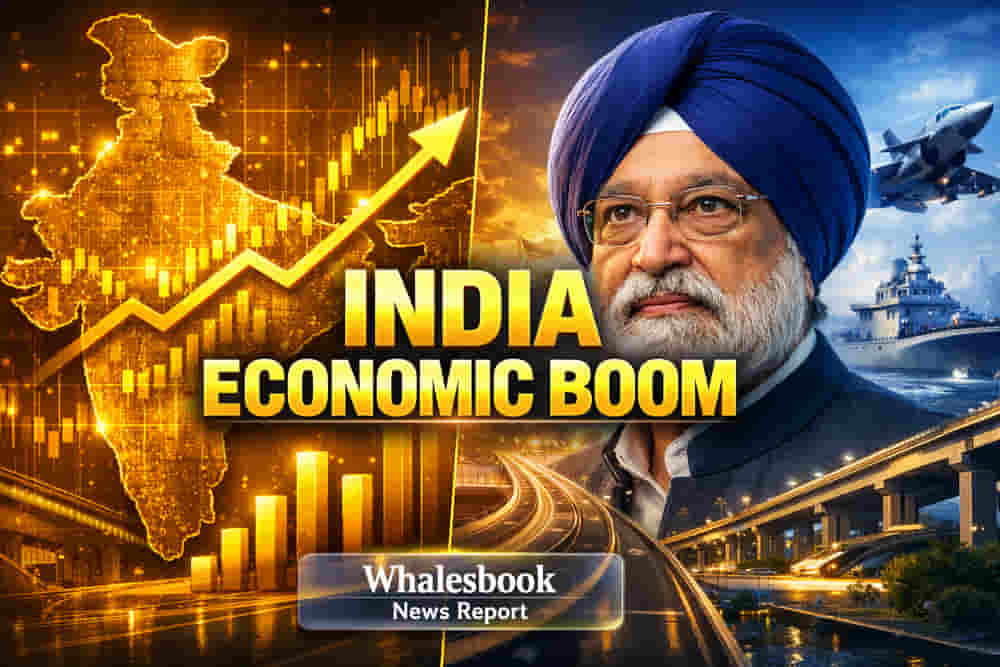
India's 2026-27 Budget: A High-Stakes Growth Gambit
The 2026-27 Union Budget unveils an economic roadmap prioritizing robust growth through significant capital expenditure, while targeting fiscal prudence. Projections indicate real GDP growth ranging between 6.8% and 7.2% for the fiscal year. This growth is underpinned by a projected nominal GDP target of 10%. The fiscal deficit is slated to narrow slightly to 4.3% of GDP, from the revised estimate of 4.4% for the previous fiscal year. These figures signal a commitment to macroeconomic stability, even as the government embarks on an expansive spending agenda.
The Core Catalyst: Infrastructure as the Growth Multiplier
Central to the budget's strategy is a substantial allocation of approximately ₹12.2 lakh crore for capital expenditure, representing a notable 11.5% increase over revised estimates for FY26. This outlay, forming 3.1% of projected GDP, is intended to act as a primary engine for economic expansion and productivity enhancement. The budget highlights a continued surge in national highway development, with a significant expansion in network length. Similarly, the civil aviation sector has seen growth, with a marked increase in airport capacity. This concentrated investment in infrastructure aims to reduce logistics costs, improve connectivity, and catalyze wider economic activity, echoing a strategy proven effective in driving growth. The efficiency of such spending, however, will be critical, as every rupee invested in national highway development is expected to yield substantial GDP returns [cite: Source A text, not for direct copying, but the fact is integrated].
The Analytical Deep Dive: Global Currents and Domestic Strengths
India's projected growth trajectory of 6.8%-7.2% for FY27 positions it favorably against a subdued global economic outlook, where growth is forecast around 2.7%-3.3%. This relative strength is bolstered by controlled inflation, with average headline inflation for April-December 2025 reported around 1.7%, though recent data suggests a slight uptick. However, the global environment presents considerable headwinds, including geopolitical tensions, trade policy uncertainties, and commodity price volatility. The weakening of the Indian Rupee, described as 'punching below its weight,' adds another layer of external vulnerability. Despite these challenges, the budget emphasizes domestic demand resilience and a strategic push in manufacturing, aiming to fortify the economy against external shocks.
The Forensic Bear Case: Execution, Debt, and Emerging Risks
While the budget's ambitions are clear, the scale of planned expenditure raises questions about execution capacity and fiscal sustainability. The projected debt-to-GDP ratio, while targeted to decline to 55.6% in FY27, remains elevated and requires continued deleveraging towards the 50±1% goal by FY31. High debt servicing costs could constrain fiscal flexibility. Moreover, the effectiveness of mega-infrastructure projects hinges on seamless execution by both central and state authorities, a perennial challenge. Risks also lie in the potential for inflation to re-emerge, particularly as core inflation has shown stickiness, influenced by factors beyond food and fuel. The revenue targets, especially the lower projected growth in indirect taxes, warrant close monitoring. Any disruption to global trade or capital flows could also impede India's export-driven sectors and investor sentiment, despite efforts to diversify markets. The long-term viability of growth relies heavily on managing these execution and external risks.
The Future Outlook: Navigating Uncertainty with Ambitious Goals
The path forward for India's economy, as charted by the 2026-27 budget, is one of calculated ambition. Analysts generally forecast continued robust growth, acknowledging India's strong domestic drivers. However, the success of this strategy will be defined by the government's ability to translate ambitious spending plans into tangible development outcomes and to navigate the complex global economic landscape. The interplay between domestic policy execution and evolving international conditions will be crucial in determining whether the budget's growth targets translate into sustainable economic prosperity.