 Whalesbook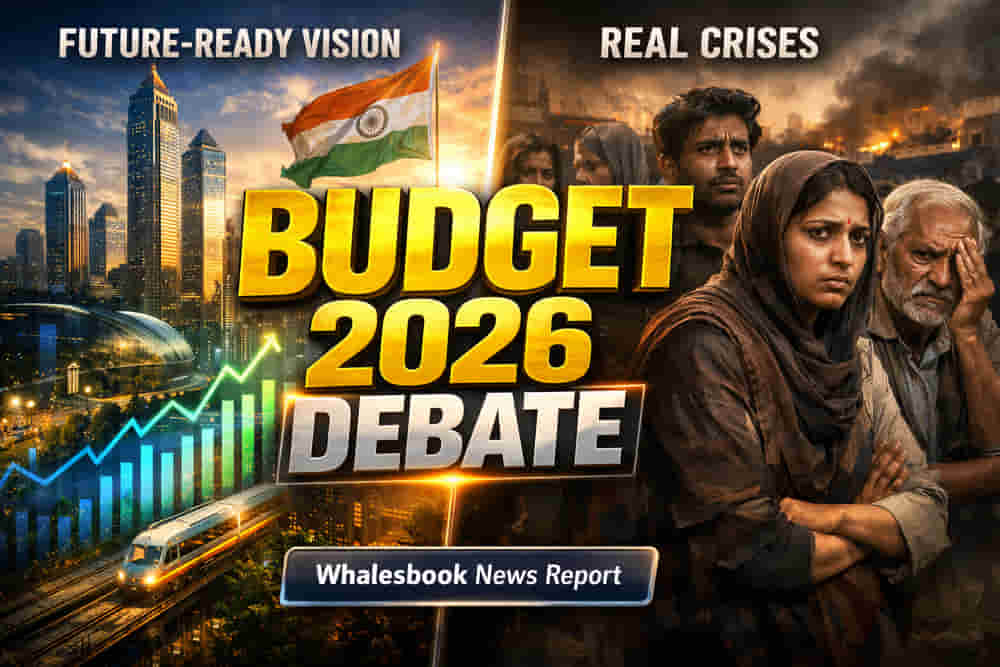
1. The Seamless Link
This budget signals a strategic shift towards supply-side economics and productivity-led growth, building on India's robust macroeconomic foundation. The Economic Survey projects a 7.4% GDP expansion for FY26, supported by strong domestic demand and increasing private sector investment, positioning India as the world's fastest-growing major economy. The government's stated aim is to accelerate the nation's transformation towards a 'Viksit Bharat'.
The Infrastructure and MSME Engine
The centerpiece of the budget is a substantial increase in public capital expenditure (capex) to ₹12.2 lakh crore for FY27, the highest ever, signaling a strong commitment to infrastructure development. This investment is intended to enhance logistics, reduce costs, and stimulate economic activity, particularly in Tier-2 and Tier-3 cities. A dedicated ₹10,000 crore MSME Growth and Resilience Fund was announced, alongside measures to improve credit access and simplify compliance for Micro, Small, and Medium Enterprises, aiming to position them as key drivers of India's growth story. Seven high-speed rail corridors are planned to connect major cities and promote sustainable passenger systems.
Sectoral Focus and Fiscal Prudence
Beyond broad infrastructure, the budget includes targeted initiatives for sectors like tourism, with plans for institutional skilling, a National Institute of Hospitality, and the development of Buddhist circuits and medical tourism hubs. The education sector also sees proposed support through new institutes and labs. Despite the increased capex, fiscal discipline remains a stated priority, with the fiscal deficit projected to narrow to 4.3% of GDP in FY27 from 4.4% in FY26. The debt-to-GDP ratio is estimated to be around 55.6% for BE 2026-27.
Divergent Economic Narratives
The budget has elicited sharply contrasting reactions. Ruling NDA leaders, including Home Minister Amit Shah and Defence Minister Rajnath Singh, lauded the budget for accelerating India's vision of a future-ready economy and ensuring growth reaches all sections of society. Allies also praised its progressive and futuristic outlook. Conversely, opposition parties, led by Congress leader Rahul Gandhi, have labeled the budget "blind to India's real crises," asserting it ignores critical issues like youth unemployment, farmer distress, and falling manufacturing. Critics argue it lacks specifics and offers no solutions for economic and social challenges.
Outlook
The Union Budget 2026-27 aims to consolidate India's position as a rapidly growing economy by prioritizing public investment in infrastructure and MSMEs, supported by fiscal prudence. The government emphasizes a productivity-led growth model and structural reforms to achieve the 'Viksit Bharat' vision. However, significant political debate is expected regarding the budget's effectiveness in directly addressing unemployment and rural economic challenges, highlighting a divergence in economic strategy and priorities.