 Whalesbook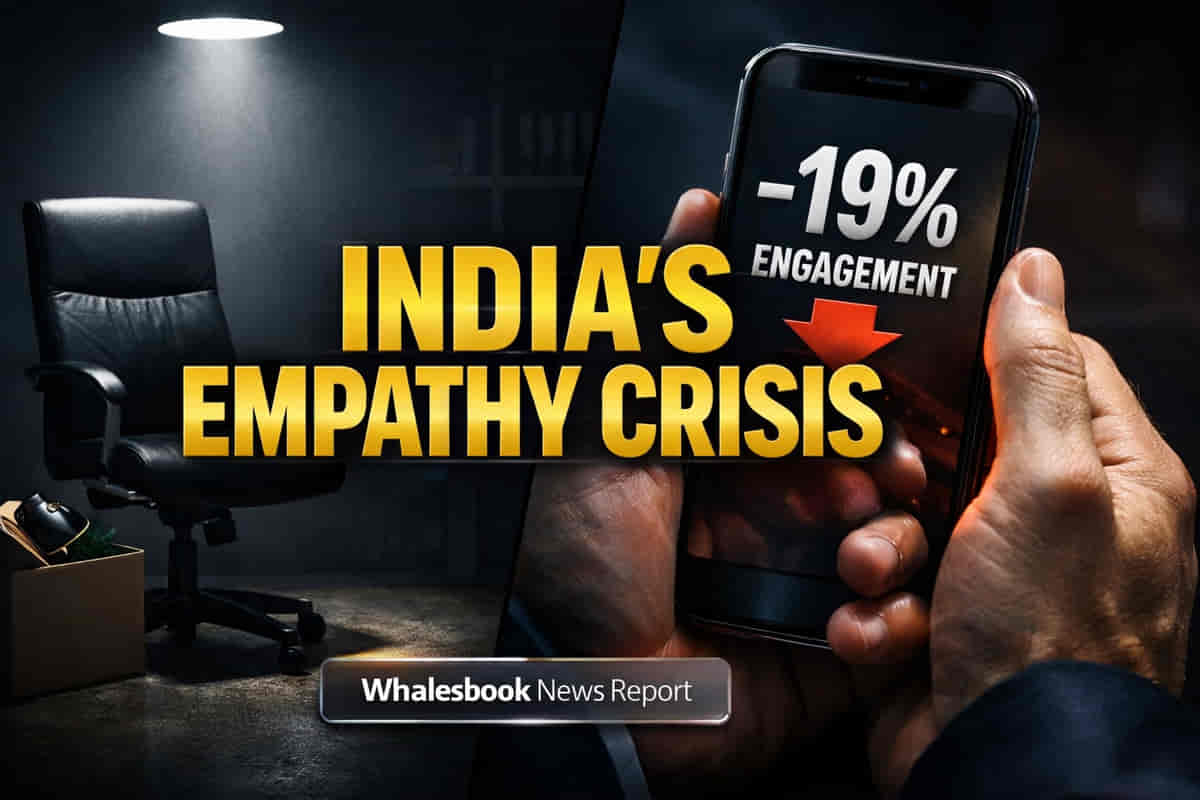
India's Boardrooms Face Empathy Crisis: Layoffs and Trust Deficit Test Capitalism
Indian employee engagement has plummeted to a global low of 19% in 2025, marking a sharp decline from the previous year and signaling a profound crisis of trust between businesses and their workforce. This stark reality, revealed by ADP Research, highlights a workforce grappling with job insecurity, with half actively seeking new employment and a third experiencing daily stress. The situation has been exacerbated by a series of what are being termed "brutal layoffs" across major Indian corporations, testing corporate reputations more than any market shock could.
The pattern of dismissals has drawn sharp criticism. Infosys terminated hundreds of trainees, with allegations from affected employees and the Nascent Information Technology Employees Senate (NITES) that evaluation criteria were unfairly altered. Tata Consultancy Services (TCS) reportedly shed around 12,000 employees, a move that coincided with a compensation increase for its CEO and postponed salary hikes for staff. This trend of mass dismissals, often characterized as treating employees as expendable, was mirrored by global giants like Oracle, Microsoft, PwC, and Meta operating in India.
The Empathy Deficit
ADP Research's findings paint a grim picture: employee engagement in India fell to 19% in 2025, down from 24% the year prior. This steep global decline suggests a widespread disconnect between corporate strategies and employee well-being. The data indicates that half the workforce is actively job-hunting, a clear sign of dissatisfaction and a search for more stable or supportive environments. Furthermore, 30% of employees report experiencing daily stress, underscoring the mental toll of current workplace dynamics.
Executive vs. Employee Disparity
The stark contrast in how employee redundancy and executive exits are handled has fueled resentment. While workers receive "pink slips" or instant dismissals, C-suite departures are often managed with care to preserve reputations. For instance, IndusInd Bank's CEO and Deputy CEO resigned following significant accounting lapses, a departure framed as taking "moral responsibility" but occurring after regulatory pressure. This disparity highlights a perceived double standard where accountability and dignity in separation differ vastly depending on an individual's position within the corporate hierarchy.
Volkswagen India's Counterpoint
Amidst this challenging environment, Volkswagen India presented a noteworthy alternative approach. When plant worker unions requested a Voluntary Retirement Scheme (VRS) for 2,300 employees, the company engaged in genuine dialogue. Volkswagen actively consulted with unions, communicated terms transparently, and offered detailed financial packages. While the process was not without its difficulties, it successfully preserved employee dignity, demonstrating that mass workforce adjustments can be managed with respect and a commitment to workers' voices.
The Business Case for Empathy
Leading global research underscores the critical importance of empathy in leadership. DDI, a global leadership firm, identifies empathy as the paramount leadership skill, reporting that leaders exhibiting high empathy achieve over 40 percent better results in coaching, engaging their teams, and decision-making. Harvard Business Review also champions empathy, labeling it a non-negotiable leadership trait for 2025. This suggests that fostering an empathetic work environment is not merely a matter of corporate social responsibility but a strategic imperative for high performance.
Reputational Risk and Social Media Amplification
Companies practicing indifference face escalating reputational risks. Employees have increasingly utilized social media platforms to voice grievances, turning them into powerful tools for collective action. Hashtags like #LayoffTruths have emerged, transforming individual stories of unfair treatment into widespread movements. Each viral cycle amplifies the reputational damage and increases the cost for companies perceived as treating people merely as numbers, impacting brand image and future talent acquisition.
Capitalism Under Scrutiny
The widespread corporate indifference has prompted broader discussions about the practice of capitalism itself. The pronounced disconnect between executive privilege and worker precarity has fueled calls for a fundamental re-evaluation of how large global companies operate. Pioneers like Patagonia and Whole Foods in the US have shown that a business model can successfully integrate purpose and profit, offering a blueprint for more sustainable and equitable practices that benefit all stakeholders, not just those at the apex of the corporate structure.
The Path to Rebuilding Trust
Indian companies must adopt more transparent and humane practices to close the trust deficit. This includes eliminating surprise dismissals, ensuring clear and consistent evaluation criteria, and providing fair severance packages that are equitable across all levels of the organization, rather than exclusively favouring the C-suite. Adopting the principles demonstrated by proactive companies and focusing on genuine communication is crucial for retaining talent and rebuilding faith in the fairness of the economic system.
Impact
The empathy deficit of 2025 carries significant future implications. It threatens to create a generation of Indian workers suspicious of employers, leading to a long-term shortage of returning talent and requiring years to rebuild trust. Companies that fail to adapt risk not only immediate reputational damage but also profound, lasting consequences on their workforce's morale and loyalty. The success of Indian businesses hinges on demonstrating that their models work for everyone, fostering a more resilient and trustworthy economic landscape.
Impact Rating: 8/10
Difficult Terms Explained
- Empathy Deficit: A situation where leaders and organizations lack understanding and consideration for the feelings and perspectives of their employees.
- C-Suite: The highest-ranking executive positions within a company, such as Chief Executive Officer (CEO), Chief Financial Officer (CFO), and Chief Operating Officer (COO).
- Pink Slips: Formal notifications given to employees that their employment is being terminated, often due to downsizing or redundancy.
- Voluntary Retirement Scheme (VRS): A scheme offered by companies to employees, allowing them to opt for early retirement with certain benefits, often used to reduce workforce size voluntarily.
- Nascent Information Technology Employees Senate (NITES): An organization advocating for the rights and welfare of employees in the information technology sector in India.