

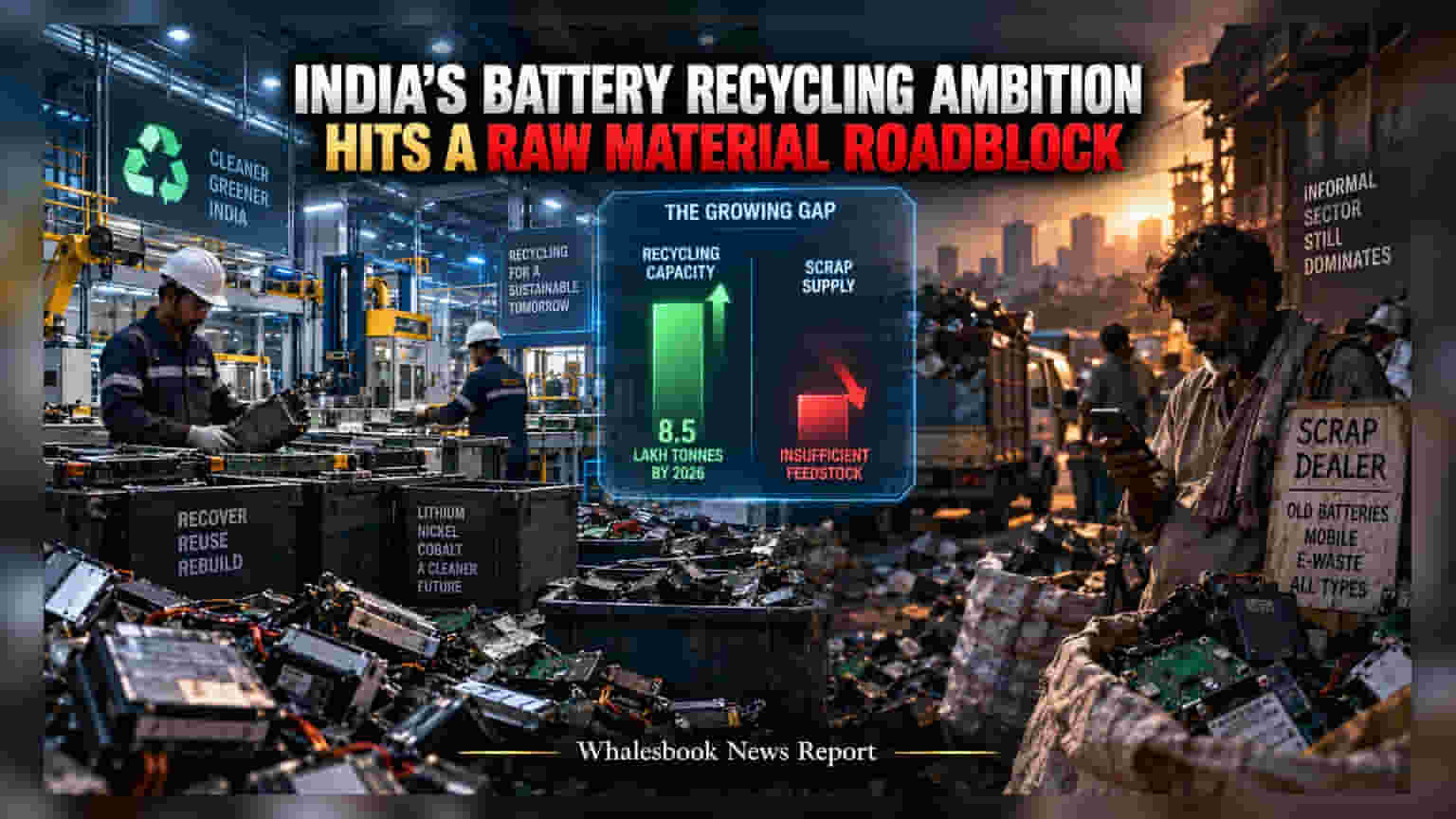
India's battery recycling industry, backed by over Rs 5,000 crore in investment, is struggling with a critical shortage of used batteries. While processing capacity is rapidly expanding, the formal sector continues to lose feedstock to informal scrap collectors, creating an economic gap for firms handling low-value battery chemistries. The sector's long-term viability now hinges on improving collection networks and meeting upcoming regulatory compliance mandates.
India’s push to become a hub for battery recycling is running into a significant reality check. While over Rs 5,000 crore has been committed to the sector and companies are planning an annual processing capacity of 8.5 lakh tonnes by early 2026, the industry is struggling with a fundamental disconnect between infrastructure and supply. Many of these upcoming plants are designed for mechanical shredding, which helps in processing, but they often lack the sophisticated chemical recovery capabilities required to extract high-purity minerals. Without a consistent supply of end-of-life batteries, these facilities risk operating below capacity or becoming dependent on imported scrap, which can significantly raise operational costs.
The Informal Sector Challenge
The most significant hurdle for formal recyclers remains the dominance of India’s informal scrap network. Neighborhood scrap dealers continue to handle the vast majority of e-waste, far outpacing the reach of the formal collection system. While regulatory bodies like the Central Pollution Control Board have highlighted substantial formal processing capacity, the actual amount of battery waste entering these channels remains low. The lack of a strong, formalized collection network means that recycling companies are often forced to compete for a limited pool of feedstock, making it difficult to achieve the economies of scale needed to justify their high capital spending.
Economic Viability and Battery Chemistry
The economic model for recycling is also being tested by the type of batteries entering the waste stream. Batteries with valuable metals like nickel and cobalt offer better profit margins, but the industry is increasingly dealing with Lithium Iron Phosphate (LFP) batteries. These chemistries lack high-value components, making it difficult for recyclers to cover the costs of collection and processing. For manufacturers, who face mandatory Extended Producer Responsibility (EPR) compliance, these rising costs can put pressure on overall profitability. Balancing the cost of compliance with the lower profit margins of certain battery types is a primary challenge for companies across the sector, including established players facing the brunt of these regulatory requirements.
Regulatory Outlook and Future Mandates
To address concerns about transparency and efficiency, regulators are shifting toward stricter enforcement, including mandates for GST-linked e-invoices for EPR certificate transactions. This is a crucial step to reduce fraudulent claims and ensure that recycling data is verifiable. Looking ahead to FY2027-28, the government has set specific minimum targets for the use of recycled materials in new batteries. As these deadlines approach, the industry's focus must shift from simply building shredding capacity to developing sustainable, long-term supply chains. Investors and stakeholders should track how effectively companies can integrate informal collection points into their formal network and whether they can scale high-purity recovery processes to improve margins in the face of shifting battery chemistries.