 Whalesbook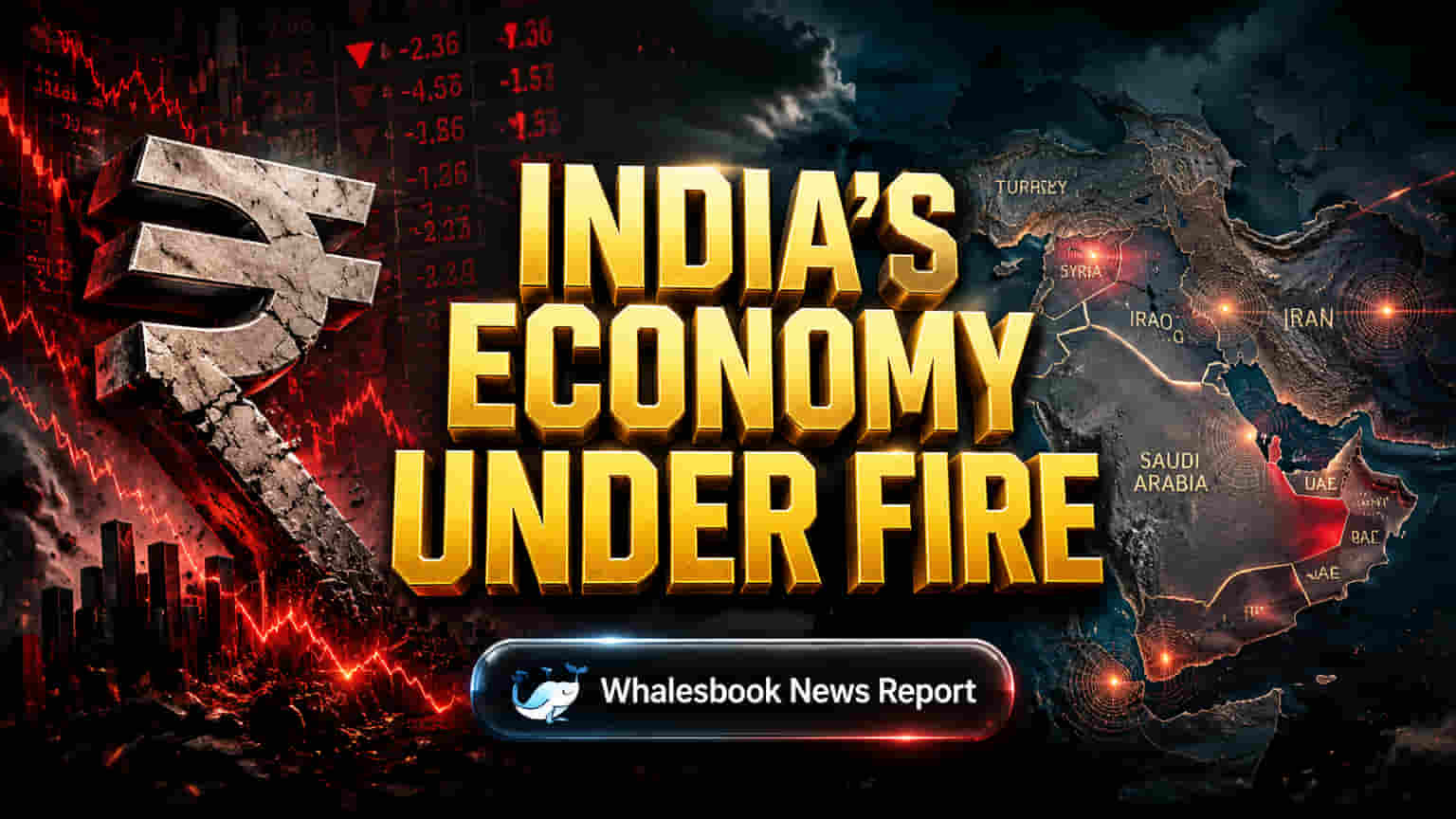


Middle East Crisis Fuels Balance of Payments Pressure
Chief Economic Advisor V. Anantha Nageswaran has stated that the ongoing crisis in West Asia has become a direct 'live balance of payments stress test' for India, moving beyond a temporary shock. This situation threatens inflation, the current account deficit, and the rupee's stability. Managing the current account effectively, ensuring its financing, and preventing further currency depreciation are identified as the main macroeconomic goals for fiscal year 2027. India's significant reliance on energy imports, sourcing nearly 87% of its crude oil and about 60% of its LPG from the Middle East, makes it highly vulnerable to supply disruptions and price swings. The potential closure of the Strait of Hormuz, a key shipping lane for these imports, has already pushed up global crude oil prices. This is expected to widen India's import bill and consequently its current account deficit, with estimates suggesting it could rise above 2% of GDP in FY27, from about 0.8% in FY26. Furthermore, with 38% of India's annual remittances coming from Gulf countries, any slowdown in these flows could add to balance of payments pressure.
Global Division Creates New Challenges for India
Nageswaran highlighted four structural shifts reshaping the global economy: global economic division, a split in technology development, higher energy costs related to the green transition, and increased global risk costs. These shifts create a complex global environment where developing economies like India face greater risks, including unpredictable capital flows and currency value pressure. In response, India is actively diversifying its trade by signing nine recent agreements with various partners to build economic resilience and reduce dependence on any single region. Agreements with the UK, Oman, and New Zealand aim to improve market access and attract foreign investment, although their full impact will take time. Building technological self-reliance and resilient supply chains are key parts of India's strategy for this divided global economy. However, the immediate challenge lies in balancing these long-term goals with the immediate pressures from current geopolitical energy shocks.
Persistent Vulnerabilities Remain Despite Reserves
Despite strong foreign exchange reserves, estimated at $701.4 billion as of January 2026, acting as a crucial buffer, significant underlying weaknesses persist. India's heavy reliance on imported energy remains a key vulnerability; any prolonged disruption in West Asia will directly increase its import bill, widen the current account deficit, and fuel inflation. The push for fiscal discipline and infrastructure investment, though strategically sound, is a difficult balancing act. Rising energy costs could strain government finances. Losses for state oil marketing companies, estimated at Rs 2 lakh crore in Q1FY27, could further complicate fiscal discipline. Analysts project the current account deficit will widen, and forecasts suggest India's GDP growth may slow to between 6.0%-6.6% in FY27. These are attributed to rising external risks and currency volatility. The Indian Rupee has already weakened significantly and experienced considerable volatility due to higher oil import costs and capital outflows, making it Asia's worst-performing currency at times over the past 12-18 months. While trade agreements offer long-term diversification benefits, they may not be enough to counter rapid geopolitical shocks immediately, and achieving true technological self-reliance is a complex, long-term process.
Sustaining Reforms is Crucial for Economic Path
Navigating the current volatile environment depends on India's ability to maintain its reform momentum and policy flexibility. The forecast for slower GDP growth in FY27 highlights the significant challenges posed by geopolitical tensions and high commodity prices. Ultimately, India's economic path in an increasingly divided global economy will depend on its ability to manage external balances, attract stable capital, and build domestic resilience through structural changes.