

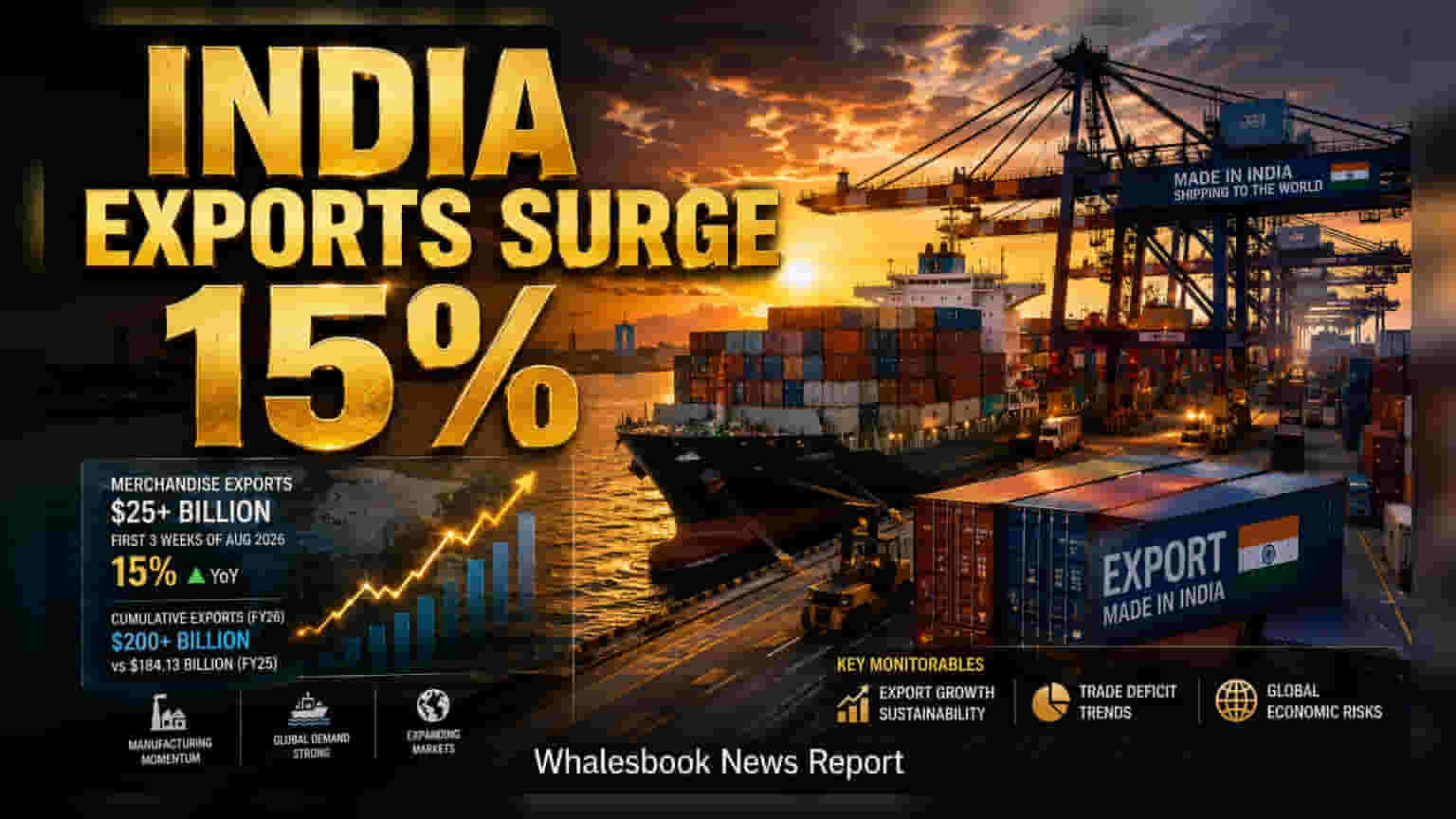
India’s merchandise exports grew 15% in the first three weeks of August, taking total shipments for the fiscal year past $200 billion. While this momentum supports the government's trillion-dollar export target, the widening trade deficit remains a key factor for investors to track.
India’s trade sector has maintained its growth momentum, with merchandise exports surpassing $25 billion during the first three weeks of August 2026. This 15% year-on-year increase brings the total cumulative exports for the current fiscal year to over $200 billion, a clear improvement over the $184.13 billion recorded during the same period last year.
The government continues to pursue an ambitious $1 trillion export target by the end of fiscal year 2027. To meet this goal, the strategy aims for $530 billion in merchandise shipments and $470 billion in services. Achieving this would represent a significant shift in India’s manufacturing and trade profile, moving the country closer to being a more central player in global supply chains.
While the export growth is encouraging, investors and analysts are also monitoring the trade deficit, which represents the gap between what a country earns from exports and what it spends on imports. In July 2026, India recorded a merchandise trade deficit of $31.98 billion. This gap widened because imports grew at a faster pace than exports. A high trade deficit can put pressure on the country's currency and, in some cases, impact the broader economy if import costs—such as energy or raw materials—continue to rise rapidly.
Looking ahead, the road to the trillion-dollar target faces several hurdles. Geopolitical instability, particularly in West Asia, creates risks for logistics and can disrupt trade routes. Furthermore, global trade fragmentation and rising protectionist policies in various markets could make it harder for Indian exporters to maintain consistent growth. Since a significant portion of exports is tied to petroleum and commodity products, the economy also remains sensitive to global price changes.
Investors may track upcoming monthly trade figures to see if the pace of export growth can outstrip the rise in import costs. Monitoring sector-specific performance, particularly in manufacturing and high-value services, will be important to gauge whether the trillion-dollar target remains realistic given current global economic conditions.