 Whalesbook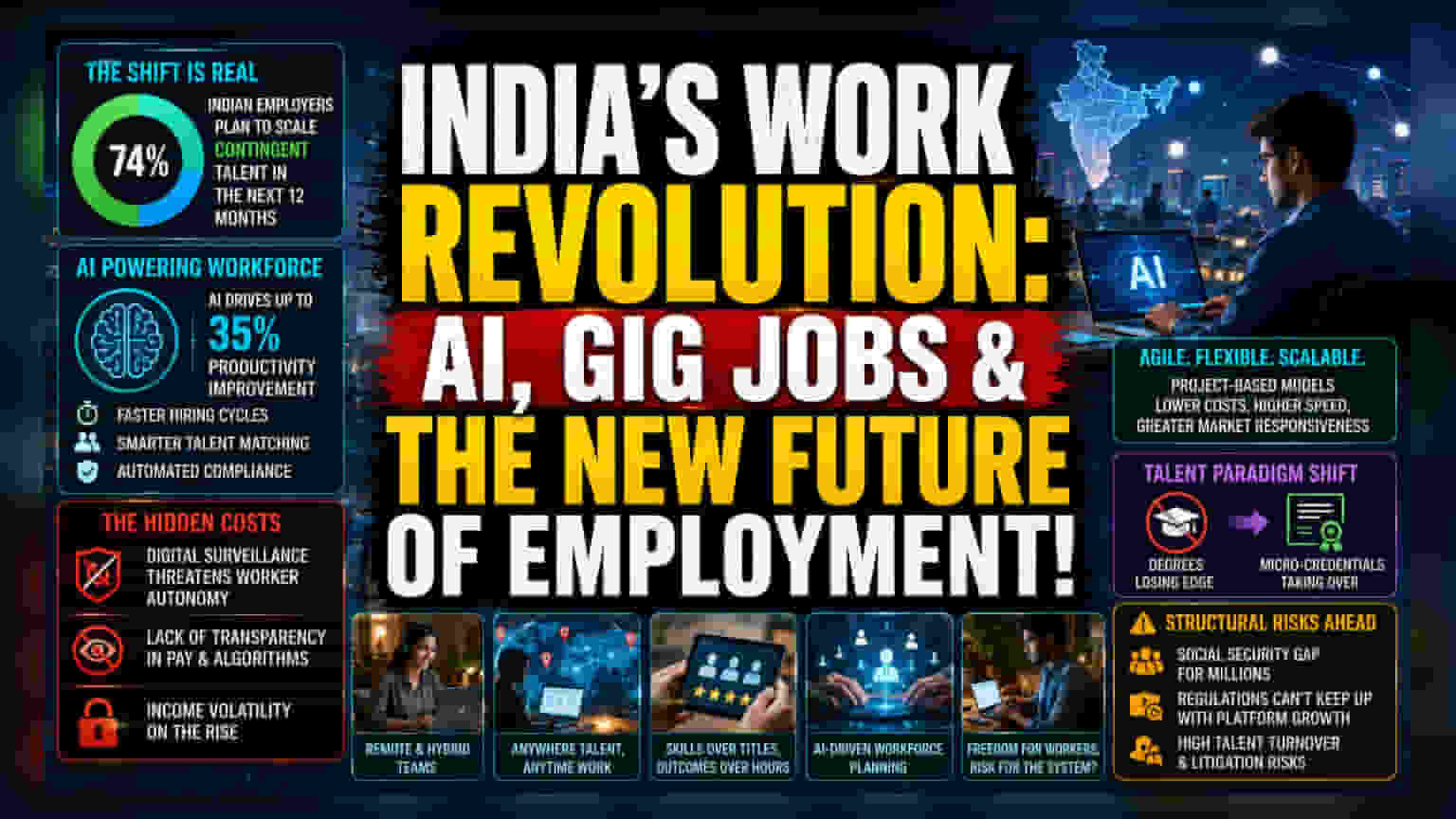


The Shift Toward Workforce Fluidity
Indian enterprises are aggressively dismantling traditional full-time employment structures in favor of agile, project-based models. This transition, which significantly outpaces global adoption rates, is not merely a reactionary measure to skill gaps but a strategic move to optimize cost structures and market responsiveness. With 74% of local employers actively planning to scale their contingent talent pools over the next year, the Indian labor market is effectively decoupling from the static hiring norms that defined the previous decade.
AI as the Operational Backbone
The acceleration of this trend is inextricably linked to the rapid deployment of artificial intelligence. Unlike global peers that often struggle with AI integration, Indian firms have utilized automated platforms to reduce hiring cycles and optimize human capital allocation. Organizations currently reporting the most success are those treating AI not as a back-office utility, but as a core engine for workforce planning. These data-driven models have enabled firms to achieve documented productivity improvements of up to 35%, while simultaneously trimming operational overhead through automated compliance and skills-matching algorithms. However, this efficiency comes at a cost; the reliance on algorithmic management is creating a new class of "digital surveillance" that raises valid concerns regarding worker autonomy and the transparency of compensation structures.
The Forensic Bear Case: Structural Vulnerabilities
Despite the immediate performance gains, the rapid informalization of the workforce introduces significant systemic risks. The transition away from traditional payroll models threatens to widen the gap in social security coverage for millions of workers. While government frameworks like the Code on Social Security attempt to bridge this divide, the reality is that the regulatory apparatus is struggling to keep pace with the velocity of digital platform expansion.
Furthermore, the "skills flip"—where employers prioritize micro-credentials over traditional degrees—exposes a fragile talent pipeline. As firms pivot toward these agile roles, they risk creating a precarious environment where income volatility becomes the norm. For the Indian worker, this represents a trade-off: higher immediate earning potential in exchange for the long-term instability associated with a lack of institutional benefits. Investors should note that companies relying heavily on these agile structures may face future headwinds, including potential litigation regarding worker classification and the high cost of talent turnover in a market where specialized, gig-based skills remain transient.