

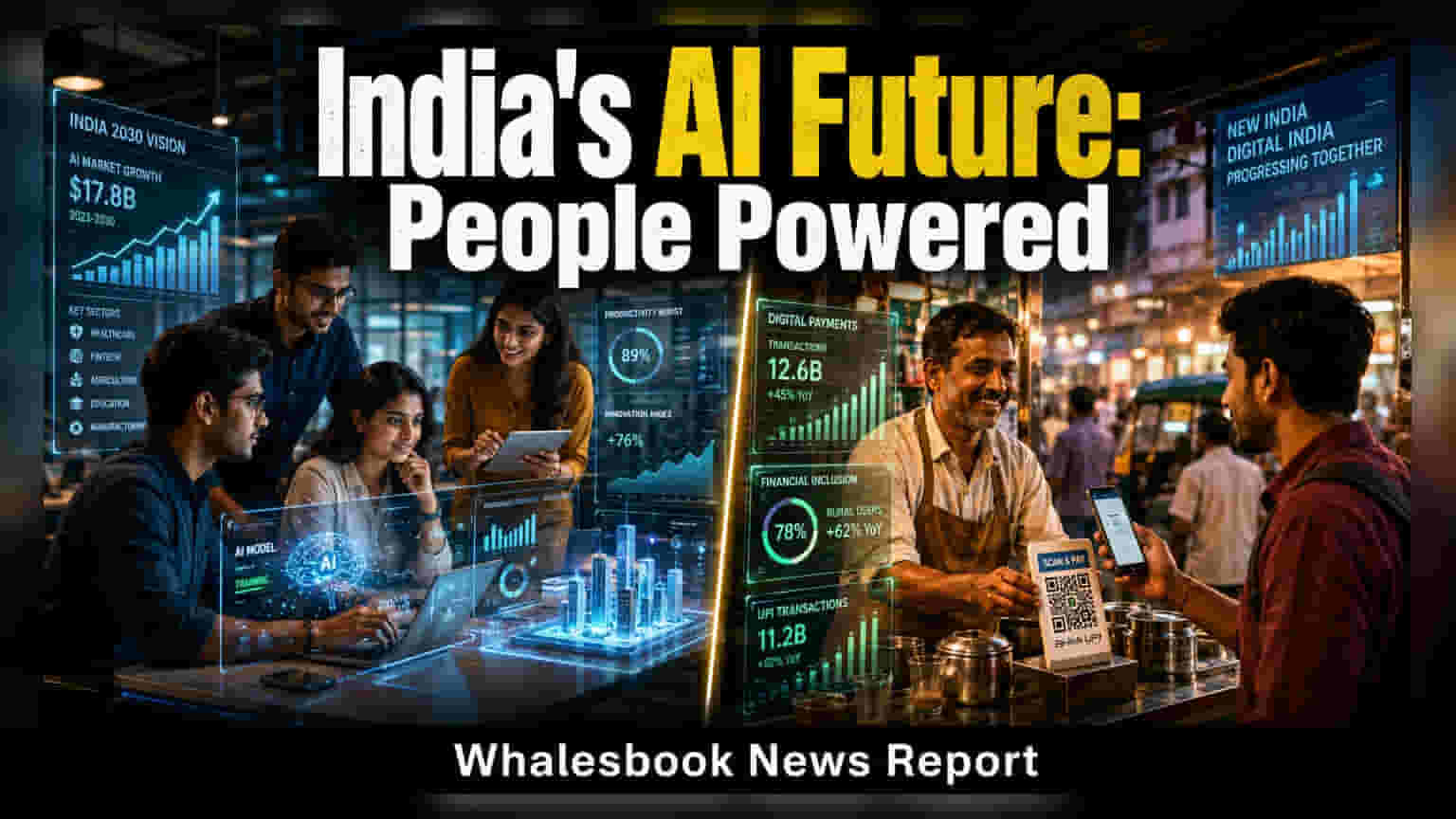
India’s approach to AI aims to blend technology with human potential, using the success of digital tools like UPI as a blueprint. For the economy, this shift emphasizes long-term productivity growth and the need for large-scale upskilling to support a digital-first workforce across Tier-II and Tier-III cities.
India is shaping a unique strategy for artificial intelligence that places human empowerment at the center, rather than treating technology as a simple replacement for human roles. Leaders and industry experts suggest that while AI can drive business growth, the nation’s core strength lies in its youth and the collective ingenuity of its entrepreneurs. This approach signals a move toward using AI as a tool to boost human capabilities, rather than an effort to automate work entirely.
Digital Adoption as a Foundation
The widespread acceptance of digital public infrastructure, such as the Unified Payments Interface (UPI), provides a strong benchmark for this strategy. By processing over 24 trillion transactions in FY26, the UPI ecosystem demonstrated that Indians readily adopt technology when it is practical, accessible, and solves real-world problems. This pragmatic philosophy is now being applied to AI adoption. The expectation is that AI will gain the fastest traction where it demonstrably helps employees work better, enhances customer service, or solves specific operational bottlenecks.
Innovation Spreading Beyond Metro Hubs
The Indian startup ecosystem is no longer confined to major metropolitan areas. With nearly half a million ventures now originating from Tier-II and Tier-III cities, the geographical spread of innovation is becoming a defining feature of the economy. Businesses in smaller hubs are increasingly integrating AI tools with traditional business acumen. This creates a practical model where AI assists in demand forecasting, inventory management, and market access—capabilities that were previously accessible only to large, resource-rich corporations.
The Shift Toward Productivity
The concept of the 'Agentic Enterprise'—where human expertise, data, and AI agents collaborate to streamline tasks—is emerging as a key theme for Indian businesses. By automating routine processes, AI can theoretically free up employees to focus on higher-value problem solving. For small business owners, from village entrepreneurs to healthcare professionals, this means having access to personalized tools and localized information that can improve their output.
Macro-Economic Challenges and Monitorables
While the focus on human-centric AI offers significant growth potential, it brings structural challenges for the broader economy. The shift requires large-scale skilling initiatives to ensure the workforce remains relevant and competent. The primary economic risk lies in a widening gap between technology deployment and the ability of the workforce to utilize these tools effectively.
Investors and market participants monitoring the Indian economy may track how quickly the domestic workforce adapts to these changes. The critical indicators to watch will be the pace of private-sector investment in digital upskilling programs, the growth rate of AI-integrated services in non-metro regions, and whether this adoption leads to a measurable increase in labor productivity. As the country aims to democratize AI access, the focus will remain on building trust and ensuring the technology serves as a force multiplier for individual and business growth.