

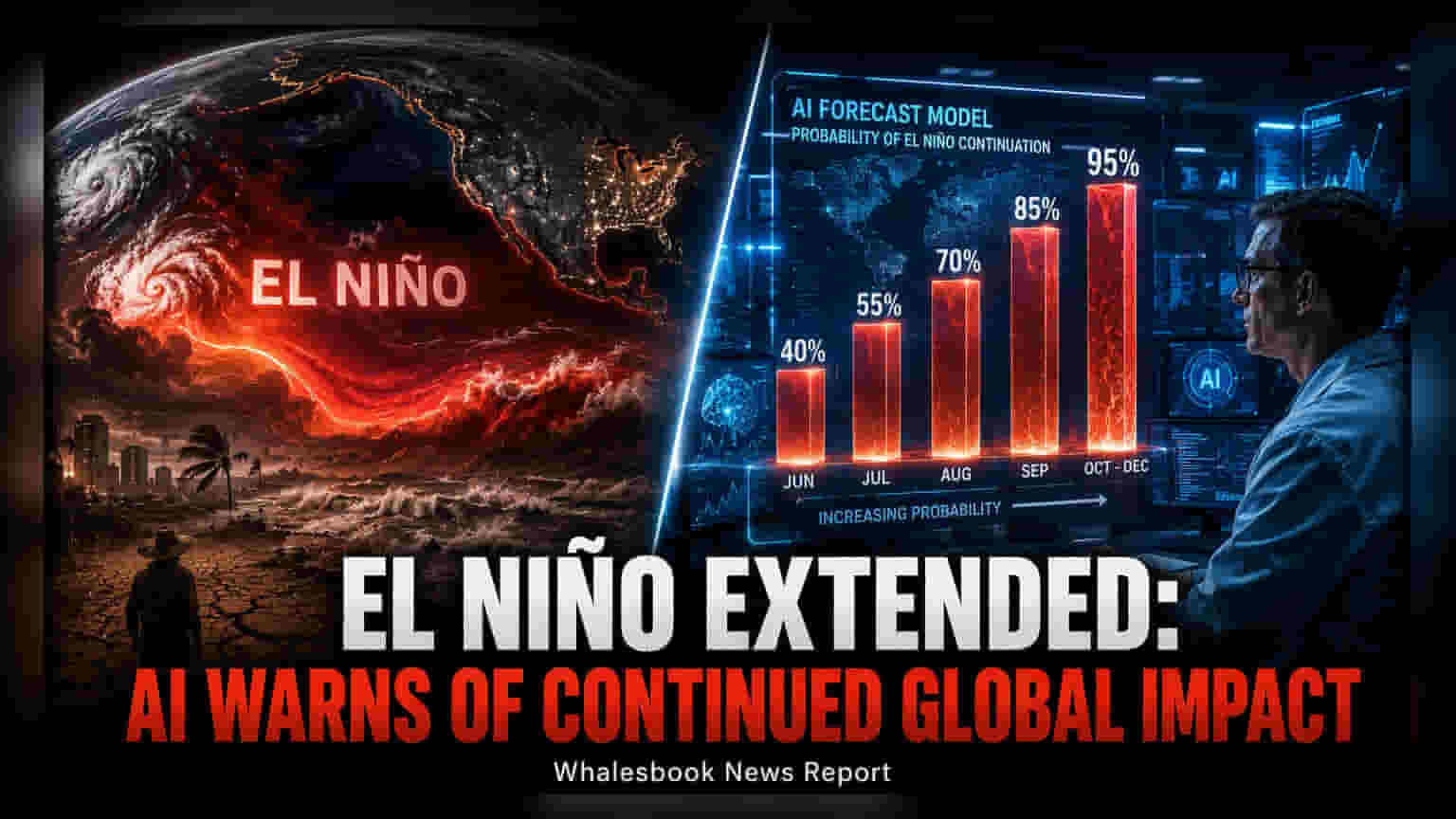
India’s AI-based weather model predicts El Niño conditions will likely persist until February 2027, potentially affecting agricultural production and food inflation. While the government continues to track climate drivers, investors are keeping an eye on rural consumption trends. Additionally, the government has announced new green hydrogen hubs at three major ports to support renewable energy goals.
The Ministry of Earth Sciences has released a new forecast using an indigenous AI/ML-based system developed by the Indian National Centre for Ocean Information Services (INCOIS). This model indicates a 70% to 90% probability that El Niño conditions, which emerged in May 2026, will continue until February 2027.
For investors and the broader economy, this extended forecast is a monitorable for the agricultural sector. Historically, El Niño events are associated with drier conditions during the monsoon season, which can pressure crop yields for rain-fed agricultural produce like rice, pulses, and oilseeds. Any significant impact on output could lead to food supply concerns and potentially influence food inflation figures. However, it is important to note that El Niño is not the sole driver of India’s weather; other climate factors, such as the Indian Ocean Dipole and the Madden-Julian Oscillation, also play critical roles in determining monsoon performance.
Green Hydrogen Hubs and Energy Expansion
Beyond climate monitoring, the government has announced a strategic shift toward renewable energy infrastructure. Three major ports—Deendayal Port in Gujarat, V.O. Chidambaranar Port in Tamil Nadu, and Paradip Port in Odisha—have been designated as hubs under the National Green Hydrogen Mission. This is part of a broader effort to position India as a key player in the production and export of green hydrogen.
Additionally, the Ministry of New and Renewable Energy has approved a proposal by NTPC to establish a green hydrogen hub in Pudimadaka, Andhra Pradesh. For the energy sector, these developments represent long-term capital spending initiatives that are aimed at reducing reliance on traditional energy sources.
Infrastructure and Policy Updates
In other developments, the government shared updates on infrastructure and sustainability. At the Satish Dhawan Space Centre (SHAR) in Sriharikota, authorities are planning protection measures after assessments indicated that coastal erosion has impacted the site’s northern sector over the past two decades. These mitigation efforts, including the construction of groynes, are expected to be a focus for maintaining infrastructure security.
On the energy and transportation front, rooftop solar adoption continues to gain traction, with over 24,000 government buildings now equipped with solar systems. Furthermore, the National Highways Authority of India (NHAI) is continuing its green corridor initiatives. The Ministry also provided an update on the voluntary vehicle scrapping program, confirming that 153 scrapping facilities are now operational nationwide, with a digital portal currently tracking discounts offered by vehicle manufacturers to encourage fleet modernization.
The key monitorable for investors will be how agricultural output and rural consumption patterns evolve over the coming quarters, especially if monsoon-dependent crop cycles face stress from the projected weather patterns. Simultaneously, the progress of the newly announced green hydrogen hubs will be tracked as these projects move from planning to execution.